
Tana Toraja
Indonesia · Asia
About Tana Toraja
Tana Toraja, literally "Torajaland", is a highland region of Southern Sulawesi in Indonesia. This article also covers Toraja Utara (North Toraja Regency).
Tana Toraja, the famed "Land of the Heavenly Kings", lies about 328 km north of Makassar, the capital of South Sulawesi Province, in the central highlands of South Sulawesi.
Tana Toraja travel guide
Understand
Culture
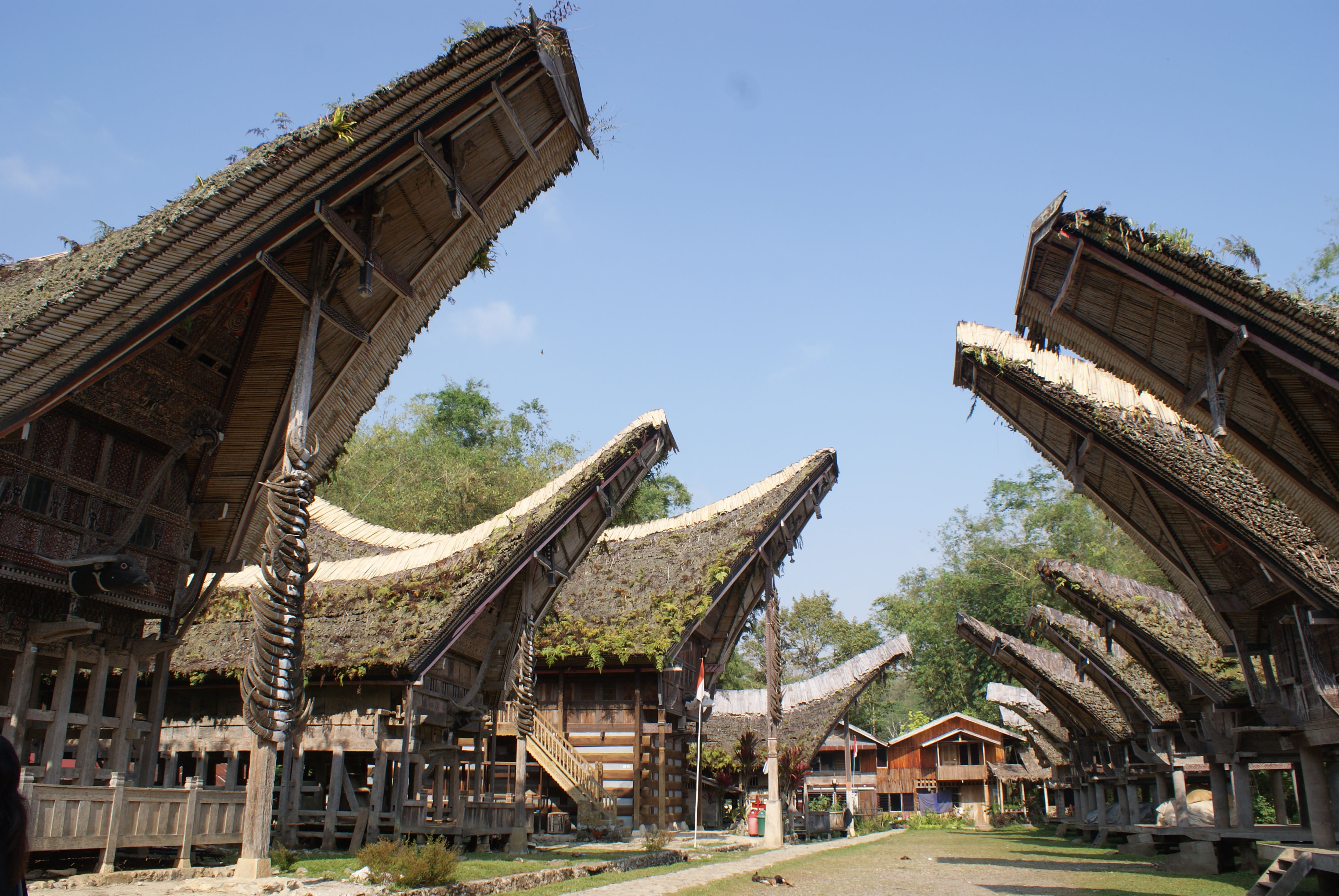
In the land of the Toraja people, many people are notionally Christian, but most are, in practice, animist. They are above all famed for their spectacular (and rather gruesome) burial rites. After a person's death, the body is kept — often for several months or even years — while money is saved to pay for the actual funeral ceremony, known as tomate. During the festival, which may last up to a week, ritual dances and buffalo fights are held, and buffaloes and pigs are slaughtered to ferry the soul of the deceased to the afterlife (puya). The deceased is then finally buried either in a small cave, often with a tau-tau effigy placed in front, inside a hollow tree or even left exposed to the elements in a bamboo frame hanging from a cliff. Tana Toraja has unique culture set in stunning scenery. Globalisation and tourism may have impact, but if you venture away from the tarmac roads you will find soon a way of life that may seem to a visitor as if it has not changed much in the last 100 years. Traditional Tongkonan houses stand proudly in this setting. These intricately decorated houses with upward-sloping roofs are the centre of all Aluktodolo (Torajan religion before the coming of missionaries; the ancestors' belief) rites; from storing the harvest in the carved rice barns, "alang", to slaughtering sacred water buffaloes at funeral ceremonies that last a week or longer. Tana Toraja's beauty is also reflected in its people. Although they are mostly devoutly Christian (there is a small number of Muslims especially in the southern area), they combine this religious belief with magic and mysticism, and welcome visitors to witness their ceremonies. Tana Toraja is a sleepy rural region cultivating rice, cacao, coffee, and cloves most of the year. Toraja's arabica coffee carries a high reputation and is something that visitors may be interested in trying. During the dry season, from June until September, when children are home from school, the rice is harvested
Getting there
By plane From the Hasanuddin Airport in Makassar, you can fly to Toraja Airport (TRT IATA; aka Buntukunik Airport), 1 hr/35 km south of Rantepao. The flight takes about 55 minutes.
By bus Tana Toraja is a solid 300-km, 8-to-10-hour drive from Makassar with various stops between the route to take some rest. Most companies run both a morning and an overnight bus, with various degrees of comfort. Frequent mikrolets/bemos leave from Makassar to the Daya Bus Terminal and take about 40 minutes. The buses from Makassar to Tana Toraja come with various levels of comfort. Routes going further north are generally slower, in poor condition and far less comfortable. The most expensive are luxury class buses with sleepers, relatively clean and comfortable. Generally, most regular commuters between Makassar and Tana Toraja understand the importance of riding new buses with better engines. Hence the ticket prices differ not only based on the classes but also on the engines as well. Better engine means the price will be more expensive.
By taxi or charted vehicle A chartered car usually costs 850,000 - 1,200,000 Rp one-way from Makassar. It is possible to find one for a few hundred thousand less if you can coordinate with someone who is driving in that direction. If you plan on staying for a few days and would like the return trip as well, a driver with car should cost about 550,000 Rp per day. Please beware that if you are planning to drive your own car, the stretch of road from Makassar, starting from Maros district area up to the town of Pare Pare is undergoing a road widening works. You may have to suddenly switch onto the opposite lane, because the lane you are on is blocked for the construction work. Be very careful and watch out for this kind of roadblock, because road signs indicating this is virtually non existent. This problem is made incredibly worse during night time by the absence of proper street light, so exercise extreme caution. The road from the town of En
Getting around
The best way to go around is by motorbike (about 80; 000 Rp per day; as of 2016). This said, using public transportation is possible for most sites too. Most of the spots can be visited without a guide (despite what your hotel will try to make you believe), though a guide may be useful for some of the more distant villages. Bemo/mikrolet rides run from 2,000 Rp for short rides of a few kilometers up to 10,000 Rp. Bolu Bus Terminal 2 km north east from Rantepao is a good place to find public transportation towards the north of Rantepao.
See
Although it can be expensive if you are on a budget, a guide can provide a lot of insight into the local practices and customs. A problem is that most guides are not certified, and will not explain more to you than the Wikipedia page on Tana Toraja.
If you still want to hire a guide, the usual base price for one day is 375,000 Rp (as of 2016), plus the motorbike (about 80; 000 Rp) if you don't drive yourself. Of course, the prices quoted first may be much higher. A price of 400,000 Rp for one day and one person that doesn't drive (and hence that will share the guide motorbike) is considered as a reasonably good price, as of 2016. If more than one person, the price shouldn't vary much, although you may need a longer time to bargain! Of course, guides will try to make you believe that you should pay a lot of extras (lunch; tax; etc.), but it is a grift. A famous scam is to make you believe you will eat in a good restaurant (for which you had to pay in advance), and then change the schedule at the last minute to go immediately to the funeral (and hence skip the restaurant; which probably doesn't even exist). It is possible to visit most of the famous sites and funerals on your own, although information can be hard to find from most hotel operators, as they will put a lot of pressure on you to hire a driver or a guide.
Bolu Buffalo Market (Pasar Bolu) north of Rantepao takes place on Tuesday and Saturday mornings.
Bori Parinding, north of Rantepao, is a combination of ceremonial grounds and burials. The ceremonial ground is an open space used for traditional ceremonies, including rituals for the dead and thanksgiving. Buntu Pune: The sites of Buntu Pune and Rante Karassik used to belong to one integrated settlement. Rante Karassik is a ceremonial ground on a sloping hill. Deri, north of Rantepao, has several tombs in full nature (in particular a particularly impressive forest of giant bamboos). The site is much less interesting than other equivalent ones in Tana Toraj
Do
Attend a funeral
If you come to Tana Toraja during the funeral season (peak is in July and August), attending a funeral is certainly a must-do. Funerals (entrance fee 20; 000 Rp) are public events and served by public transport. Avoid offers by guides, telling you that they are private or difficult to access! Your hotel probably will not help you to locate the funeral, claiming it is hard to find by yourself (it is not). In summer, (fake) guides might te
Overview adapted from Wikipedia, travel guide fromWikivoyage (CC BY-SA). Photography via Wikimedia Commons.