
South End
United States · Americas
About South End
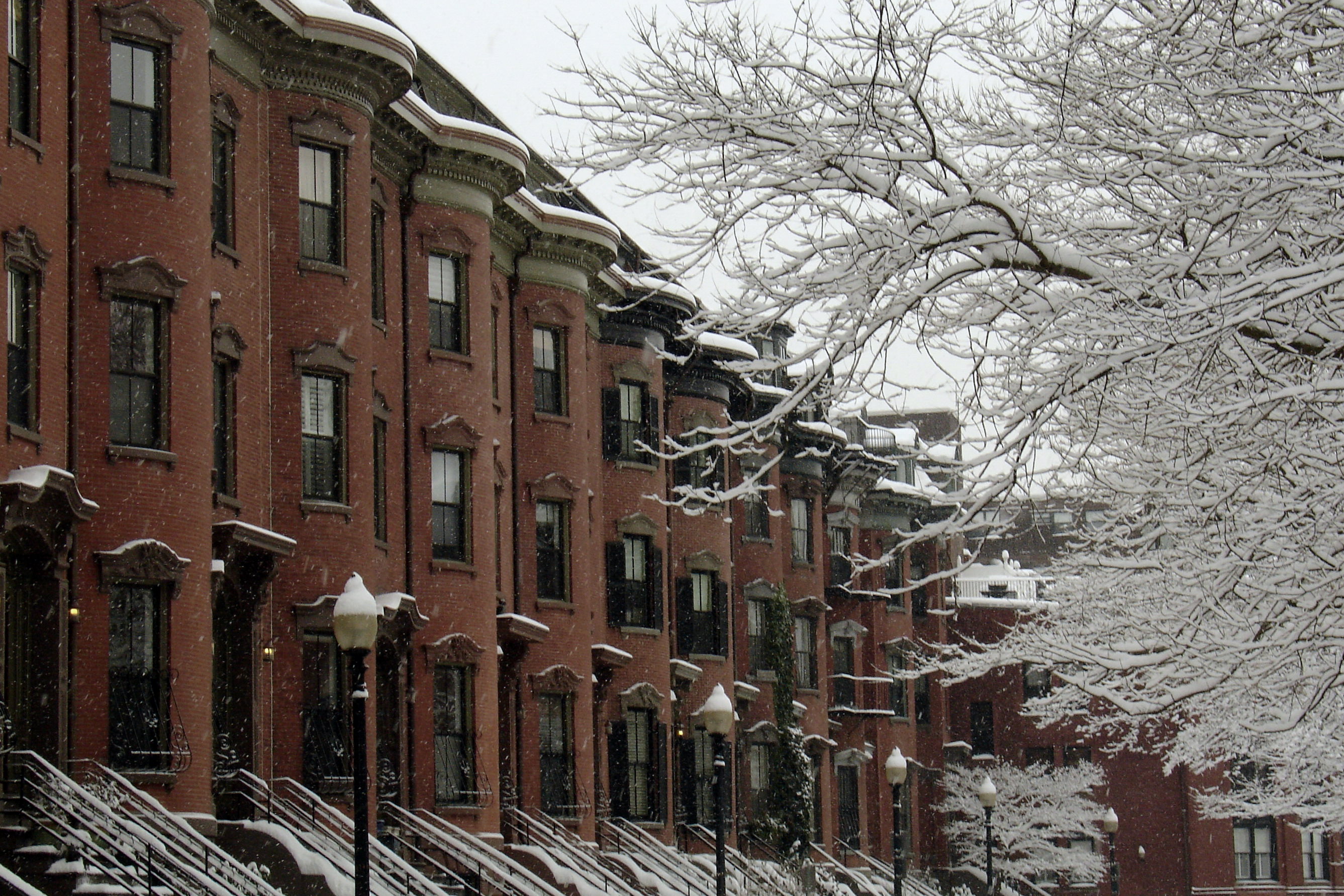
Possessing the largest Victorian row house district in the country, the South End is one of Boston's most popular places. After many homes underwent renovation in the 1960s, upscale restaurants and art galleries sprang up, and the area has attracted a diverse blend of families, young professionals, a gay and lesbian community and a thriving artistic center.
South End travel guide
Understand
In response to the crowded conditions throughout the downtown and Beacon Hill neighborhoods, the city of Boston decided to fill in tidal marshes to the south. Beginning sometime around the 1830s, a new inner city residential neighborhood was envisioned, with a large and stable tax base to draw from. Architect Charles Bulfinch was hired, who oversaw the infill of land and created a series of residential parks. Inspired by English residential town squares, most greenspace is artfully landscaped and ringed with attractive cast iron fencing. The buildings here were designed to be uniform five-story bowfront structures. To further accentuate the visual unity of the area, Bullfinch called for a common palette of brick, slate, limestone, and cast iron elements to be used. At first, a burgeoning middle class moved to the South End including business owners. As new housing developments opened up, however, the Back Bay and Roxbury soon became the "it" neighborhoods, and the South End would slide into a tenement district by the end of the 19th century. Close to good railroad jobs and now more affordable, the South End quickly began to attract African-American families, and became a center of black middle class Boston life and culture. Known as a "Jazz Mecca" for the first half of the 20th century, when musicians like Duke Ellington and Cab Calloway performed in a myriad of area clubs. More and more buildings fell into disrepair, and by the 1960s absentee landlordism was rampant and the neighborhood was one of the poorest of the city. At this point, Boston's city planners once again stepped in, knocking down blocks of dilapidated structures and replacing them with housing projects and areas of light industry. It was an imperfect solution, but it mostly worked out, and set the groundwork for the beautiful and diverse community residing in the South End today.
Getting there
By public transit The Orange Line is going to be your best option for accessing most of the South End. The Back Bay and Massachusetts Ave stations bring you close to the action. While the Ruggles station is in the neighborhood, most of the attractions are further north. The Green Line roughly parallels the Orange in this area, but the stations are slightly further away. One stop on the Red Line, Broadway, is great for accessing SoWa market and all the new developments in the South End's northeastern corner. If the suburbs and beyond are where you're leaving/arriving from, Back Bay Station is for you. On the Commuter Rail, the Providence/Stoughton, Framinghham/Worcester, Needham, and Franklin lines all stop here. This is also a main stop for Amtrak with Acela Express, Northeast Regional, and Lake Shore Limited trains all heading further afield. This station is also the first stop for the #39 bus, which takes you south past the museums and into Jamaica Plain. Another great option is the Silver Line, a bus rapid transit service running through the center of the neighborhood. From north to south the stops are: Herald St, East Berkeley St, Union Park St, Newton St, Worcester Sq, Massachusetts Avenue, and finally Lenox St. This bus can be helpful, as it passes by all the big commercial areas in the South End.
By foot This is really the best way to see this minute neighborhood, barely over a mile across. As a point of reference, traversing the neighborhood would take the average person less than 30 minutes on foot. Walking from the Orange Line Mass Ave station, to the I-90 I-93 overpass next to downtown.
By car Strongly not recommended. There are no parking garages in the South End, and virtually all on street parking is resident only. You'd have to park in a different neighborhood and walk in anyway, so what's the point of driving?
By bike If you're coming from Jamacia Plain or Roxbury, the Southwest Corridor bike path paralleling the Orange Line is a handy way
See
There's not much to see in the South End in particular. The neighborhood is quite small and beautiful, so your best bet may be to just go for a stroll. The area has some of the most wonderfully restored brownstones, they really pop offset against the dramatic backdrop of Back Bay's skyscrapers. You will find scores of gardens and small parks tucked between the warren of intimate (and occasionally cobblestoned) streets. Evenings here are great for walking as well, as gas lamps flicker to life and light your path across care-worn bricks.
1 Site of Boston town gate (T: Tufts Medical Center). 24 hours daily. At one time this route was the only way in or out of Boston. Still an isthmus in the early 17th century, the town was almost entirely surrounded by water. Here at the corner of Washington and E Berkeley streets Mayflower era colonists built gated earthworks to keep out natives and unwanted animals. A gallows stood outside the gate, where thieves and murderers would be executed. These defenses were constantly being improved, especially during the colonial era. As time went on, however, the water was filled in by earth and the gate lost its importance. Today there is no plaque or other signifier of this important spot, only a few signs at the nearby bus station. This noisy street corner could be easily skipped, or it could be a heady spot to contemplate the passage of time. Free. (updated Nov 2016)
Galleries
This is a smattering of the galleries the South End has on offer. They can be found throughout the neighborhood, with the greatest number being concentrated in the SoWa Market area. Naturally. It's best to visit on the weekends, and better still on market days.
2 L'Attitude Gallery, 460 Harrison Ave #8A (SoWa). Tu-Sa 10:30AM-5:30PM, Su noon-5PM. (updated Feb 2017) 3 Adelson Galleries, 520 Harrison Ave (SoWa), ☏ +1 617 832-0633. W-Su noon-6PM. (updated Feb 2017) 4 Mills Gallery, 539 Tremont St (Cyclorama), ☏ +1 617 426-5000. Su W noon-5PM, Th-Sa noon-9PM.
Do
1 Boston Center for the Arts, 539 Tremont St (Cyclorama), ☏ +1 617 426-5000. Times and locations vary. This non-profit coordinates multiple spaces in the South End, and is dedicated to hosting original events alongside visual and performing arts. Supports working artists by connecting them to the community, and patrons of the arts. Check the calendar daily for new performances, gallery openings, open studios, and more. The BCA has used the historic Cyclorama as its principal building since its inception in 1970. The city of Boston funded redevelopment costs in an effort to revitalize the South End area and the art scene. $0-50. (updated Nov 2016) 2 Matthews Arena, 238 St.Botolph Street (T: Massachusetts Ave), ☏ +1 617 373-2691. Today owned by Northeastern University, and was the original home of the Boston Bruins. Matthews Arena opened in 1910 and is the oldest multi-purpose athletic building still in use in the world. It has undergone significant renovations over the years, so expect state of the art if you're catching a game here. (updated Apr 2017) 3 Stir, 102 Waltham St (T: Back Bay), ☏ +1 617 423-784
Overview adapted from Wikipedia, travel guide fromWikivoyage (CC BY-SA). Photography via Wikimedia Commons.