
Siem Reap
Cambodia · Asia
About Siem Reap
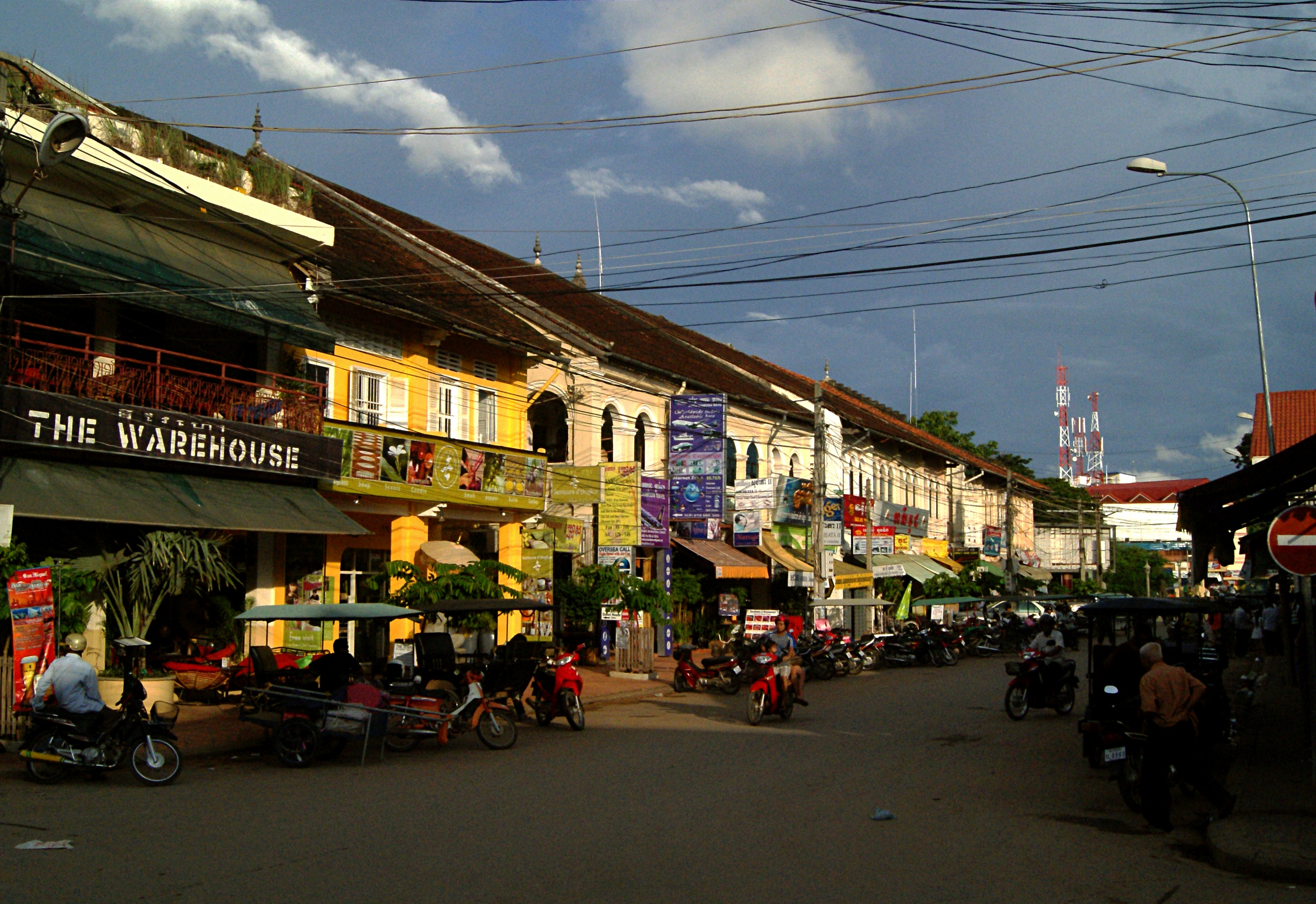
The town of Siem Reap (សៀមរាប), in northern Cambodia, is the primary access point for the Angkor Archaeological Park, just north of the city. It is quite laid-back and a pleasant place to stay while touring the temples. It is a nice compromise between observing Cambodian life and enjoying the amenities of modern services and entertainment, thanks to a large foreign community.
Siem Reap travel guide
Understand
The name "Siem Reap" literally means "Siam Defeated", commemorating a (possibly apocryphal) victory over invading Thais in 1549. These days, however, the only rampaging hordes are the tourists heading to the Angkor Archaeological Park. This once quaint village has become a major tourist town, full of things to do, places to eat and drink. New high quality tarmac roads and beautiful wide paved sidewalks have replaced the red dirt pot holed roads that were muddy in wet season, and dusty in dry season. The building boom is mostly over, and it's now a very pleasant town with lots of beautiful shady trees, especially along the riverbanks and roads around Angkor Wat. Check out the ConCERT tourist office, a local NGO committed to raising the standards of responsible tourism and eco-tourism activities and providing information on the causes and effects of poverty in Cambodia, volunteering opportunities and eco-tours.
Getting there
By plane 1 Siem Reap-Angkor International Airport (SAI IATA). Opened in October 2023, this clean and cool space is the country's largest airport. Being 50 km out of town, travel to and from this new airport costs more (except for seats on the minibus) and takes much longer than to the old airport, which has closed. It has one terminal and is served by international direct flights from Bangkok (both airports), Kuala Lumpur, Singapore, and various airports in Laos (Luang Prabang) and Vietnam (Hanoi; Ho Chi Minh; Da Nang; Phu Quoc). Flights from Seoul, Kunming, and Shanghai were scheduled to begin by early 2024. Cambodia Angkor Air flies domestic from Phnom Penh and Sihanoukville as well. US$8 per minibus seat, US$40 for private minivan transfer. (updated Oct 2025)
By bus Bus is a common way for getting around Cambodia with a range of bus companies serving Siem Reap, with several daily departures and arrivals (especially from Phnom Penh). Premium operators includes Giant Ibis and VET Air Bus Express, while companies such as Larryta, Seila Angkor Express, E-Booking, Mey Hong and others offer economy options with Air Conditioning. Try to book at least the day before travel. Booking online is easier with BookMeBus and Camboticket[1], as you can board with e-ticket with either of their services. Travel agents and guesthouses will do this for a US$1-2 fee per ticket. Buses tend to leave in the morning or early afternoon. There are also night buses on some routes. Many buses terminate at an out-of-town bus station to the east of Siem Reap, from where travellers will need to take a tuk-tuk into town. This should cost no more than US$2, or maybe US$3 if you're not keen to drive a hard bargain. If arriving from the west, consider getting off the bus as it passes through town on National Road 6, say as it crosses the bridge over the river, before it reaches the bus station. If arriving from the east you have little choice but to face the touts.
Domestic services Domes
Getting around
Travel to and around the Angkor Archaeological Park is extensively covered in its own article. The following is a discussion of travel inside Siem Reap.
On foot The city centre is fairly compact and flat, now with good quality and often wide, paved sidewalks. Though in places you can find them doubling up as motorbike and car parking lots. However, as Siem Reap has grown, many interesting neighborhoods have popped up that are further outside of the main downtown business district, and are a bit out of the way for pedestrians.
By bicycle Siem Reap is a popular place to cycle, with some scenic cycle paths painted green, or trails in forests near roads leading to and around Angkor Wat. There is also a green cycle path running along side the river, often in the shade of large trees, starting at the Hard Rock Cafe, then heading north. Bicycle rental shops around town mostly don't open earlier than 07:00, so if you want to ride to Angkor Wat early in the morning, rent one the day before. Some guesthouses also rent bicycles. One day rental varies between US$1 to US$8, depending on the quality of the bike. Discounts available for longer rentals. Guided electric mountain bike tours are also available in Siem Reap, offering pedal-assist bikes that make the Angkor circuit more manageable in the heat, with access to jungle trails not accessible by tuk-tuk or bus.
By motorbike Motodops (motorbike taxi) abound and will make sure you know where they are. Rides within town should only cost US$0.50 or 2,000 riel, although prices can double at night or during bad weather. Agree a price first. Full day can be arranged for ~US$10. Helmets for passengers are rare though may materialize if requested in advance. Renting motorbikes is no longer prohibited. There are plenty of options available from the ubiquitous gasoline-driven scooters (starting at ~US$8 per day), small electric scooters for one with a top speed of 25 km/h (~US$10) to larger ones for two people going up to 60 k
See
Most people come to visit Angkor Archaeological Park, which is thoroughly covered in its own article. The town has some worthwhile attractions and a number of beautiful modern Buddhist temples.
1 Angkor National Museum, 968 Charles de Gaulle Blvd (T Galleria department store, beside the museum, runs a free shuttle (a little train) from the Old Market, every 30 min from 10:30 except on W), ☏ +855 63 966 601, [email protected]. Daily 08:30-18:00. A modern museum with exhibits covering the history of the Khmer Empire, and the art, architecture, clothing, and culture of Khmer civilization, with a special focus on the Angkor complex. It is worth spending a couple of hours in the air-conditioned galleries as a break from visiting temples. Lots of pre-Angkorian and Angkorian statues, plus informative videos. Some say the 1,000 Buddhas room is as impressive as it sounds. The gift shop has some lovely souvenirs and fascinating books, but they're very overpriced. Visitors are required to check bags, water, and hats at the entrance (for free). Photography prohibited. US$12; audio guide in many languages US$5 (credit card accepted). (updated Feb 2020) 2 APOPO, Trapeang Ses Village, Kouk Chauk Commune, Siem Reap Koumai Road, ☏ +855 81599237, [email protected]. Daily tours every half hour 08:30–11:30 and 13:00–16:30. A demining organization that uses trained rats to sniff out land mines, a strategy which is much faster and safer than using metal detectors (if the rats step on a mine; they are too light to set it off). The visitor's center has guided tours including examples of land mines and UXO (unexploded ordnance) and a demonstration of how the rats find mines. The tour takes about 45 minutes and is a fascinating way to learn about the problem of land mines in Cambodia and support demining work. The guide's English may be hard to understand, but the demonstrations are so interesting, the tour is well worth doing anyway. US$10. (updated Mar 2024) 3 Angkor Botanical Garde
Do
Activities 1 Angkor Pottery Center (3 km South of Old Market on Road 63), ☏
Overview adapted from Wikipedia, travel guide fromWikivoyage (CC BY-SA). Photography via Wikimedia Commons.