
Savannakhet
Laos · Asia
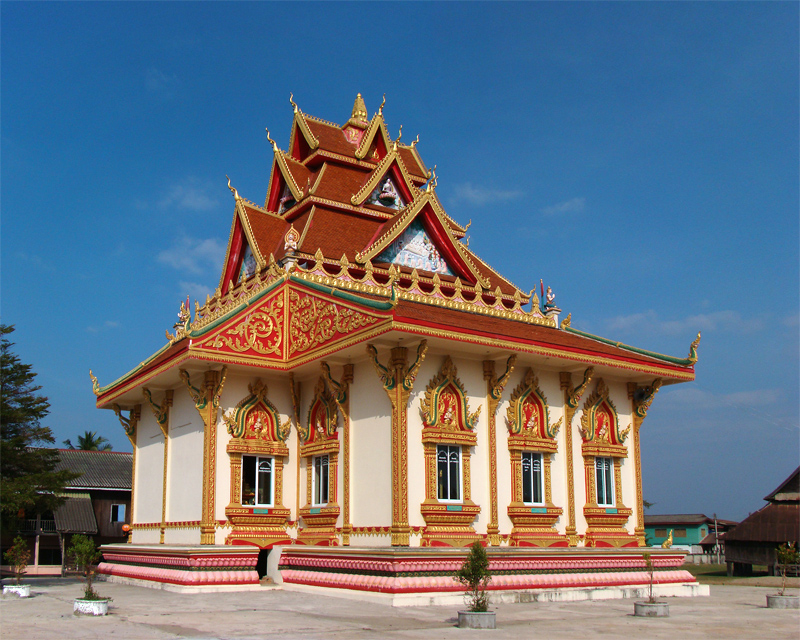
About Savannakhet
Savannakhet (ສະຫວັນນະເຂດ, commonly abbreviated to "Savan") and officially known as "Kaysone Phomvihane" (ໄກສອນ ພົມວິຫານ, name of the district), is the capital of Savannakhet Province in Southern Laos. It is on the Mekong River. With an estimated population of 120,000, it is the second largest city of Laos. The city is the hub between west (Mukdahan, Thailand) and east (Vietnam), and between north (Vientiane) and south (Pakse).
Savannakhet travel guide
Understand
Visitors to Savannakhet are often surprised by its old French colonial architecture and the friendly, sleepy atmosphere of the town which conserves many aspects of Lao traditional culture. The small but blossoming tourist sector offers various eco-trekking programs to the outskirts of the city and to preserved forests and other places of interest in neighbouring districts such as Champhone). The welcoming and generous character of the local people might give you the sincere feeling of being happy to be a family member, very unlike the commercial character of tourist destinations such as Vang Vieng and Si Phan Don. Although there is a casino, Savannakhet has no night-life scene, and Savannakhet is not popular as a tourist destination among Western visitors. The last two decades, dinosaurs have become a main theme of Savannakhet: The Dinosaur Museum and decorations in the streets reflect the history. Long after dinosaurs had left their last footprints, Savannakhet probably was founded in the 17th century by forty families who immigrated from Phonsim village (around 20 km to the east of the city). It is said that the settlement at the Mekong riverside was called Tahae village and researchers assume that Buddhist temple Vat Xaiyaphoum is a remainder of that era.
France expanded Indochina by obtaining the east bank of the Mekong after a border dispute in 1893. The French used the Mekong River as the main artery of transport. Not many years later, a network of water transportation, post, and telecommunication facilities and a railway were completed. Also a road, connecting Savannakhet with Quang Tri (Vietnam), was built. In the 1920s and 1930s Vietnamese and Chinese started to settle in Savannakhet. Nowadays, the Chinese and Vietnamese still live in the same parts of the city, while other parts are still redolent of the French administration that was centred in the south part of town. The 1,600 m Lao-Thai Friendship Bridge II was opened in January 2007, connecting Savann
Getting there
By plane Savannakhet has an 1 airport (ZVK) not far from downtown. Lao Airlines and Lao Skyway both fly here to/from Vientiane.
By bus
There is bus service from Vientiane to Savannakhet. For the time being it is the only way to practically get to Savannakhet from the capital. It is a 9-hour bus journey on a newly paved road. While the journey is long, it is an excellent way to see the local villages and lush countryside of Laos. Buses from Vientiane to Pakse, often stop in Savannakhet. There are two different types of buses that service the route from/to Vientiane:
Local bus - These public bus leave Vientiane and Savannakhet throughout the morning, and make lots of stops to get passengers and goods. Takes approximately 9 hours, costs 75,000 kip one way. A genuine Lao experience. VIP Bus - much like the local bus, but there are fewer stops, assigned seats, there is a toilet and all-important air conditioning. Less frequent and costs more, but well worth it. This is a night bus. Travel time is approximately 8 hours as the bus doesn't exceed 65 km/h. There are two types of night buses: one with bunk beds (120; 000 kip) and one with seats (110; 000 kip). Each bunk bed accommodates two people. Highly recommended is that you buy the space next to you if you are travelling alone or are travelling in odd numbered groups as you will be sleeping next to a stranger in a twin-sized bed. There are also local buses from and to:
Tha Khaek (30; 000 kip; 2-3 hours) Pakse (35; 000 kip; 5 hours) Si Phan Don (75; 000 kip; 7 hours) There are direct local buses from and to less travelled domestic destinations, such as Sekong (60; 000 kip; 5 hours), Salavan (60; 000 kip; 8 hours), Attapeu (70; 000 kip; 10 hours) and Sepon (40; 000 kip; 4-5 hours). International
The Second Thai–Lao Friendship Bridge across the Mekong to Mukdahan, Thailand opened to the public in 2007. There is a regular bus service between Mukdahan and Savannakhet, with departures approximately once an hour. A one-way tri
Getting around
The easiest way to get around Savannakhet is by foot or bicycle. Tuk-tuks are also available around the city and are an easy way to get to a specific location quickly. Be cautious about the fee for the tuk-tuk and always set the price before the ride. Because the minor roads of the districts around Savannakhet are often badly paved, a reliable cheap motorbike for rent in Savannakhet town might be hard to find.
See
1 Dinosaur Museum. Daily, 08:00-11:30 and 13:30-16:30. Exhibits dinosaur fossils or "big lizard bones" as called in Lao. They were excavated from Xonbouly District. Three kinds of dinosaur bones have been discovered; Pode, Iguanodon and Sauropode. Two rooms. Information is all in Lao and French, no English. 10,000 kip. 2 Historic Downtown Exhibition, Latsaphanit Rd (Second floor; Lin's Café), ☏ +856 20 9988 1630. 08:30-20:00. A private exhibition of the town's history, mainly focused on French colonial architecture of the downtown area. Free. 3 Old French colonial buildings. Old French-style buildings can be seen in the central city area, especially around the Catholic church and the central plaza. These building are heritages from the French colonisation of Laos in the mid 20th century. 4 Co-Cathedral of St. Therese (ໂບດກາໂຕລິກ ນັກບຸນເຕເຣຊາ). Historic colonial cathedral built in 1920. (updated Jan 2022) 5 That Ing Hang Stupa (13 km northeast of Savannakhet). This 16th century stupa is one of the most revered in the country. Annually in December, Buddhists travel to this holy site for the annual "Boun Pha" ceremony. There are two roads that lead to the stupa: the first one is the busy main road to Seno. Tuk-tuk rides should cost 70,000 kip for a round-trip. Far more recommended is the alternative road through the green rural outskirts, passing the Beung Va lake, which is best experienced by bicycle or motorbike. 6 Wat Sayaphoum. A 16th century temple in the centre of the city along the bank of the Mekong River. Now serving as both temple and high school for novice monks of Savannakhet. Pee Mai Lao (The Lao New Year celebration) and Boun Suang Huea (boat racing festival) following Buddhist Lent are held here.
Do
1 Dong Natad Forest (The entrance is very close to the That Ing Hang stupa). A "Provincial Protected Area" which extends to 8,300 hectares and hosts two tribal villages. There is a beautiful lake called Nong Lom in the centre of the forest where you can observe wild birds like teal, butterflies, and rare plants. 2 Savan Vegas Casino, Nongdeune Village, Kaishonephomvihan District, ☏ +856 41 252 200. 24/7. More than 500 slots, 100 table games, and a sports book. On the 4,950 square metre (53; 262 sq ft) main casino floor, the selection of table games includes midi-baccarat, mini-baccarat (Super Six), blackjack, Caribbean stud poker, fan-tan, roulette, sic-bo, money wheels, and tiger and dragon. Teach English. Urban teenagers depend on foreigners to practice and improve their English. In Savannakhet, thresholds don't exist, so don't he
Overview adapted from Wikipedia, travel guide fromWikivoyage (CC BY-SA). Photography via Wikimedia Commons.