
Sahel
South Sudan · Africa
About Sahel
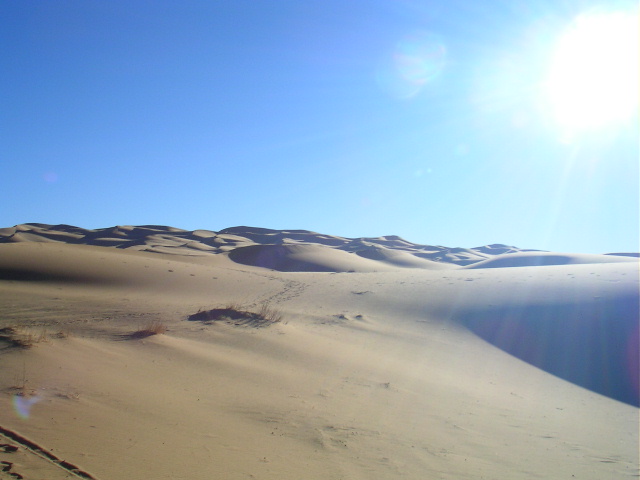
The Sahel is a region of Africa at the southern edge of the Sahara Desert.
Sahel travel guide
Understand
The Sahel runs 3,862 km from the Atlantic Ocean coast of Mauritania in the west to the Red Sea coast of Sudan in the east. The ecoregion definition takes in part of other countries but for the purposes of this travel guide, it includes all of Chad, Mali, Mauritania, Niger and Sudan. The region consists of semi-arid grasslands, savannas, steppes, and thorn shrublands lying between the Central African wooded savanna to the south, and the Sahara to the north. The topography of the Sahel is mainly flat, and the region mostly lies between 200 and 400 m elevation.
History Over the history of Africa the region has been home to some of the most advanced kingdoms benefiting from trade across the desert. Collectively these states are known as the Sahelian kingdoms which were a series of empires, based in the Sahel, which had many similarities. The wealth of the states came from controlling the Trans-Saharan trade routes across the desert. Their power came from having large pack animals like camels and horses that were fast enough to keep a large empire under central control and were also useful in battle. The first large Sahelian kingdoms emerged after 750, and supported several large trading cities in the Niger Bend region, including Timbuktu, Gao, and Djenné. During the 19th century, the French colonized the Western and Central Sahel while the Muhammed Ali of Egypt invaded the Eastern Sahel (Sudan) in 1820. Eventually the British became the de facto occupiers of Sudan. Every Sahelian country achieved independence from their respective European colonial power over the 1950s and 1960s. Unfortunately, due to the region's constant instability and coups in the 21st-century, the region has colloquially earned the nickname of "coup belt". Travel to this region is one of the most off-the-beaten-path destinations in the world, as more extremist groups centre themselves in the Sahel.
Climate Annual rainfall varies from around 100-200 mm in the north of the Sahel to around 700-9
Getting there
By plane Getting in by plane most often remains the only practical means to reach the Sahel. The primary airports are the capital cities: Nouakchott, Dakar, Bamako, Niamey and Khartoum.
Overland Getting to the Sahel is extremely difficult, but not impossible, and firmly discouraged by most Western governments. Border regions tend to be ripe for terrorism, kidnappings, and are simply volatile overall. Many tend to be closed for unspecified durations and cannot be reasonably relied upon.
Overview adapted from Wikipedia, travel guide fromWikivoyage (CC BY-SA). Photography via Wikimedia Commons.