
Sagay
Philippines · Asia
About Sagay
Sagay is a city of 146,000 people (2015) in Negros Occidental. It is near the Sagay Marine Reserve, the largest marine reserve in the Philippines. It is known for its Sinigayan Festival, held in March.
Sagay travel guide
Understand
Sagay City was called Arguelles when Teniente Francisco Rodriguez and Basilio Cordova founded it in 1860 in the mouth of the Bulanon River. Later, by the order of the Spanish governor the town was transferred to Pueblo de Magallanes (now known as Old Sagay) in honor of Fernando Magallanes. During the Philippine Revolution, Sagay contributed its share to the successful national struggle for independence. The First Philippine Republic was however short-lived when the country passed to the hands of another colonial power, the United States, in 1898.
The American Period In 1906, the name of the town was changed to Sagay. The name was taken from the semi-spherical shell called "sigay", which can be found in the area. The American influence seeped into every aspects of Sagay's life, politically and culturally. At this period of Sagay's history, land transportation began to supplant sea travel but the seaside community continued to flourish. The first public schools conducted in English were established. Meanwhile, in 1907 the Insular Lumber Company, reputed to be the biggest hardwood mill in the world, was established in what is now called Barangay Fabrica. Though measures to prevent the destruction of Sagay's rich forest were made, reforestation programs failed. Later, the old forest areas were converted mostly into sugarcane fields and some into cornfields. With the exhaustion of the forest resources of Sagay, ILCO was phased out in 1975 and transferred to Hinoba-an. Another major industrial development was the establishment of Lopez Sugar Corporation in the 1920s. Also during these years, sugar, copra, lumber and fishing became the important source of income for the inhabitants. The economic growth of Sagay brought about influx of migrants from Iloilo, Cebu and Bohol. This trend made Sagay a melting pot of Cebuanos and Ilonggos. With these developments, business and industry flourished.
Japanese occupation During World War II, the factories were destroyed and th
Getting there
By bus Sagay City is a two-hour travel by bus from Bacolod. Ceres Liner is the island's most used bus liner.
See
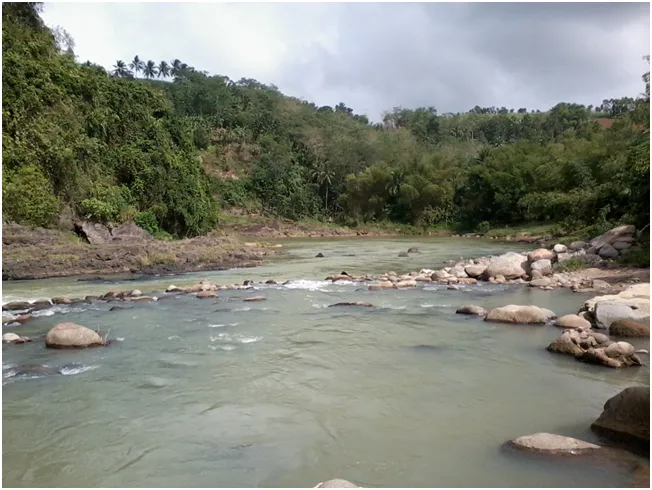
Himogaan River, Barangay Puey. Residents call that place as the Himoga-an River Overflow that is located at Barangay Puey, Sagay City, Negros Occidental. The Himoga-an River is the longest river of Sagay City. It was wide and clean so you would not wonder why most people living near that area usually take a bath and wash their clothes there. Free.
1 Inangtan Hanging Bridge, Barangay Maquiling. "Inangtan" in local dialect means "to connect". The Inangtan Bridge connects the Barangay Maquiling proper from its rural half that is separated by Himoga-an River. Free.
Do
Sagay Marine Reserve, the largest marine reserve in the Philippines Sinigayan Festival is a festival held every 3rd week of March to honor the city's patron saint, Joseph. "Sinigayan" is derived from the spherical shell “sigay” which abounds many islets and shores of the city.
Buy
Shopping malls and markets Lopues Value Store, AE Marañon St. Sagay City Market Mall, Rizal St.
Overview adapted from Wikipedia, travel guide fromWikivoyage (CC BY-SA). Photography via Wikimedia Commons.