
República District
Brazil · Americas
About República District
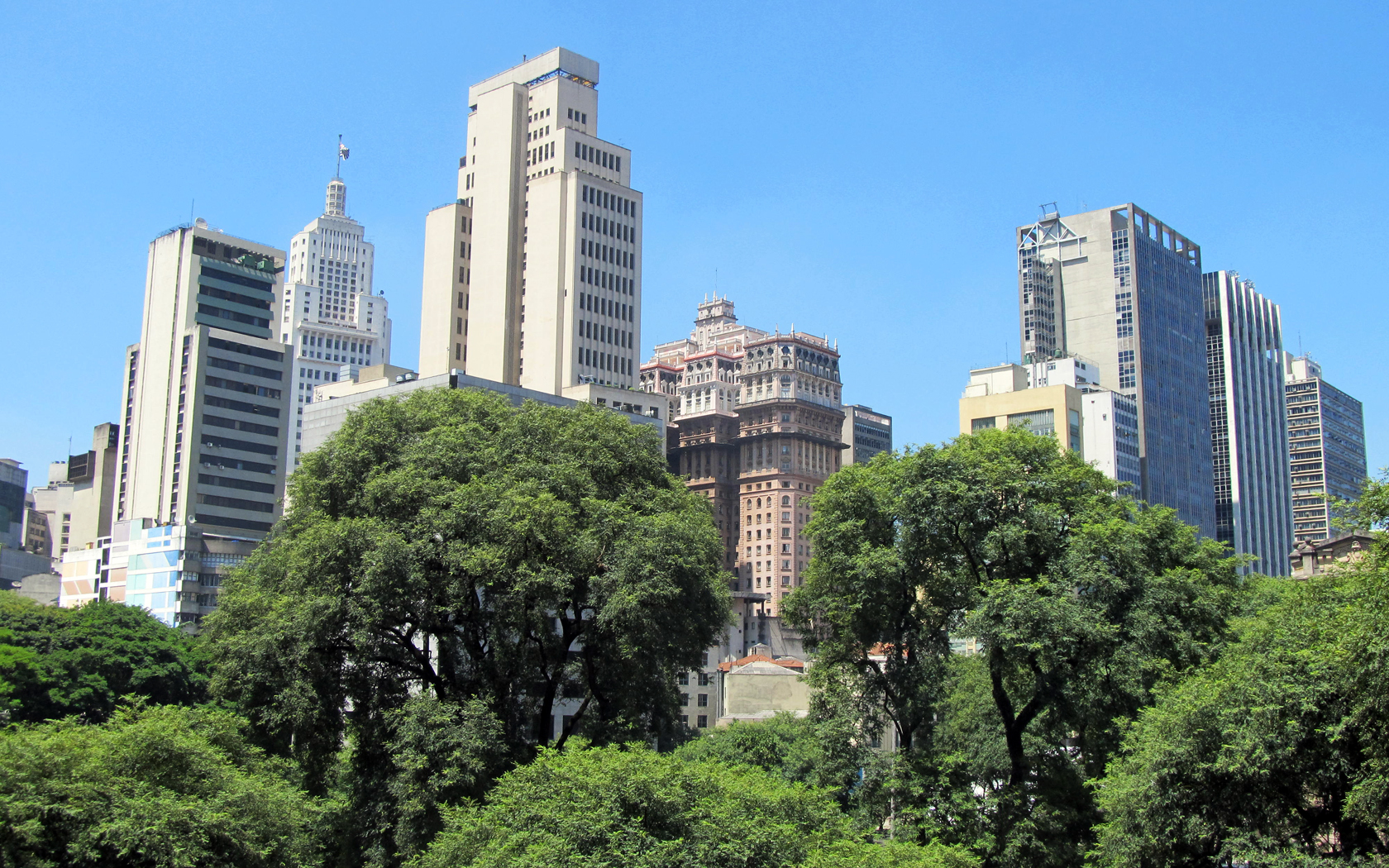
São Paulo's city downtown area (Centro) is where the city was founded, in 1554. It contains many historical buildings and areas which are protected by the municipality. In the second half of the 20th century, business and upscale households have moved away from the Center, making the area meet urban degradation and rise of criminality. Many renovation projects are taking place, making the region slowly but confidently regain importance and take its place as the city's historic core and a vibrant commercial and cultural zone.
The Center is composed of the Sé and República districts, plus the ring of districts around these two: Bom Retiro, Santa Cecília, Consolação, Bela Vista, Liberdade and Cambuci.
Much of the best of the architecture of São Paulo is found in the city center. There are many baroque and neoclassical buildings, with some resemblance to those found in cities like Paris, Vienna and even Buenos Aires, as well as some impressive early-modern buildings like the S-shaped Copan. However, due to the lack of policies for protecting the cultural heritage of the city, some of these buildings suffer from vandalism and are sometimes completely covered with graffiti.
Note: Avenida Paulista is partly in the Center. For places in this avenue and up to 4 blocks from it, check the São Paulo/Paulista section.
República District travel guide
Understand
Each district of the center has its own peculiar history and characteristics.
Bela Vista (also known as Bexiga/Bixiga) — One of the biggest centers of Italian culture outside of Italy. Home to the city's most important theater venues and to a vibrant nightlife, dotted with bars where bands, be they new or veteran, show off all their skills when it comes to rocking the place. Bom Retiro — Contains the neighborhood of Luz, one of the richest neighborhoods of the city during Brazil's coffee-based economy - which fell apart during the 1920s. Luz is a decadent area, with many streets populated by drug addicts, although a revitalization plan to relocate them is underway. Its historical importance and landmarks still make it a place not to be missed. Bom Retiro has also developed an officially-recognized Koreatown, with a large majority of shops and restaurants owned by Korean immigrants or their descendants.
Consolação — The neighborhoods composing this district, Consolação, Higienópolis and Pacaembu, were the first to grow outside the more historical part of the center. They are considered to be the "noble" areas of the Center, and even the "Red Light" zone on Rua Augusta is gradually being cleaned up. Liberdade — Known as São Paulo's Japanese district, although nowadays more Chinese and Koreans inhabit this area, with many of the ethnic Japanese having moved to more upscale areas. However, the area is still visited a lot by Japanese-Brazilians and those who are fond of Japanese culture. Due to its cheap housing and high-quality cheap restaurants, the area is a very popular choice of place to live for students and temporary workers. República — Once the site of the most elegant residential buildings in São Paulo, República was seriously hit by an exodus from downtown in the 1970s and 80s. Nowadays, it has been renovated as the whole historical central area. The streets between Praça da República and Largo do Arouche make up the oldest gay hot spot in town. It looks dec
Getting there
By metro or train
The rail network is the easiest and fastest way of getting to the center. The city center is crossed by various train and metro lines. These are the stations located at each district:
Bela Vista — Brigadeiro, Trianon-Masp, Consolação Bom Retiro — Luz, Tiradentes, Armênia Consolação — Paulista Liberdade — Liberdade, São Joaquim República — República Santa Cecília — Santa Cecília, Marechal Deodoro, Júlio Prestes Sé — Pedro II, Sé, Anhangabaú and São Bento Oddly, Paulista Station is on Rua da Consolação, while Consolação Station is on Avenida Paulista. If you find you have gone to the wrong one, you can use the long underground passageway that connects them.
By bus Numerous buses run continuously to the center from other parts of the city. For a visitor, they may sometimes be more convenient than the Metro, and you save some money by taking only buses instead of buses and train (but not that much). Check the SPTrans website for routes and itineraries (only in Portuguese). From many parts of the São Paulo, there are buses going to Parque Dom Pedro II, where the busiest bus terminal of the city is located. If you step down at this terminal, memorize the spot where the bus stopped if you plan to go back using the same bus, as you may have a hard time finding it again in the large and confusing terminal.
By car The Center is crossed by Corredor Norte-Sul, that links the north and the south parts of the city, and by Radial Leste-Oeste, that links the west and the east. Av. Rebouças and Av. Nove do Julho come from the Southwest, and Av. do Estado from the southeast. On weekdays and Saturday morning, going to most parts in the Center of São Paulo by car is not recommended, unless you are masochist, rich, or have a lot of patience. Parking can cost as much as R$ 20 for a single hour! It is best to park in the street at Zona Azul areas, where you pay an amount set by the Municipality, but finding a place to park may take some time. On weekends, cheap
See
Historical landmarks
1 Praça da Sé, Sé (between ruas 15 de Novembro and Direita. Sé metrô station). São Paulo's central square has fountains, sculputures, palm trees and lots and lots of people. The Catedral da Sé and Palácio da Justiça de São Paulo are located here. Free. 2 Pátio do Colégio, Pátio do Colégio, 84, Sé (near Praça da Sé). Museum: Tu-Su 09:00-17:00, Library: M-F 13:00-17:00. Place where São Paulo was founded in January 25, 1554. First building of the then-village, the Jesuit School is the city's cradle. Museu Anchieta, about the life of the founder of São Paulo José de Anchieta, is here. 3 Viaduto do Chá, Sé (near Metro station Anhangabaú). Linking Rua Barão de Itapetininga to Rua Direita. Marks the transition from old to the new part of the center. 4 Vale do Anhangabaú, Sé (near Metro station Anhangabaú). The valley is a giant boulevard with gardens, sculptures and a view of the main downtown office buildings. Edifício Altino Arantes and Palácio dos Correios' are here. 5 Largo São Francisco, Sé (Near Stations Sé and Anhangabaú). Church and Convent of Saint Francis and the historic Law School of the University of São Paulo. 6 Largo São Bento, Sé (Near Station São Bento). The square holds São Bento's church and monastery, a 17th century monastery, where mass is still held against a backdrop of Gregorian chants. The monks' bakery is a temptation. Give in, it’s no sin. 7 Monumento à Duque de Caxias (Monument to the Duke of Caxias), Praça Princesa Isabel, Luz. Largo da Memória, Sé (near Vale do Anhangabaú). The obelisk in this square dates from 1814, which marks São Paulo becoming a city. 8 Praça da República, República. There are buildings that bear witness to many different architectural styles: the 1935 Edifício Esther, considered the first with a modern architectural design; the S-shaped Edifício Copan designed by Oscar Niemeyer; and Edifício Itália (see Historical buildings). 9 Jardim da Luz (Next to Luz station, adjacent to Pinacoteca d
Do
Concerts and theatre
The center of São Paulo contains dozens of theatres and concert halls, with dozens of performances being carried everyday. Most theatrical performances are in Portuguese, and their price may vary from completely free to R$ 300. It is better to choose the place by the performance you want to see. A list of performances being carried in the city can be found in various websites, including: [1], [2], [3]. The following theatres and concert halls are the ones that deserve particular attention:
1 Theatro Municipal, Praça Ramos de Azevedo, Sé. One of the two traditional addresses for classical music fans. This is where the historic Modern Art Week took place in 1922. The building, designed by Ramos de Azevedo in 1911, is reason enough to justify a visit. Almost directly across the street, the building now called Shopping Light, another of Azevedo’s designs, was the headquarters of an English company that first electrified the city and built the now nostalgic city str
Overview adapted from Wikipedia, travel guide fromWikivoyage (CC BY-SA). Photography via Wikimedia Commons.