
Papua New Guinea
Papua New Guinea · Oceania
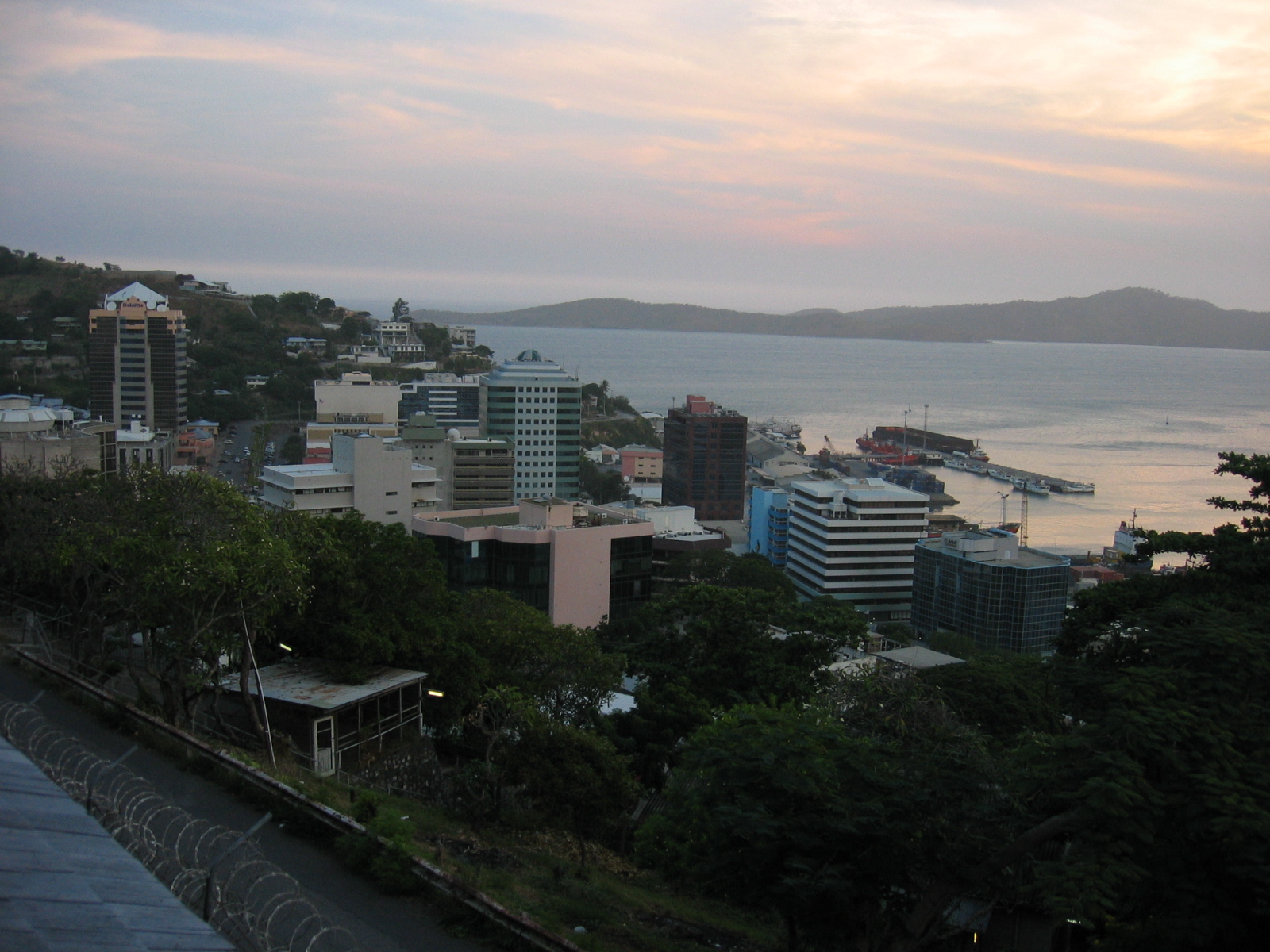
About Papua New Guinea
The Independent State of Papua New Guinea (PNG, Tok Pisin: Papua Niugini, Hiri Motu: Papua Niu Gini) comprises the eastern part of the world's largest and highest tropical island, New Guinea, together with many smaller offshore islands.
Papua New Guinea travel guide
Understand
History There is evidence of human settlement as long ago as 35,000 years in what is now Papua New Guinea. This comes from an archaeological site at Matenkupkum, just south of Namatanai in New Ireland province. Other archaeological digs at several locations in New Ireland have discovered tools and food residue dating back 20,000 years. In more modern times, Papua New Guinea, the eastern half of the island of New Guinea (which is the second largest island in the world), was divided between Germany ('German New Guinea') and Great Britain ('British Papua') in 1884. The Dutch had West Papua, now the Indonesian territory of Papua. The southeast part of the island, also known as Papua, was owned by the UK but administered by Australia, and thus a colony of a colony, until Australian federation in 1901, when it became an Australian territory. In 1914, the Australians did their part in the Allied war effort as a part of the British forces and took control of German New Guinea. They continued to administer it as a Trust Territory under the League of Nations on behalf of the British, and later the United Nations. However, it was not just disinterested colonialism. Gold had been discovered in several places and was rapidly exploited. Remnants of vast gold dredges can still be seen in the Bulolo and Wau area. During the Pacific War, New Guinea was the site of fierce fighting on land (at Buin and on the Kokoda Track) and sea (at the Battle of the Coral Sea). It was the first place in the war where the Japanese advance was checked and then reversed. After the war, both New Guinea and Papua were administered from the government centre of Port Moresby on the south coast, in Papua. While it became a country in July 1949, under the name Territory of Papua and New Guinea, the country, now united as "Papua New Guinea", achieved independence from Australia in September 1975. Today Papua New Guinea continues to be the foremost country in Melanesia. The country struggles to fulfil the
Getting there
Entry requirements Everyone needs a visa to enter Papua New Guinea, but a 60-day visa on arrival is available to all EU/EFTA citizens and to citizens of Andorra, Argentina, Brazil, Brunei, Canada, Chile, Ecuador, Fiji, Hong Kong, Indonesia, Israel, Japan, Kiribati, Macau, Malaysia, Maldives, Marshall Islands, Mexico, Micronesia, Monaco, Nauru, New Zealand, Palau, Peru, Philippines, Samoa, San Marino, Singapore, Solomon Islands, South Korea, Taiwan, Thailand, Tonga, Tuvalu, United Kingdom, United States, Uruguay, Vanuatu and Vatican City. A 30-day visa on arrival is available to citizens of Antigua and Barbuda, Australia, Bahamas, Barbados, Belize, Botswana, Lesotho, Mauritius, Dominica, Grenada, Guyana, India, Russia, Saint Vincent and the Grenadines, Saint Kitts and Nevis, Saint Lucia, Seychelles and Vietnam. Citizens of other countries need to obtain advance visas from the nearest PNG diplomatic mission. The immigration authorities will allow visa on arrival only for stays longer than 8 hours, so if you're transiting through Port Moresby, you will not be permitted to leave the airport.
By plane Jacksons International Airport (POM IATA) in Port Moresby is the nation's international airport.
Air Niugini flies to and from Cairns, Sydney, Brisbane, Honiara, Koror, Nadi, Manila, Singapore, Hong Kong, Chuuk, Pohnpei, Tokyo and Port Vila. Citilink flies to and from Denpasar Philippine Airlines flies to and from Manila PNG Air flies to and from Cairns Qantas flies to and from Brisbane and Sydney Solomon Airlines flies to and from Honiara
By boat The ports include Madang, Lae, and Port Moresby on the mainland, Kieta on Bougainville, and Rabaul and Kimbe on New Britain. However, there are only internal ferries. International ferries are unavailable. However, cruise ships occasionally dock at Port Moresby.
By land The only land border is with Papua, Indonesia. Crossing it involves some preparation but is easier than it used to be. That said, make sure you have
Getting around
By car Papua New Guinea is a strange place when it comes to travel. The tropical conditions, fierce geography, and lack of government capacity means there are very few paved roads in the country, with a very messy road system. Most highways in PNG are not connected to one another. The big exception to this is the Highlands Highway, which begins in Lae (the country's main port) and runs up into the highlands through Goroka to Mt. Hagen with a fork going back to the coast and Madang. Shortly outside Mt. Hagen the road branches, with the southern line going through the Southern Highlands to Tari while the northern line runs through Enga province and ends in Porgera. On the north coast, a tenuous highway runs from Madang to Wewak only in theory, with a large gap between Gavien and Bak. With the exception of a brief span of road connecting it to the immediate hinterland and a road that will enable you to follow the coast southeast for a few hours, there are no major roads linking Port Moresby to anywhere else. Because it was administered by Australia until 1975, traffic in PNG drives on the left side of the road with right hand vehicles. The maximum speed limit is a very low 70 km/h.
By public motor vehicles (PMV) The most common way to travel is by PMV/bus with the locals. Lae, Madang, Goroka, Tari, and Mount Hagen are all connected by a good highway. As a newcomer it is probably advisable to get help from locals (e.g.; hotel-staff). Most towns have several boarding points. A trip from Lae to Madang costs around K20, to Mt. Hagen K30 (kina).
By plane
Papua New Guinea has historically been one of the world centres for aviation and still features some of the most spectacular flying in the world. In the 1920s, Lae was the busiest airport in the world: it was there that aviators in the gold mining industry first proved that it was commercially feasible to ship cargo (and not just people) by air. In fact, Lae was where Amelia Earhart set off on her last journey. Air
See
South New Guinea The Kokoda Trail is a 60-mile (97-kilometre) trail, beginning in the Port Moresby area and leading up into the Owen Stanley Range. This trail was first used by gold miners in the 1890s and is most known as a historical World War II site as the Japanese tried to reach Port Moresby along it. It takes between six and twelve days to hike this track, which includes plenty of ups and downs between mountain ridges and streams.
The Highlands The Highland region is made of a long string of fertile valleys, each separated by mountains, that mean the Highlands are composed of many distinct tribal regions. In the Eastern Highlands is Mount Wilhelm, Papua New Guinea's highest mountain (4535 m). Climbing Wilhelm is relatively easy; but three or four days are recommended to allow for sightseeing. There are views of both the north and south coasts of New Guinea from the peak. The Wahgi River in this area is considered one of the best whitewater rafting destinations in the world.
Overview adapted from Wikipedia, travel guide fromWikivoyage (CC BY-SA). Photography via Wikimedia Commons.