
Pachuca
Mexico · Americas
About Pachuca
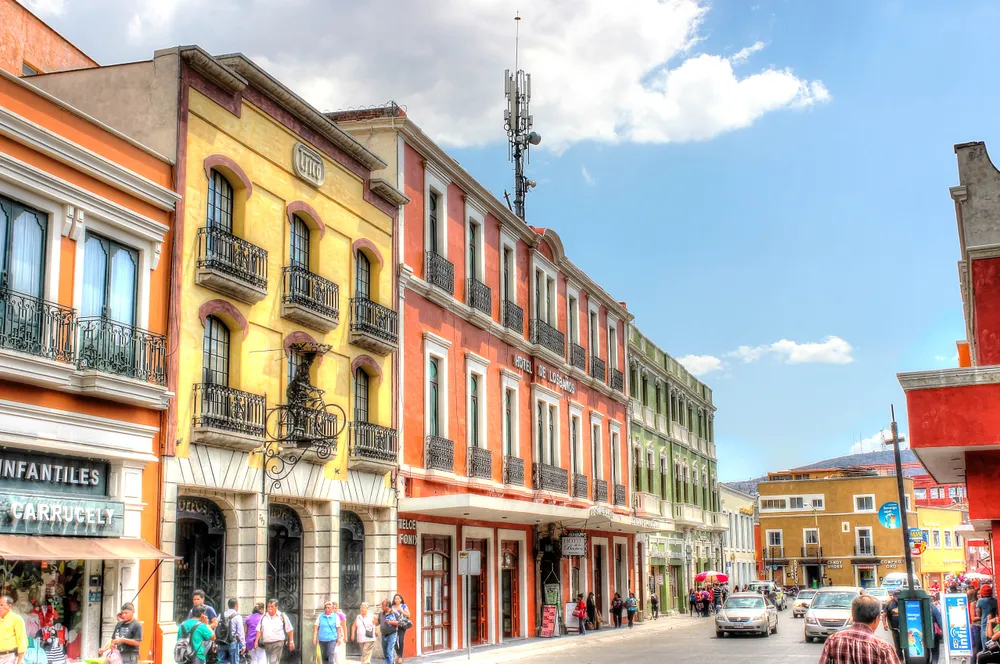
Pachuca (also known as Pachuca de Soto) is a city of almost 300,000 people (2020) in the state of Hidalgo, that draws visitors with its well-preserved historical center and mining heritage. Locals call Pachuca "La Bella Airosa" (The Beautiful Windy City). With its colonial Centro, a lively arts community, and nearby forests and mountains to attract nature lovers, there is much a visitor will find "beautiful". You'll have to trust in God to provide the wind.
Pachuca travel guide
Understand
The capital of Hidalgo State, its history is intrinsically entwined with mining since the Aztec days. After the conquista, the Spanish hired Cornish labor and innovation to help with further mining. But due to political instability and wild fluctuations in the price of precious metal values, Pachuca eventually diversified into other areas, including tourism. The city occupies a small valley and is almost completely surrounded by large hills, which are also covered in colorful houses. The city centre has maintained most of its colonial-era structures, with narrow winding streets. Away from the centre is the modern part of Pachuca, with warehouses, factories, supermarkets and a large football stadium called El Huracán (The Hurricane). In addition to its role as a regional center, Pachuca may be known to some as the site where much of Club de Cuervos (Club of Crows), a Netflix series, was shot. It is also fortunate to be close to a mountainous natural getaway known as Parque Nacional El Chico. Pachuca and nearby communities have an interesting and enduring English heritage, which started in 1824 when the Real del Monte Mining Company contracted with many miners in Cornwall to immigrate to Mexico and take on the project to re-open the flooded Real de Monte mine. The English influence can be seen in the architecture of some of their houses and especially in the Methodist church, which they established. The Cornish immigrants are credited with starting Mexico's oldest professional football (soccer) team, Pachuca Football Club (F.C. Pachuca) in 1892. They also introduced the local population to the epicurean delights of the Cornish pasty. Mexicans may have tweaked the recipe a bit over the years, but pastries (spelled paste in Pachuca) remain hugely popular, and are available everywhere. Historical travelers may want to visit the English Cemetery in Real del Monte, where many of the original Cornish immigrants were buried.
Getting there
By plane Pachuca is accessed by flights to Mexico City, Benito Juárez International Airport (MEX) has direct buses to Pachuca leaving every 30 minutes from Terminal 1; Felipe Angeles International Airport (NLU), known as AIFA, is the closest major airport if you are driving. Futura and ADO both operate buses from AIFA to Pachuca. A ticket for the 90-minute ride costs M$156 (April 2026). Depending on traffic conditions, it takes about 90 minutes to arrive at this town.
By carpooling You can have a look on Blablacar for shared rides. From Mexico City it's around M$70 (Jan 2022) and from Puebla approx. M$130 (Jan 2022).
By bus Pachuca is easy to reach by first class bus from several cities in the region, including from Mexico City's North station (Autobuses del Norte) and Puebla's CAPU station (~2 hr; M$200). From the bus station, take a taxi or one of the combi minivans (M$7.5) to get to the old city center. See also Bus travel in Mexico.
1 Central de Autobuses, Ex Hacienda de Coscotitlán. 24 hours. Very large regional hub bus terminal served by many bus lines with frequent arrivals and departures. The terminal is very clean and cavernous with large waiting areas and long lines of ticket counters. Restrooms cost M$10 (coins required to allow passage through gate). Many small shops and fast food counters including American fast-grease franchises. (updated Apr 2026)
By car Pachuca is about 90 km (56 miles) north of Mexico City. The road is flat with very few curves. Because it is a toll-highway, it's usually in good condition.
Getting around
Pachuca is a good size city so you'll want to use the taxis or public transportation to get around. Taxis are dependable and safe in Pachuca. Most hotels will call a radio taxi for you, if asked. Combis are the cheapest way to get around. Uber ride-hailing service has good coverage of the entire area.
By bus
There is local bus service operated by the city that covers major thoroughfares.
Tuzobús is a bus rapid transit (BRT) system. It is the primary way to move around the city center and to destinations to the north or south. Buses run in dedicated lanes and stop only at permanent stations. As of 2026 the 1-way fare is M$10 and must be paid using a prepaid Tuzocard (available in machines at stations). A Tuzobús app is available for both Apple iOS and Android phones, you can use it to view schedules and get system alerts. Peseros are smaller buses that operates routes through the neighborhoods, ending at a Tuzobus stop. The peseros are well-regulated and are integrated with Tuzobus system. Garzabus serves the State University of Hidalgo community with stops at ICA Tuzos, Ixo, and Colosio.
By combi Combis are small vans that drive along major roads, such as Blvrd. Felipe Angeles or Blvrd Marquez, and will pick up and drop off passengers anywhere along the route for a small fare (often M$10). Ask a local where the nearest combi route is and where it goes, or just look for a busy street and observe where the vans are stopping to pick up and drop off people. If you're not sure where the regular stops are, you can always just wave at an oncoming combi and the driver will stop (unless the van is already full; in which case he will pass you by). Combis have their destination (terminal point of their route) on a sign or painted on the front windshield.
See
1 Palacio del Gobierno del Estado de Hidalgo (State Capitol), Plaza Benito Juarez. M-F 08:30 - 16:00, Sa 09:00 - 14:00, closed Su. One of the smallest and least interesting of Mexico's state capitols. Built in 1970, the building is modern and sterile feeling with no historical exhibits. Tourists may want to see the exhibit of art works by state artists and can enquire about observing legislative sessions. (updated Apr 2026)
Monuments 2 Reloj Monumental de Pachuca (Monumental Clock Tower). A clock tower built in 1910 to commemorate the centennial of the independence of Mexico. It is situated in Plaza Independencia. (updated Oct 2020) 3 Cristo Rey. Large Jesus statue on a hilltop overlooking the city. Affords some fine views of the city if you walk around the terrace/stairwell. (updated Oct 2020)
Plazas 4 Plaza Juárez. Main square (err; zocalo) of Pachuca with a Benito Juarez statue in the center and the state capital building and municipal theater fringing its borders. (updated Oct 2020) 5 Pisal de Byron Gálvez (Parque David Ben Gurión). 08ː00-18ː00 daily. Outdoor plaza made up of pieced-together mosaics that you can walk upon. (updated Oct 2020)
Art 6 Macromural of Pachuca (Mural de Palmitas), Guadalupe 204, Las Palmitas (behind Sam's Club). A whole neighborhood draped in pastel colors. If you feel like you're suddenly in an Easter egg land, you're probably in the right spot. (updated Nov 2020)
7 Jardin de Arte, General Square, Calle Pedro Ma. Anaya 1, Centro. Urban sculpture garden provides a peaceful oasis next to the state capitol (Palacio de Gobierno Estatal). Lots of colorful murals. Tianguis are here on Saturday market days. (updated Oct 2024) 8 El Cuartel del Art
Overview adapted from Wikipedia, travel guide fromWikivoyage (CC BY-SA). Photography via Wikimedia Commons.