
Organ Pipe Cactus National Monument
United States · Americas
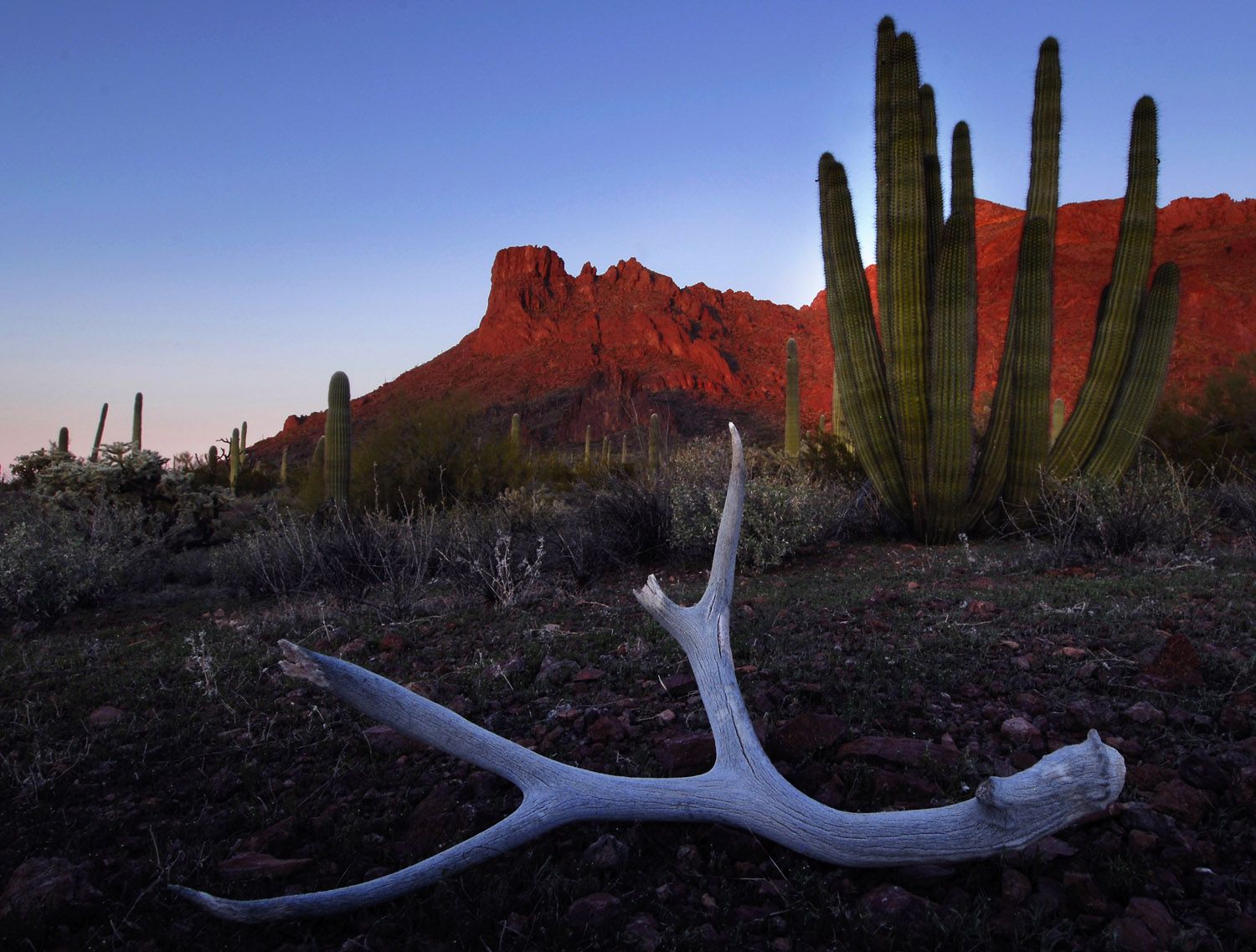
About Organ Pipe Cactus National Monument
Organ Pipe Cactus National Monument is a national monument and a UNESCO biosphere reserve in the Western region of Arizona, bordering Mexico.
Organ Pipe Cactus National Monument travel guide
Understand
More untouched and lush (for a desert that is) than more easily accessed American southwest desert parks, Organ Pipe Cactus National Monument was created to protect its namesake, the organ pipe cactus, the monument being the largest concentration of the plant in the United States. It is in the extreme southern portion of Arizona and borders along Sonora, Mexico. The visitor's center is less than 10 miles (16 km) from the Mexican border. The nearest large population centers are Tucson and Yuma, both over 150 miles (240 km) from the monument, though several small towns with gas stations, hotels, and groceries are near the NORTHERN borders of the park, and other towns near the southern edge, if you want to drive across the Mexican border (the single US highway into the park continues directly into Mexico). The monument is a through-route between Arizona and Puerto Peñasco (also known as Rocky Point) in Sonora, Mexico. Just 5 miles (8 km) south of the visitor center is the US Port of Entry in the town of Lukeville and the Mexican Border Customs in Sonoyta (Aduana Fronteriza de Sonoyta).
History
Landscape
Flora and fauna Though named for the Organ Pipe Cactus - the park has far more saguaro cactus than those of the organ pipe variety - in far higher concentrations than say - Saguaro Cactus National Park, also of Arizona. In essence, the park is a relatively lush and untouched American southwest desert environment, with a far higher concentration of cacti and other desert plants than perhaps anywhere else in the American southwest - with a decent and best in US, but not exactly overwhelming (this is the northern end of its range), number of organ pipe cacti interspersed.
Climate
Summer months are hot, with temperatures exceeding 100F. Winter months are milder, with temperatures in the 70s, with overnight lows in the 40s.
Visitor information Park website
Getting there
The only viable method to reach the park is via car. Arizona Highway 85 (AZ 85) leads from south into the monument from Interestate 8. There is no public transit into the monument. The nearest major airports are in Phoenix and Tucson, with some service in Yuma. There is a US Port of Entry at Lukeville, along AZ 85 at the US-Mexico border.
Getting around
There is no public transit in the monument. Private vehicles or hiking are the only options for getting around.
See
1 Kris Eggle Visitor Center, 10 Organ Pipe Drive. Daily 8:30AM-4:30PM. Kris Eggle Visitor Center includes an information desk, nature trail, exhibit hall, 15 minute film, and a bookstore. (updated Jul 2020)
Do
Evening programs, Twin Peaks Campground (amphitheater). Several evenings a week, talks are given at the campground on a wide variety of topics. Check with the Kris Eggle Visitor Center or the Twin Peaks Campground for dates and topics. Free. Patio talks, Kriss Eggle Visitor Center (on the back patio). Daily: 11AM, 1PM, and 3PM. 20-30 minute talks on a variety of topics related to the history, geology, plants, and animals of the monument. Check with the Visitor Center for topics. Free. Ajo Mountain Drive. A 21-mile drive through one of the most scenic areas of the park, into the hills and back down again. The road is mostly gravel or dirt, but is passable and often frequented by passenger cars. RVs 24 ft or longer are not recommended. Download the informative audio tour before you start. Ajo Mountain Van Tour (meet at the Twin Peaks Campground information kiosk). Dec-Apr daily at 1PM. Rangers provide a guided tour on the Ajo Mountain Drive, stopping at several areas along the way to get out and explore. The tour is limited to 10 people per day, so sign up in advance with rangers at the Kris Eggle Visitor Center or Twin Peaks Campground. 3-3.5 hours Free (reservations required). Biking. Bikes are allowed on all roads open to vehicular traffic but are not allowed on hiking trails or in the backcountry. Geocaching. Geocaching is a sort of scavenger hunt using a GPS receiver to locate the hidden item. Organ Pipe is one of the few units in the National Park system to allow this hobby. Two geocaches are listed as being in the monument. Guided Hikes. Ranger led walks around the monument. Check the Kris Eggle Visitor Center or the Twin Peaks Campground for dates and times. Free. Hiking. Trails range from short, handicapped accessible trails to long, wild trails into the hinterlands of the park. Remember that portions of the park are restricted so be sure to check with the Visitor Center for trail closures and before starting an off-trail hike. Below are a few o
Sleep
Lodging There is no lodging in the monument. Ajo and other smaller towns are within 30 minutes of the park.
Camping 1 Alamo Canyon Primitive Campground (Campground is located at the end of the Alamo Canyon Road. Road junction with Highway 85 is located halfway between milepost 65 and 66 on the eastern side of the highway. Road is suitable for all cars). 4 sites. All sites are first-come, first-serve. Primitive campground at the mouth of Alamo Canyon. Facilities include charcoal grills, tables, pit toilets, and trash cans; there is no water. Wood fires and ground fires are not allowed. No RVs, trailers or generators. $12 per night. (updated Aug 2022) 2 Twin Peaks campground (1.5 miles / 2.4 km from Kris Eggle Visitor Center and Highway 85). Check-in: Reservations required. 208 sites. Tents and RVs up to 40 ft, no hookups. Running water from standpipes and in restrooms. $20 per night. (updated Aug 2022)
Backcountry Due to border security concerns, the backcountry is closed indefinitely.
Go next
North: Cabeza Prieta National Wildlife Refuge – bordering on the north and west, provides a habitat for the Sonoran Desert wildlife. South, in Sonora, Mexico: El Pinacate y Gran Desierto de Altar – sister park to Organ Pipe Cactus National Monument.
Overview adapted from Wikipedia, travel guide fromWikivoyage (CC BY-SA). Photography via Wikimedia Commons.