
Ontario
Canada · Americas
About Ontario
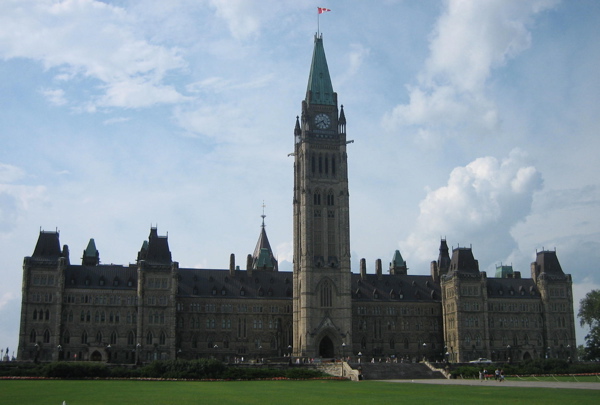
Ontario is Canada's second-largest province, and the most populous, with more than 14 million inhabitants. It is home to the Canadian capital city of Ottawa, and Toronto, which is Ontario's capital and Canada's largest city.
Stretching from the shores of Hudson Bay (an arm of the Arctic Ocean) in the north to four of the five Great Lakes in the South and from Manitoba in the west to Quebec in the east, Ontario is truly massive at over a million square kilometres (almost half a million square miles).
However most of that area is remote wilderness untouched by tourism, apart from camping, fishing, and hunting. Most visitors stay in the more densely populated southern part of the province which is at the same time a fertile farming region, Canada's main industrial area, and English Canada's political, media and cultural hub. The national capital, Ottawa, features numerous monuments and museums, of course. The pre-eminent urban region, however, is Greater Toronto, the seventh most populous metropolitan area in North America with more than six million people or almost half of all Ontarians. Here one finds the usual suite of amenities associated with big-city life but with the added twist that Ontario is one of the world's greatest magnets for international migration, drawing people from around the world in huge numbers since Canadian immigration laws were relaxed in the 1960s:
Ontario travel guide
Understand
In addition to being Canada's most populous province, Ontario is also a major tourist destination, especially around the Niagara Falls. More than 90% of the population resides in the four regions that make up Southern Ontario, which covers a much smaller land area than the expansive north, making them worlds apart in topography and local culture. Due to its massive size, Ontario can provide the visitor with access to Canada's most populous city, Toronto; the world's largest freshwater lake, Lake Superior; and even a polar bear park in the Subarctic. While English is the first language of most people, one will find historic French speakers and some signage in French, many other immigrant languages in the greater Toronto area, and First Nations peoples' native tongues still being spoken, though dwindling.
History Prior to the arrival of the Europeans, the region was inhabited by Algonquian (Ojibwe; Cree and Algonquin) in the northern/western portions, and Iroquois and Wyandot (Huron) people more in the south/east. The French explorer Étienne Brûlé explored part of the area in 1610–12. Samuel de Champlain reached Lake Huron in 1615, and French missionaries began to establish posts along the Great Lakes. The British established trading posts on Hudson Bay in the late 17th century and began a struggle for domination of Ontario with the French. After the French defeat during the Seven Years' War, nearly all of France's North American possessions were ceded to Britain in 1763, including most of what is now Ontario. The first big wave of European settlement occurred in 1782–1784 when 5,000 American loyalists arrived following the American Revolution. The British also set up reserves in Ontario for the Mohawks who had fought for the British and had lost their land in New York state. American troops in the War of 1812 invaded Upper Canada across the Niagara River and the Detroit River, but were defeated and pushed back by the British, Canadian fencibles and militias, and F
Getting there
By plane Most visitors arrive by way of Toronto Pearson International Airport (YYZ IATA) in Mississauga (just outside of Toronto). The airport is Canada's busiest and a major hub for most Canadian air carriers. If your destination is in Southern Ontario, you will likely pass through Pearson at some point. The airport is served by multiple daily flights from major Canadian and American cities, as well as nonstop flights to major European and East Asian cities. Pearson is a very expensive airport, however, so alternative airports in smaller cities (such as Hamilton; or even Buffalo across the border) are popular with travellers on a budget. For destinations in Eastern Ontario and the Ottawa Valley, flights from within Canada, from the United States, and the United Kingdom are also available to Ottawa. Many American hubs have daily direct flights into Ottawa. Montreal's Trudeau Airport is another option for Eastern Ontario, especially for destinations not served by Ottawa Airport; Montreal is just two hours away from Ottawa by road or train. Some carriers run their own buses; for example KLM sell an Amsterdam-Ottawa ticket that flies to Montreal then uses a bus the rest of the way. There are other buses direct from the airport. Via Rail's Dorval station is close to the airport and has trains to Ottawa, Cornwall, Kingston, Toronto and other Ontario towns. In Southern Ontario, there are airports at Windsor, Sarnia, London, Hamilton and Kingston that are served by Air Canada and/or WestJet to various Canadian destinations (but most commonly only to Toronto). There is also an airport at Kitchener that is served by WestJet to Calgary and Flair Airlines to domestic destinations. You could also land at Detroit Metro Airport just across the border from Windsor. If you plan to travel to Northwestern Ontario or the North of Superior region, then Thunder Bay International Airport is your best bet. Air Canada's direct flights include those from Toronto and Winnipeg, and WestJet
Getting around
By car Ontario is a large province and, as a result, the car is nearly always the most convenient way to explore it. If you are arriving by plane, cars are easily rented if you are over 23, but easiest if you are over 25 years of age. There is more to Ontario than Southern Ontario and Toronto (or Hamilton; or Niagara), and driving to and through the vast and varied regions of Ontario can be an adventure. Coming from the USA or other provinces, your options are numerous. In Northern Ontario, the car is a must if you wish to get from place to place. In most cases, you will be driving the Trans-Canada Highway (a cross-Canada network of highways; often offering more than one route), either on Highway 17 or Highway 11. Even by car, you will be unable to access the northern half of Ontario. Roads are the exception, not the rule, and you will rely on plane and train nearly anywhere north of Lake Nipigon. Speed limits are posted in metric. Roadways are usually in good condition. Ontario is unusual in that it has both numbered highways and named highways, and uses a number range to designate controlled-access highways, rather than a letter prefix. Controlled-access highways (numbered 400-427 and the Queen Elizabeth Way) have posted speeds of 100 or 110 km/h (62 or 68 mph). Other provincial highways (numbered 2-148) generally have posted speeds of 80 km/h (50 mph). You will likely find that the average speed of traffic exceeds these limits by 10-20 km/h when conditions are good, as drivers do not expect to receive a speeding ticket at those speeds. Fines for speeding escalate rapidly at higher speeds. Anyone caught exceeding the speed limit by 50 km/h or more, or making certain undesirable driving manoeuvres such as racing, preventing others from passing or rushing to turn left on a fresh green light before the oncoming lanes have moved, can be hit with an automatic fine between $2000 and $10,000, a seven-day licence suspension and a seven-day vehicle impound. On
See
Niagara Falls will be at the top of the list for many travellers. More water goes over the three falls here per minute than over any other falls in the world. The city of Niagara Falls has many other places of interest, from beautiful gardens, to butterfly conservatories to ticky-tacky tourist traps. The Niagara region is the most important of the Wine Regions of Ontario. Toronto is a busy, cosmopolitan, multicultural city with theatre, museums, galleries, shopping, professional sports, and restaurants offering the cuisines of the world (half of Torontonians were born outside of Canada). If the view from the observation deck of the CN Tower, which was the tallest tower in the world from 1975 to 2017, doesn't take your breath away, you can take a step outside (with a harness), and walk around the edge of the building 356 m above the city. Ottawa, Canada's capital city, is rich in historical buildings and museums, including the National Gallery of Canada, Canadian War Museum, and the
Overview adapted from Wikipedia, travel guide fromWikivoyage (CC BY-SA). Photography via Wikimedia Commons.