
Northern Virginia
United States · Americas
About Northern Virginia
Northern Virginia (or NoVA) is highly populated, and smashes most all stereotypes of Virginia, that one-time Southern state. Though much of it is considered a suburb of metropolitan Washington, D.C., the inner suburbs are really cities in their own right, with world class attractions and nightlife, and the ensuing sprawl is likewise dense with its own attractions and culinary gems.
Northern Virginia travel guide
Understand
Northern Virginia is emphasis on the Northern. No drawls here, the politics are liberal, and people aren't too sure what to make of grits. Actually, most Northern Virginians were born elsewhere, with nearly half of them either from a different country or born to immigrant parents. Outside the immigrant populations, which are fairly wealthy in their own right by any national standards, the native-born population is downright spectacularly wealthy. Polo shirts and khakis shorts rule, pearls adorn the night, mansions are so nouveau-riche (and prevalent), and world class golf is in every direction. Northern Virginia has always been closely tied with the nation's capital. This part of the state benefits from the history and the cultural aspects of Washington D.C., featuring famous museums, cemeteries, and the home of the first president of the United States. Arlington and Alexandria, in particular, are every bit as dense urban areas as D.C. — if not more so. Fairfax County is only slightly less dense, and, with over one million residents, is the most populous county in the state by far. Much of the northeastern corner of Virginia, aside from the cores of Arlington and Alexandria, was farmland for most of its history until the period immediately following World War II, when government employment increased and the population around Washington D.C. began to grow. The area experienced another explosion in growth due to tech industry jobs in the early 1990s. Today it remains one of the fastest growing areas of the country. While Northern Virginia continues to expand, the region ranges from crowded planned cities with excellent shopping to soccer-mom suburbia, from ethnic neighborhoods full of authentic restaurants to the upper-crust style of the Hunt Country.
Getting there
By plane
Washington Dulles International Airport (IAD IATA) Ronald Reagan Washington National Airport (DCA IATA) Leesburg Municipal Airport (charter and private planes only; no commercial service) Baltimore/Washington International Airport (BWI IATA) Northern Virginia has two big airports: Ronald Reagan National (DCA IATA) in Arlington, and Washington Dulles International (IAD IATA) in Sterling. Baltimore-Washington International (BWI IATA) is often cited as the area's third airport, but if you factor in the $100 (or more) cab ride, that Southwest Airlines flight isn't as good a deal as it seemed, right? Private and charter craft can also land at Leesburg Municipal.
By car A good long list of major interstates lead into Northern Virginia. I-495 (the Capital Beltway) and I-95 both lead into Arlington and Alexandria from Maryland, with I-395 being a special extension of I-95 at the Beltway into Washington, D.C. from the south. Some of the worst traffic in the region can be found along the I-95 corridor between Springfield and the Fredericksburg area. This is due to US-1 and I-95 both being major highways for East Coast travel through Virginia to Washington, DC and also the primary roads for travel around the area's suburban sprawl. Continuing south of Fredericksburg will take you to central Virginia, home to Richmond, the state capital. On the Maryland side of I-495, you can pick up I-95 north to Baltimore, Philadelphia, New York City, and Boston, or I-270 to I-70 to Pittsburgh and on to the Midwest. I-66 (paralleling US-50) comes in from the Shenandoah Valley via Front Royal, west of which it connects with I-81. Note the highway east of I-495 is HOV-2 (two people per car except motorcycles) only in the direction of rush hour, 6-9:30AM and 4-6:30PM. Traffic on all of these highways and many of the other arteries around them is very heavy during morning and afternoon rush hours (about 7-9:30AM and 3:30-7:30PM). Washington, DC area traffic is now considered the w
Getting around
Taking Metrorail might be a good option - there are many stations within the Beltway (near Washington; DC; in other words), including one that emerges right outside the Fashion Centre at Pentagon City. It is also the easiest way to enter Washington, DC. Most of the region is car-centric, so driving is often the only feasible option. However, if you wish to enter Washington, DC, or cross the Beltway in either direction, the traffic is awful. The highways (I-395; I-95; I-495; and I-66) are extremely backed up during rush hour. The "Mixing Bowl" (the intersection of I-395; I-95; and I-495 south of Washington; DC) is especially notorious. Attempting to travel by road between 2PM and 6PM on any weekday (and; for that matter; on a weekend) is an exercise in frustration. There are many regional bus systems in the area (most of which accept payment via SmarTrip) but using them is unlikely to be a fast way to reach your destination. Check using Google Maps or their websites. Some areas have Capital Bikeshare, the DC area's bike rental system.
See
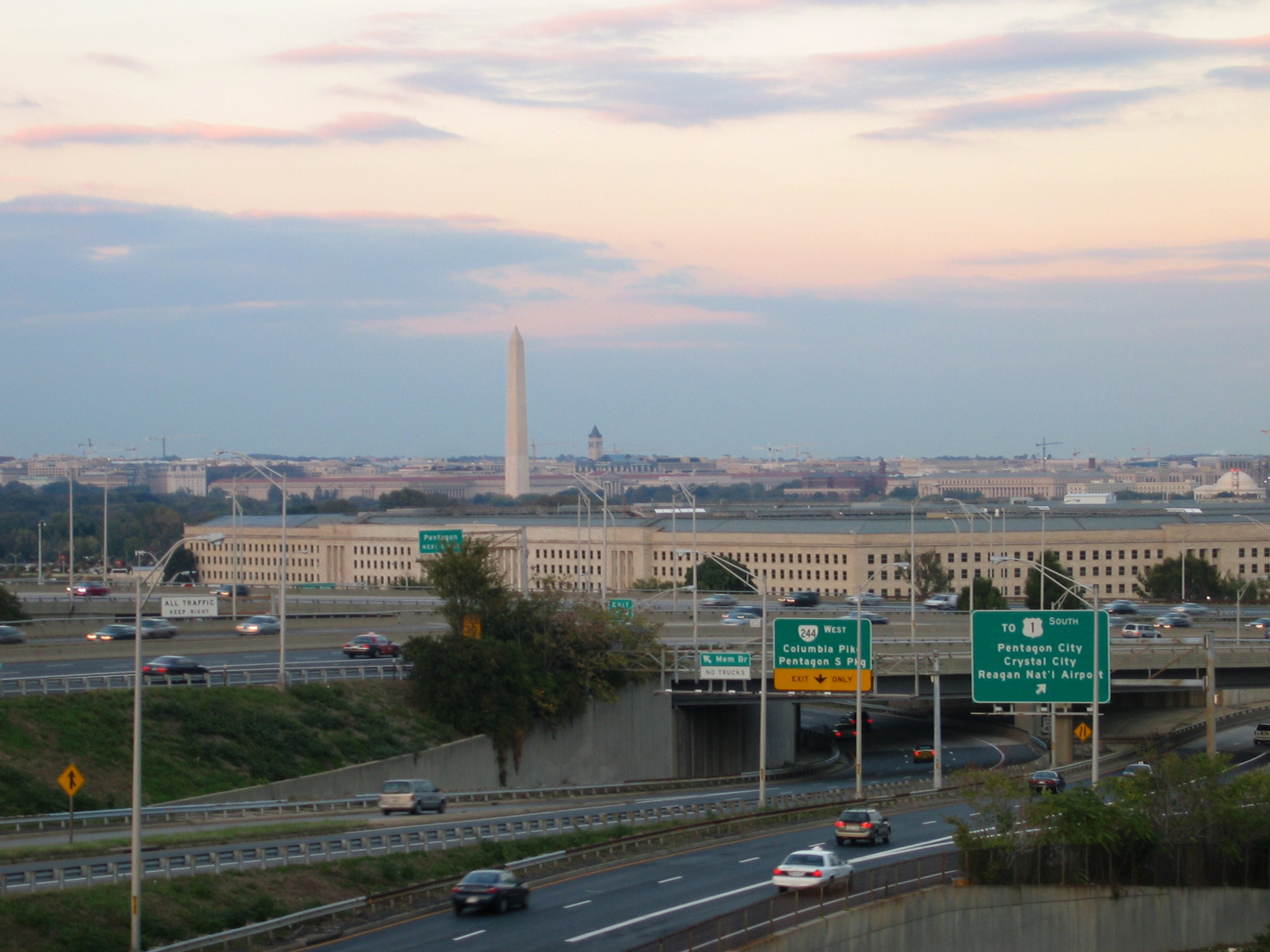
The Arlington National Cemetery in Arlington is a national military cemetery that includes John F. Kennedy's tomb and the house of General Robert E. Lee. Visitors can watch the changing of the guard ceremony in front of the Tomb of the Unknown Soldier. Old Town Alexandria in the independent City of Alexandria. This highly walkable Old Town at the edge of the Potomac River features historic buildings, churches, museums and art galleries, a farmers market, and a variety of places to eat and shop. George Washington lived in the Mount Vernon country estate in Fairfax County. National Rifle Association Museum and Headquarters in Fairfax. Museum and firearms range. The Pentagon in Arlington; just across the Potomac River from downtown DC. While lingering is not recommended for security reasons, you should know it is the largest office building in the world, and covers 4 zip codes. (Army; Navy; Air Force and Department of Defense.) Tours can be booked online, but they fill up fast and requirements are strict. Steven F. Udvar-Hazy Center — National Air and Space Museum in Chantilly houses many air/spacecraft, including the SR-71 "Blackbird" spy plane, the Concorde supersonic jet and the space shuttle "Enterprise". Manassas National Battlefield Park was the site of two major battles of the American Civil War, also known as the First and Second Battles of Bull Run. National Marine Corps Museum in Quantico is a fabulous museum, often and wrongly overlooked by those unaffiliated with the Marine Corps. National Museum of the United States Army in Fort Belvoir charts the history of the Army, from its beginnings as George Washington's Continental Army to a number of exhibits that showcase current technology and threats, such as cybersecurity and global cyberwarfare.
Do
Great Falls Park, in McLean. Gorgeous national park with waterfalls and hiking trails, minutes from the beltway. Kayaking and rock climbing. Going to the park after a large rain storm provides different views as the water levels can change drastically. There are many great trails in the region, such as the 45-mile-long Washington & Old Dominion trail.
Buy
Tysons Corner Center: is the D.C. are
Overview adapted from Wikipedia, travel guide fromWikivoyage (CC BY-SA). Photography via Wikimedia Commons.