
North Halmahera
Indonesia · Asia
About North Halmahera
The Maluku Islands, also known as the Moluccas or the Spice Islands, are a region of Indonesia lying between Sulawesi and Papua. They are divided into North Maluku Province and Maluku Province.
These are the famous Spice Islands, which drew Indian, Chinese, Arab and eventually European traders in search of cloves, nutmeg, mace and several other spices that were at the time grown only in these islands. For European traders, these spices were almost as precious as gold. Maluku was the first part of what is now Indonesia to be colonised by Europeans, first the Portuguese, then Spanish and finally the Dutch. As a result, many Moluccans have European names.
The islands are still somewhat off-the-beaten track for travelers. Because of their isolation and lack of infrastructure, some of the small islands are a hidden paradise. Transport can be frustrating, but the combination of pristine reefs, tropical beaches, forest-coated volcanoes, centuries-old forts and charming local culture make the effort worthwhile.
North Halmahera travel guide
Understand
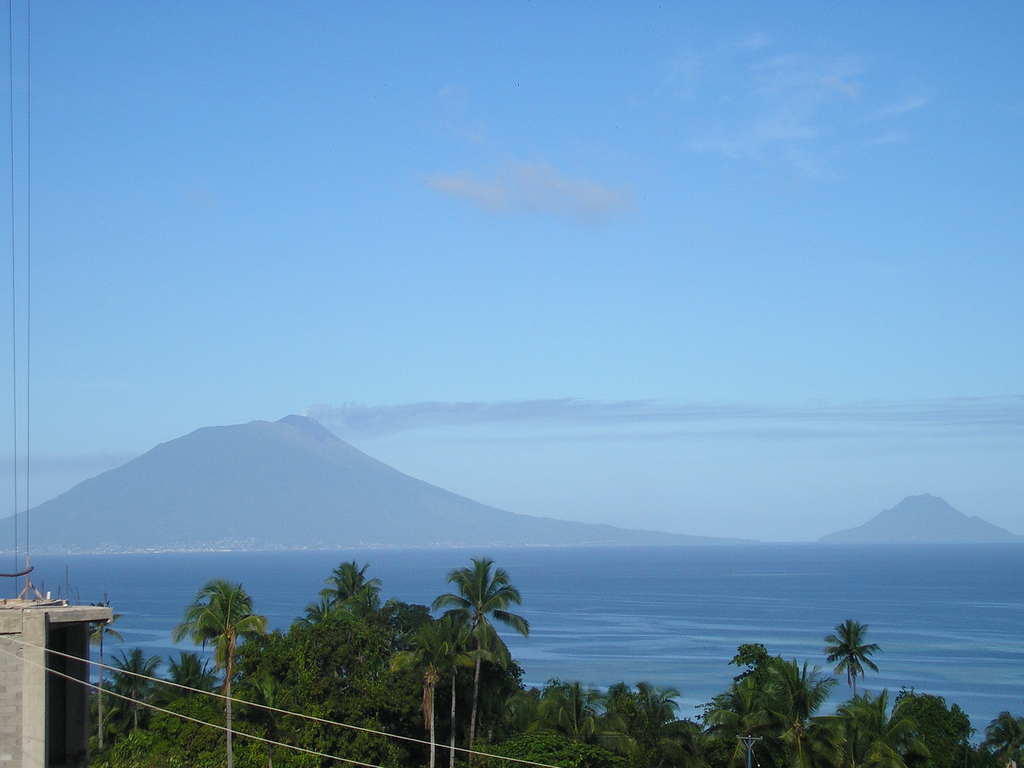
The 632 islands of Maluku are sprawled across a vast expanse of ocean, sitting astride one of the world’s most volatile volcanic belts. Maluku is blessed with incredible sea gardens, idyllic, tropical beaches and rugged, forest-coated volcanic mountains.
In 1511, the Portuguese built their first fort in the area on the island of Ternate, and cornered the clove trade. The Spanish tried to break the monopoly with Magellan's expedition of 1519, officially named Armada de Molucca. The Dutch, who arrived in 1599, mounted the first serious threat to Portuguese control of Maluku’s treasures. Armed conflicts broke out, taking a heavy toll from the islands' populations as well as the rival European powers. When the Dutch finally emerged as victors they enforced their trade monopoly with an iron fist. Whole villages were razed to the ground and thousands of islanders were massacred, especially on the island of Banda. The British briefly occupied Maluku during the Napoleonic Wars, but Dutch rule was restored in 1814 and it wasn’t until 1863 that the compulsory cultivation of spices was abolished in the province. Now fish and other sea products are Maluku’s major sources of revenue, but nickel, oil, manganese and various kinds of timber also contribute to the province’s wealth. The main gateway into Maluku is through the provincial capital Ambon, which is served by regular flights to most parts of the archipelago. Air and sea transportation connect the islands with 79 seaports and 25 airports. Roads on many of the islands provide access to the more remote places of interest.
Local people Prior to the inward migration of Austronesian peoples in the early twentieth century under the Dutch, the inhabitants of Maluku were Melanesian. That inward migration continues today, when Maluku is part of Indonesia. Christianity and Islam are the most common religions. Christianity arrived with the Portuguese and Spanish before Dutch colonisation. The Sultanate of Ternate and Tidore was i
Getting there
By plane The two main airports of Maluku are in Ternate (North Maluku) and in Ambon:
Sultan Baabullah Airport (TTE IATA) on the island of Ternate has regular flights from Manado, Makassar, and Jakarta. Pattimura Airport (AMQ IATA) on the island of Ambon has regular flights from Makassar and Jakarta, and also serves flights from several airports in Papua. Pitu Airport (OTI IATA) on the island of Morotai in the far north of Maluku is served by flights from Manado. Flights from Jakarta to Maluku are usually cheaper with a stopover in Makassar or Manado, rather than direct.
Also - Karel Sadsuitubun Airport (LUV IATA)
By ferry Several ports, such as Ambon, Banda Naira, Ternate, and Tual are served by either Indonesia's national ferry company PELNI, or private companies such as ASDP Indonesia Ferry. There are also smaller, more basic local boats to every significant island in southern Maluku province. The neighboring Lease Islands and Seram have frequent speedboat and ferry connections with Ambon.
Getting around
By boat Ferries connect major cities and islands in Maluku and are arguably the easiest way (but not the fastest) to travel across the archipelago. For example, a direct trip from Ambon to Ternate may take 18 hours. Other trips across the archipelago may take almost a day (For example; from Saumlaki to Banda Naira). Prices vary across the region and can be more than Rp200,000 for adults (For example; the Banda Naira-Tual-Dobo route).
By road Ambon and Seram island in particular has a decent network of roads reaching all of its villages. Buses, bemos and ojeks are the main forms of public transport, though taxis could also be hired. Other places may not have asphalted roads and therefore very hard to access.
See
Since Maluku is an archipelago, there are lots of white sand beaches and corals islands to explore. Some are locally famous, most are either hard to access or unheard of. Because of isolation and the lack of pollution in the region, a lot of them, if not all, are very pristine. This in turn preserves some of the world's last remaining coral reefs. But with tourism continue to develop in the region, there will be plenty of change in the future. Maluku's colonial history also left behind a large number of historical sites, from old forts to colonial buildings. Most are located in Ambon and Bandaneira, but other historical sites remain scattered throughout these little islands. Decades without any significant changes creates some of the best preserved colonial sites in Indonesia.
Beaches Sulamadaha Beach. Located in a village with the same name, Sulamadaha beach is unique because of its black-sanded beach with colourful reefs and clear ocean surrounding it. The price is Rp2,500 per person (as of 2014). It is about 14 km from Ternate city and can be reached from there by angkot or private vehicles in about 1 hour. Most people snorkel or dive here. In addition, visitors can also enjoy water games like Banana Boat. Everyone is charged Rp 35,000 to try this boat. Ora Beach. Located at the edge of Manusela National Park, Seram islands, it offers the chance of staying on top of the clear blue seawater. It's a bit like the Maldives or Bora Bora, but cheaper.
Historical sites and museums Fort Amsterdam. A fort and a blockhouse in Hila town of Ambon Island. The blockhouse was built in 1637 by the Dutch East Indies Company. Before the fort was built, a trading lodge was established here by Francisco Serrão in 1512, a Portuguese explorer and a cousin of Ferdinand Magellan. Fort Belgica. A heritage 17th-century Portuguese fort that was built atop a hill on the southwestern part of the island of Banda Neira, Maluku Tengah. The fort acted as a fortification system for the isla
Do
Diving and snorkeling in various spectacular spots with many corals and fish in Ambon, Banda Islands, and Ternate. Also, the wreck diving in Morotai Island. Mountaineering on Mount Api Banda, Mount Binaiya, and Mount Gamalama. Sun bathing on numerous white sand beaches on Kei Islands.
Eat
The Maluku islands cuisine is rich with seafood. Some dishes look like ordinary Indonesian dishes (with savory taste and a lot of spices), but some are quite unique both in taste and ingredients. An example of the latter is Sagu Woku Komo-Komo, made from sago and fish offal, which is said to taste better than it looks.
Seafood dishes such as the Gohu Ikan (also known among Mollucans as Ternate's sashimi), use more conventional ingredients. It is made out of fresh tuna combined with lemon juice, basil, coconut oil and mashed peanuts. Other seafood dishes include Ikan Kuah Pala Banda (slow-cooked fish soup with spices and a savory-sour taste), Ikan Komu Asar (smoked tuna; usually served with Colo-Colo Sambal), and Kohu-Kohu (a dish made from coconut; anchovies; long beans; and bean sprouts eaten with Kasbi or cassava). The staple food here, along with the rest of East Indonesia, is papeda or sago congee. It has a glue-like consistency and texture and is commonly eaten
Overview adapted from Wikipedia, travel guide fromWikivoyage (CC BY-SA). Photography via Wikimedia Commons.