
Nevis
Saint Kitts and Nevis · Americas
About Nevis
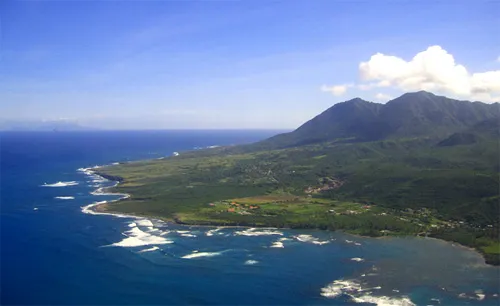
Nevis is the smaller of the two islands that make up the small Caribbean island nation, the Federation of Saint Kitts and Nevis. A former British colony, these islands became independent from Britain in 1983. St. Kitts and Nevis are separated by a 2-mile wide channel known as "The Narrows". Several ferries run every day between Charlestown, the capital of Nevis, and Basseterre, which is the capital of St. Kitts.
Nevis is not very commercially developed. It is still a very quiet and relaxing island, and a lot safer than many Caribbean islands. The local people who live on Nevis are kind and welcoming, but Nevisians who don't work with tourists on a regular basis tend to be shy at first. Nevis has one of the highest literacy rates in the world; education and religion are very important aspects of the islanders' lives.
Nevis travel guide
Understand
The people of Nevis who are not in the tourist business tend to be very shy, but are friendly and helpful once you get past the initial shyness, which can take some time. It is appropriate to greet everyone you pass or meet, saying either, "good morning," "good afternoon," or "good night" (which is said instead of "good evening.") Nevisians in general attend church regularly. Cursing in public is against the law. Provocative dress and rudeness are frowned on. Topless sunbathing is not allowed on the beaches of Nevis. Most non-tourist places on Nevis such as banks, grocery stores, and government offices will often have lines. Ferries frequently do not leave on time. Service in local restaurants can be very slow. Local people expect that you will not complain or show irritation about these delays, which are considered normal. Don't take photos of the local people or their houses without asking their permission first; this is considered to be very rude. Nevis was the birthplace and childhood home of Alexander Hamilton. It was also the place where Horatio Nelson was stationed as a young sea captain and where he met and married his wife, a young plantation widow, Fanny Nisbet. It is illegal to swear on Nevis Island.
History The first inhabitants in Nevis were Amerindians who reached Nevis over 2,000 year ago from what is now Venezuela. Christopher Columbus saw the island but did not land there. The island was given the name "Nuestra Senora de las Nieves", meaning "Our Lady of the Snows". Captain Barthemow Gilbert was the first recorded European visitor in 1603. In 1628, the British settled on Nevis. In 1629, the island was invaded and taken over by the Spanish. Eventually Nevis became a British colonial holding, valued for its very rich production of sugar, the whole island other than the steep slopes of Nevis Peak was all turned into sugar plantations. By the early 20th century, the sugar industry was going downhill, and eventually all of the sugar mills closed.
Getting there
By plane Coming in by air you may have to take two flights to get to Nevis. If you arrive from Europe or the USA, your first flight will take you to one of the Caribbean hubs, an island much larger than Nevis, such as Puerto Rico or maybe St. Maarten. Then you will get on a much smaller plane and fly over to the small airport on Nevis.
Vance W. Amory International Airport (NEV IATA). (updated Jan 2020) Some visitors can instead take a non-stop flight to the sister island of St. Kitts, and then a ferry or water taxi over to Nevis. If you are staying at a hotel in Nevis and arriving in St. Kitts, the hotel staff will make the necessary arrangements for you to get over from St. Kitts to Nevis.
By boat There are two main ways to get from St. Kitts to Nevis via ferry: car ferry and passenger-only ferry. If you decide you want to rent a car in St. Kitts, you can then take a car ferry over to Nevis. The car ferry is called the "Sea Bridge" and it also takes pedestrians. It leaves every 2 hours during the daytime from Majors Bay, at the extreme tip of the southeastern peninsula of St. Kitts. It is about a 25-minute (very hilly and very scenic) drive from the airport on St. Kitts to Majors Bay. The "Sea Bridge" takes about 15 minutes to cross over to Cades Bay on Nevis, a few miles north of Charlestown. If you don't want to rent a car in St. Kitts you can take a taxi to Majors Bay, get on the Sea Bridge and then get a taxi or bus once you are on Nevis. If you want to make things really easy, you can negotiate a taxi to take you all the way from the St. Kitts airport to Majors Bay and onto the "Sea Bridge" and off again, all the way to your destination in Nevis. The passenger ferries all leave from the port in Basseterre, St. Kitts (which is only a short distance from the airport) and arrive at the port in Charlestown, Nevis. They are mostly passenger ferries. Only the RO/RO ferry boat known as the "Sea Hustler" can carry vehicles. The ferries from Basseterre have to
Getting around
Taxis are vans that have yellow license plates that start with T or TA. They are large, efficient, clean, and the drivers are mostly very knowledgeable and friendly. Drivers can bring you to your destination and wait for you, or can come back and get you at your convenience. Although a bargain in terms of what you get (really more like a personal limo -- and the charge is the same no matter how many people are coming with you) -- taxis are relatively expensive in absolute amounts (USD10-20 is typical) to go even a rather short distance. And in general whenever you use a taxi, ask in advance how much the cost is going to be, and determine whether the amount quoted is in East Caribbean dollars or US dollars; there is a big difference because 1 US dollar equals 2.7 EC dollars! If you are only visiting Nevis for a day or two, it is well worth the cost to take a guided taxi tour of the island, which can last two or three hours according to what suits you. There is a ride-hailing app, "Drop SKN Ride", but it doesn't appear to work as of 2025. Buses on Nevis are vans with a lot of seats and a license plate which is green and starts with the letter H. The vans are privately owned, but government-registered. These buses are safe, cheap, extremely convenient, quite fast, and are a fun way to see a little of real life on Nevis. Everyone from old ladies to little kids will be getting on and off. Buses are extremely frequent during early morning and late afternoon, but are not as frequent in the middle of the day; they also do not run at all after about 9PM. A bus will pick you up anywhere on the main road and drop you off anywhere else on the main road, or even on a side street if you pay a little extra. The buses take people from point to point very inexpensively for around XCD3-5 (USD1-2; depending on how far you are going) per person. Buses generally make circuits on one part of the ring road (the road running around the island) with each van running back and forth on rough
See
The museums. There are three museums on Nevis: the Nelson Museum (closed since 2019), the Alexander Hamilton House (home to the Nevis Historical and Conservation Society), and the Sports Museum. There is also the Philatelic Bureau, of interest to stamp collectors. Hermitage Plantation in Saint John, has one building that was built of lignum vitae wood in 1640; this is the oldest surviving wooden house still in use in the Caribbean today. 1 Bath Hotel of 1778. Just outside Charlestown, this was the first hotel built in the Caribbean and may even be said to have started tourism in the Americas; it was a luxury hotel and spa. The soothing waters of the hotel's hot springs lured many famous Europeans, including the poet Samuel Taylor Coleridge, Antigua-based Vice Admiral Horatio Lord Nelson and Prince William Henry, Duke of Clarence, the future William IV of the United Kingdom. These luminaries attended balls and private parties at the hotel. The hotel's time of splendiferous entertainment and
Overview adapted from Wikipedia, travel guide fromWikivoyage (CC BY-SA). Photography via Wikimedia Commons.