
Negros
Philippines · Asia
About Negros
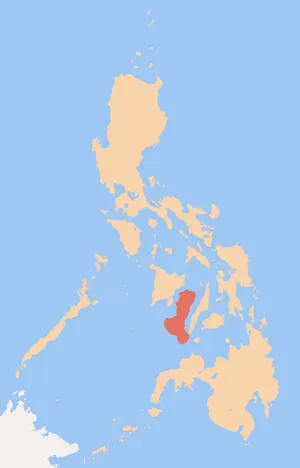
Negros is a large island in the Visayas, the island group that forms roughly the central third of the Philippines.
The island-region is known for being the main producer of sugar and organic products in the nation, and is home to many beaches and some nature reserves (some still rarely visited), as well as the tallest peak of the Visayas, the semi-active Kanlaon Volcano. In some cities and towns, especially in Bacolod and to the cities north of it, are several historic landmarks, such as ancestral houses once owned by prominent native families. In the south of the island is Dumaguete, a hip university city that attracts both locals and foreigners alike. Negros is also famous for its several native cultural events, the most popular being the MassKara Festival, which is annually celebrated every October. Negros is also known as one of the top culinary destinations of the Philippines because of its regional cuisine, which is famous for delectable desserts and delicacies and various other dishes.
Negros travel guide
Understand
Negros is the fourth-largest island in the Philippines and the second-largest in the Visayas at 13,309.60 km2 (5,138.87 sq mi). Both Luzon (main island of the north) and Mindanao (main island of the south) are much larger in both area and population. In terms of area, Negros is about the same size as Samar (the 3rd-largest) or Palawan (5th), but it has a larger population than either, with 4.4 million inhabitants as of the 2015 census, versus 1.9 million for Samar and 1.1 million for Palawan. Magellan was the original leader of the first expedition to circle the Earth, but he was killed in battle on Mactan Island in Cebu Province, leaving Elcano in command the rest of the way. The leaders had been promised an island each, and Elcano's heirs were given the hereditary title Margues de Buglas; "Buglas" is an ancient name for Negros. They later gave the island its present name "Negros", which is Spanish for "blacks", after seeing the island's dark-skinned native inhabitants. The name Buglas and the title, however, have survived into the modern era; the current Margues lives in Silay. For centuries, Negros has been an important center of sugar production and one of the country's most prosperous regions, hence its nickname the "Sugarbowl of the Philippines". Under colonial American administration, it was the only region where local government was fully run by the native Filipinos, rather than by colonial authorities. That government was dominated by a few wealthy Negrense families — mostly owners of sugarcane plantations, many with Spanish and/or Chinese ancestral ties. Those families are still influential today. Negros is also actively and progressively pursuing the goal of becoming the "Organic Food Bowl of Asia", thanks to its lush, fertile volcanic soil suitable for organic multi-crop agriculture.
Getting there
Bacolod and Dumaguete are the main transport hubs; each has an active airport and a seaport with many ferries. See those city articles for details. As of 2018, however, there are no international flights to the island, though Bacolod's airport can handle them and Dumaguete is building a new larger airport fit for international traffic, which will probably come into service in the late 2020s. The nearest major international airport is Cebu, but it is also common to reach the island via Manila or Clark airports. Iloilo airport is close but does not have many international flights.
Getting around
The vivid yellow Ceres buses (both air-conditioned and non air-conditioned) go to all of the cities and most towns on the island, and in some areas, jeepneys are also used between cities and towns near each other. Transport options within the cities and towns vary; jeepneys and taxis are common in Bacolod, but in Dumaguete, as well as many of the smaller places throughout Negros, it is all three-wheelers. See the city articles for more details. Vans for hire (V-hire) are faster and more frequent on popular routes such as Bacolod to Silay or Dumaguete to Dauin, departing when full rather than on fixed schedules. For those wanting to explore at their own pace, renting a scooter or hiring a private driver opens up the interior roads and coastal routes that public transport doesn't serve well. See Driving in the Philippines. The island has several scenic drive corridors passing through sugarcane plains, mountain foothills and coastal stretches that reward slower travel, see the interactive map. Roads vary considerably in quality — main highways are generally good but mountain and barangay roads can be rough, particularly after rain.
See
Negros rewards slower exploration rather than a checklist approach. The island's most visible landmark is Kanlaon Volcano, the highest peak in the Visayas and visible from much of northern Negros Occidental. It remains semi-active and is popular with experienced hikers, though eruption alerts periodically close access. Silay City north of Bacolod is the island's heritage centre, with around 30 ancestral houses from the sugar boom era still standing. The most visited is Balay Negrense, a restored nineteenth century mansion that gives a clear picture of how wealthy sugar families lived. The city has a walkable heritage district worth at least half a day. The Balinsasayao Twin Lakes Natural Park in Negros Oriental offers one of the island's quieter nature experiences, two crater lakes accessible by road from Dumaguete, surrounded by forest with resident wildlife. Apo Island off the southeastern coast near Dauin is a well established marine reserve and one of the better diving and snorkelling destinations in the Visayas. Waterfalls are scattered across both provinces, with Casaroro Falls in Valencia among the most visited. Many lesser known falls are accessible but require local guidance, particularly after rain when trails become difficult. The MassKara Festival in Bacolod each October is the island's largest cultural event, drawing visitors from across the Philippines. The Buglasan Festival in Dumaguete runs at a similar time and is a quieter alternative with strong local participation.
Do
Diving and snorkelling around Apo Island and the Dauin marine sanctuary are among the most popular activities on the island. The waters off the southeast coast are consistently rated among the best in the Philippines for reef health and visibility. Several dive operators are based in Dauin. Whale and dolphin watching is centred on Bais City, where boats go out into the Tañon Strait. Spinner dolphins are commonly seen and whale sightings occur regularly. Trips are best arranged through the local cooperative rather than through hotel operators. Mountain hiking on Kanlaon and the surrounding peaks attracts serious climbers, while the i
Eat
Negros has a strong claim as the culinary heart of the Philippines, shaped by centuries of sugar culture and some of the most fertile volcanic soil in the archipelago. Bacolod is the island's food capital, best known for chicken inasal — charcoal-grilled marinated chicken eaten with rice and local vinegar — and napoleones, a sweet layered pastry that has become one of the island's most recognisable exports. The real eating on Negros happens in carinderias, small local eateries where the day's dishes are cooked fresh each morning and served until they run out. Menus follow what is available and in season, which changes by town and by day. Rice is not a side dish here — it is the meal, with everything else built around it. Morning markets are worth an early start. Most serious food shopping is done before 9am and the best produce, fish and street food goes quickly. Wandering a market before breakfast is one of the better ways to understand how the island actually eats. The island is also a growing centre for organic agriculture and slow food, with Negros actively positioning itself as the organic food bowl of Asia. This is less a restaurant trend than a reflection of how food has always worked here — short supply chains, seasonal availability, and cooking close to the source.
Overview adapted from Wikipedia, travel guide fromWikivoyage (CC BY-SA). Photography via Wikimedia Commons.