
Nazareth
Israel · Asia
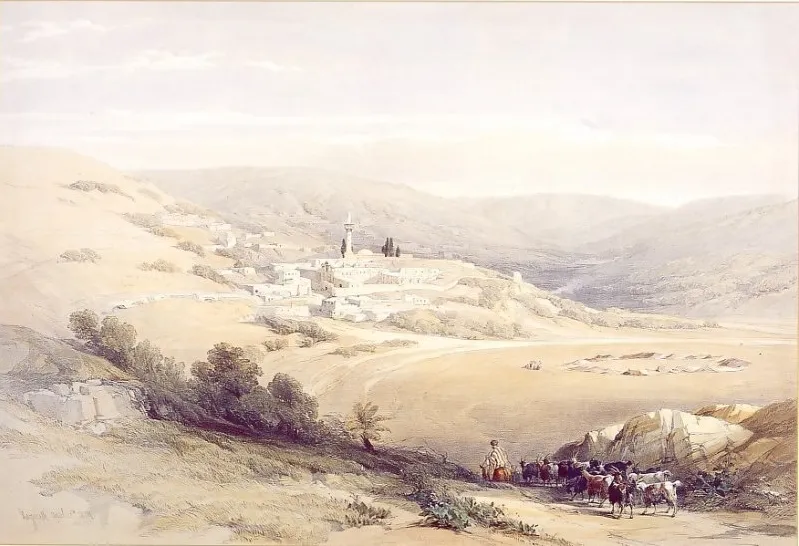
About Nazareth
Nazareth (Arabic الناصرة an-Nāṣirah, Hebrew נצרת Nasarat) is a city in northern Israel. It is the largest Arab city in Israel proper, having a population of 60,000, a harmonious mix of Muslims (70%) and Christians (about 30%).
Nazareth travel guide
Understand
Nazareth is best known as the home of Joseph and Mary and hence also Jesus, although the New Testament states that he was born in Bethlehem.
A number of Christian holy places in Nazareth are associated with the Annunciation, the childhood and the early ministry of Jesus. In addition to the imposing Basilica of the Annunciation, these sites include the Greek Orthodox Church of the Archangel Gabriel (built over the freshwater spring known as "Mary’s Well"), the Greek Catholic "Synagogue Church" (assumed site of the synagogue where the young Jesus was taught; and where he later read from Isaiah), and the Franciscan Church of St. Joseph (built over a cave identified since the 17th century as the "workshop" of Joseph). As the place where Jesus grew up, studied and lived most of his life (and regarded by most historians to be his likely historical birthplace), Nazareth has for 2,000 years been closely identified with Christianity and has attracted hundreds of millions of pilgrims from around the world. Nazareth is also Israel’s largest Arab city and as such serves as a major cultural center. Over the past decade the historical Old City has been extensively renovated, preserving and restoring the architectural beauty and unique character of its narrow lanes and alleys. The combination of these three elements – history, culture and architecture – assures the Old City of Nazareth a place among the most beautiful historical destinations in the world. Nazareth is bordered by the predominantly Jewish city of Nof HaGalil.
Getting there
By bus The main bus route is bus 331 from Haifa. It runs along the main street of Nazareth and its station is very close to The Basilica of the Annunciation. Half of its trips depart and end in Downtown Haifa. And Half from HaMifratz central bus station at the eastern entrance of Haifa. It runs every 15 minutes on average. And it works continuously even on Saturdays. Unlike most public transportation in Israel. So unlike most Israeli cities, you can visit it on Saturday by public transportation from another city. From Jerusalem to the center of Nazareth, bus 955 arrives 5 times a day. Another option is buses that stop at the entrance to the city. In a large traffic circle about 800 meters from The Basilica of the Annunciation: Bus 833 from Tel Aviv (runs every hour), bus 431 runs every hour from Tiberias, and bus 353 from Acre (runes every hour). There is also a bus from/to Amman operated by Nazarene four times per week, departing Nazareth at 08:30, and costing ₪80. The same bus leaves Amman again at 14:00. Call +972 4 601 0458 to make sure it's operating and if there are free spots.
From the West Bank From Jenin (also applicable to Nablus and Ramallah): Take a shared taxi (sherut/serviis) or hitchhike to the border, and cross on foot. From the Israeli side of the border, taxis to Nazareth cost ₪150 and to Afula ₪40-50. Alternatively, you can take bus 52 from the roundabout after the border into Afula (₪7.40). And a bus from Afula to Nazareth is ₪10.90.
By car Nazareth is 102 km from Tel Aviv and 131km from Jerusalem.
By hiking Nazareth is on a sort of plateau overlooking the Jezreel Valley, and it can be fun to hike up the edge of this plateau via 1 Mount Tabor. Take the bus to Gazit Junction ("Tzomet Gazit"). From Afula you can take bus routes 30, 541, and 542 (25 min ride). From Tiberias you can take the 541 (35 min ride) or 30 (65 min). The climb up Mt Tabor takes an hour, and there you can see the (by its sheer size) impressive and beautiful Church o
Getting around
Prepare for some of the area's worst driving. Traffic is typically on the heavy side, roads are not well-signed nor well-maintained, and parking is rather haphazard. Beware of sharp switchbacks and small, winding roads with no exit—these are cramped, crazy streets. Driving in this town is doable, but for the brave of heart. GPS is a must, but not entirely trustworthy. Central Nazareth can be easily covered on foot.
By bus
See
Prominent Christian sites
2 The Basilica of the Annunciation. M-Sa 08:30-23:45 & 14:00-17:50; Su and feasts 14:00-17:30. Winter, M-Sa 09:00-11:45 & 14:00-16:30; Su and feasts 14:00-16:30. built above the sunken grotto which according to the Roman Catholic faith was the home of the Virgin Mary and the place where she received the Annunciation (the announcement of the imminent birth of Jesus). The large and impressive modern-day church is built above the remains of churches dating back to Crusader and Byzantine times, still visible on the lower level. The church boasts dozens of pictures donated by Christian communities around the world. The largest Church in the Middle East and one of Christianity’s holiest shrines, its imposing dome dominates the Nazareth skyline and is an ideal landmark and starting point for visiting other churches. It marks the spot where the Archangel Gabriel Informed the Virgin Mary that God had chosen her to bear his son; there is also a tradition that Mary lived in a house on this site. The complex of the modern Basilica is built on two levels. The lower one, marking the traditional Roman Catholic site of the Annunciation, contains ancient remains of churches from the Byzantiane and Crusader eras. During archaeological excavations, relics were found dating back to the Canaanite settlement of Nazareth, though the most interesting find was of a typical Nazarene house, hewn out of the rock, from the Roman Period. The upper level, built between 1959 and 1969 on the site of an 18th-century church, is in strikingly modern architectural style. With its stained- glass windows highlighted against bare stone.A garden and courtyard connect the Basilica to St. Joseph’s Church and Workshop. Admission to the Basilica is free. 3 Greek Orthodox Church of the Annunciation. Built above a spring believed to be the source of a well where Mary drew water each day. This is the site where the Greek Orthodox tradition maintains that the Angel Gabriel revealed to
Do
Walking Tour of the Old City (duration 3 hours). The route begins at the Mary’s Well Square (ample parking nearby). Visit the well area (el-Sabil). Opposite is the ancient bath house, also well worth a visit (entrance fee payable), including the pleasant souvenir shop Cactus and a guided tour followed by hot and cold drinks. The remains discovered beneath the shop are believed to date back to the early Roman era – the time of Jesus. From here continue to the nearby square to visit the famous Greek Orthodox St. Gabriel’s Church. This is the site at which, according to Greek Orthodox belief, Mary received the Annunciation from the Angel Gabriel. On exiting the church, walk along the Pilgrim’s Path towards the Municipality and the Mascobia building – an impressive project built in 1904 as a hospice for Russian pilgrims. Further along the Pilgrim’s Path, on Street 6098 (most of Nazareth’s streets are known by numbers rather than names), you reach Bishop’s Square. On the right is the Greek Orthodox Bishopric, a white building
Overview adapted from Wikipedia, travel guide fromWikivoyage (CC BY-SA). Photography via Wikimedia Commons.