
Namche Bazaar
Nepal · Asia
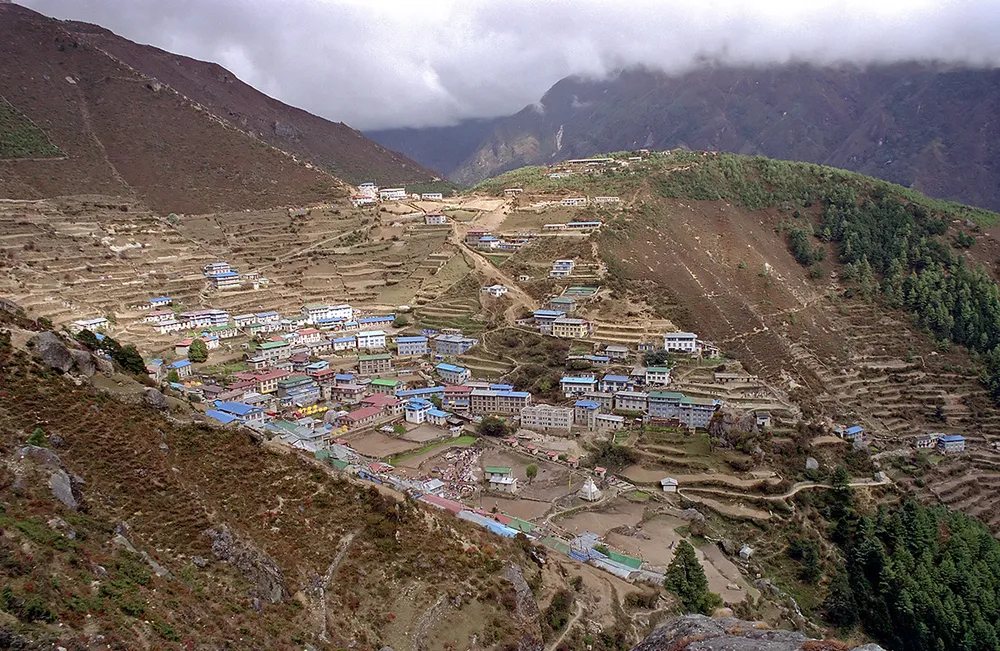
About Namche Bazaar
Namche Bazaar (3440 m) is the unofficial capital of the Khumbu region of Nepal, and is a major stop-off point for trekkers and climbers heading for Mount Everest base camp.
Namche Bazaar travel guide
Understand
The village is located on crescent shaped mountain slopes that offer stunning views of the mountains across the valley. It is a grueling 3 to 4 hour climb up from the river to Namche, and at 3,500 m, it is possible to suffer altitude sickness here. Therefore, it is advisable to spend at least two nights in the village to acclimatize. Traditionally the village was a trading post, with locals bartering yak cheese and butter for agricultural goods grown at lower altitudes. However, after Sir Edmund Hillary and Tenzing Norgay's successful climb of Everest in 1953, the dynamics of the village changed forever as climbers and trekkers soon followed in their wake. At first the groups came in a trickle, but in the 1960s and 1970s this turned into a torrent, and being located at a confluence of trekking trails, Namche was best served to meet their needs. In addition, as Namche is the first place on the Khumbu trek that is above altitude sickness threshold, most travelers prefer to spend at least two nights here in order to acclimatize. Still, despite the village's popularity with trekkers, geographical restraints have contained its growth, and it remains a small settlement with no more than 60 dwellings. Namche has prospered from the tourist trade, and according to government statistics it is the wealthiest district in Nepal, with 7 times the average national income and twice that of the capital, Kathmandu. In addition to an abundance of hotels, the village also boasts three small museums, a stupa, monastery, several cafes (locally known as bakeries) and many well stocked stores. Namche has several official money changing facilities, and as it is the only place in the region to offer this service (besides Lukla), visitors should ensure that they have sufficient cash for the remainder of their journey before leaving the village. The rate of exchange in Namche is much lower than in Kathmandu, and so it is advised to only use the facilities in Khumbu as a last resort or for chan
Getting there
The trek from Lukla to Namche can be done in one full day, but unless you are experienced at trekking at high altitude and extremely fit, taking two days over the journey is strongly recommended. Many people who rush to Namche suffer altitude sickness and have to be brought down again the following day.
Although expensive, it is also possible to charter a helicopter between Lukla or Kathmandu and Namche.
Getting around
There is only one way to move around in Khumbu: on foot.
See
Sagarmatha National Park Visitor's Centre, located at the top end of the village off the Tengboche trail (right side of village when looking up). Offers information on the wildlife of the area. There are some interesting photographs. Museum of Sherpa Life, located above the village off the Tengboche trail. An introduction to Sherpa culture and the fauna and flora of the region. Museum of local medicinal plants and Tibetan herbal medicine at the Healing Centre (see the Stay healthy section). Offers an introduction into the world of Tibetan medicine through posters and artifacts. It also has a small gift shop, the profit from which help maintain the clinic upstairs. Namche Monastery, located off the Thame trail (left side of village when looking up). A small monastery in the Nyingma tradition of Tibetan Buddhism. It has pleasant courtyard and some traditional frescoes on wall of the main shrine.
Do
Namche market. As the name of the village suggests, Namche Bazaar has a market. Every Friday and Saturday morning, Sherpas from the surrounding valleys spread out their agricultural products and electronic goods carried from Kathmandu on land above the main path into town. While the goods themselves may not be interesting to tourists, the market itself is certainly worth wandering around and is a good place to get some souvenir shots of "Khumbu life". Check out the yak "parking area" above the market, although don't get too close as yaks are notoriously ill-tempered. Dumjee Festival. In June (lunar calendar fifth month 9-17), Namche holds an annual festival called dumjee (actually all the villages in Khumbu celebrate this event, but the festivities in Namche are the most impressive). The festival celebrates the achievements of a highly respected Sherpa lama, and while the first few days are rather subdued with just local families visiting each other for food and entertainment, the final few days are a boistorous affair held at the Namche Monastery. The ceremonies are presided over by the incarnate lama of Tengboche Monastery and include lama dances, traditional Sherpa dances and an initiation ceremony.
Buy
Handicrafts. The main street into the village is lined with Tibetan run handicraft stalls and stores. Most of the goods are available in Kathmandu, but certain woolen items are made locally. Also, check for anything special that has been carried over from Tibet. There are tailors in the centre of town, across from the Liquid Bar, and up by the Sherpa Market (right side as you face the horseshoe). Books. New and second hand books are available at several places, and a store with one of the best selections is located in front of Namche Hotel. Necessities. Namche has some well stocked, albeit a little expensive, stores selling such things as batteries, basic medicine (throat lozenges, aspirin etc.), toiletries, sun block and trekking clothing/equipment. These items (except for the trekking equipment) are available further up the trail, but the variety is far less and the prices much higher. And take care when buying trekking equipment anywhere in Nepal as, if not purchased within a genuine brand branch shop then you are almost guaranteed to buy a knock-off. Prices for genuine branded equipment will not be significantly cheaper than prices in your home country. Do not expect knock-offs to last longer than one expedition.
Eat
Namche is really geared for the ravenous tourist, and offers all kinds of delights. Namche's bakeries are quite famous in Nepal and, considering that the town is a six-day walk from the nearest road, they produce some amazing pastries. None of the bakeries are open during the tourist "off-season" from June until September. All the hotels have dining facilities open to non-residents. During the off-season, not every hotel in Namche remains open.
Herman Helmers Bakery, on the main street into town, next to Hotel Namche, has great apple pie, chocolate cake and freshly baked pizzas. Namche Bakery, down from the main intersection. Freshly made pizza and delicious coffee. Traditional Sherpa dishes include:
Rigi kur - potato pancakes, which are delicious eaten directly off the griddle and covered with dzo (yak) butter and a sauce made of mature cheese and spices called sorma. Due to the effort involved in making rigi kur, they are generally not listed on lodge menus. However, most places will oblige if you order well in advance. Tzen - a heavy pâté made from millet and flavoured with spices. "Thukpa" - Noodles with soup. Perfect for a cold day. "Nak cheese"
Overview adapted from Wikipedia, travel guide fromWikivoyage (CC BY-SA). Photography via Wikimedia Commons.