
Muş
Turkey · Asia
About Muş
Muş is a city in the Eastern Anatolia mountains of Turkey, with a population of 117,000 in 2022. It's the seat of the province of Muş, with a total population of 400,000.
Muş travel guide
Understand
Lynch described an area where more than half the people were Armenians, Christian artisans and craftsmen who ran small businesses. The other 40% or so were ethnic Kurds or Turks, Muslim peasant farmers, busy enough in season but perforce idle at other times. And among the many conflicts that have tormented Anatolia, it is this divide that most resonates with visitors, not least for the official silence that cloaks it.
"Turkification" of Anatolia began here, when the Roman eastern empire based in Byzantium / Constantinople was defeated at Manzikert in 1070 AD. Their conquerors the Seljuks created a dynasty that ruled until the 13th century, but never captured Constantinople. That was achieved by the Ottomans in 1453, and they built a sprawling empire. By the late 19th century this was in terminal decline, though propped up by Western powers as a bulwark against Russian expansion. Ethnic conflicts broke out in many places: further west this was mostly Turks versus Greeks, but in the east the Armenians bore the brunt. This culminated in the Hamidian massacres of 1894-96, when between 100,000 and 300,00 Armenians were slaughtered. Western protests stemmed the killings but there was no stronger action against the Ottomans, or reparations. In 1915 Turkey was embroiled in the First World War and believed that the Armenians were seeking a breakaway state with Russian connivance. This was pretext enough for a genocide in which a million Armenian men were killed, plus many women and children, and those who survived were forced to convert to Islam. The post-war Turkish republic washed its hands of all crimes of the Ottomans yet has shown a curious reticence over the very worst. The Armenians fled to Beirut and Egypt, to the West and to the Armenian USSR satellite state, and never returned here.
Getting there
By plane 1 Muş Sultan Alparslan Airport (MSR IATA) has regular flights from Istanbul (both IST and SAW), Ankara, Izmir and Antalya. It's 18 km east of city centre and has car hire.
By road Highway D300 transects Turkey from Izmir on the Aegean coast via Konya, Kayseri, Malatya, Muş and Van right up to the border with Iran. It's a good fast highway, mostly undivided, but priority for the snowplows in winter. From Ankara take O-21 south (toll) then join D300 towards Kayseri. You could also take D200 / E88 east past Sivas and Erzincan.
By bus Buses run several times a day from Ankara (15 hours) and Istanbul (20 hours). From Adana change at Osmaniye for the bus from Hatay through Gaziantep, Şanliurfa, Diyarbakır and Batman. Frequent dolmuşes ply the highway between Elazığ, Muş, Tatvan and Van. Bus lines include Metroturizm, Van Yolu and Kamil Koç, now part of Flixbus. 2 Muş Bus Station is on D300 5 km north of city centre. Dolmuşes take you downtown.
By train Vangölü Ekspresi winds through the mountains twice a week from Ankara, scheduled to take 24 hours but often long delayed. There are couchettes and a sleeping car and a buffet with breakfast and snacks. The main stops are Kayseri, Sivas, Malatya and Elazığ, see TCDD for timetables and tickets. It continues to Tatvan (another 2 hours) where it connects with the ferry across the lake to Van, for the train to Tabriz and Teheran. A regional train from Elazığ runs four days a week, taking 4 hr 45 min and continuing to Tatvan. 3 Muş Tren Garı the railway station is 1.5 km north of the D300 junction. It's under repair in 2025.
Getting around
Taxis and buses serve the main thoroughfares, but you need your own wheels to explore this rugged province.
See
Town and nearby
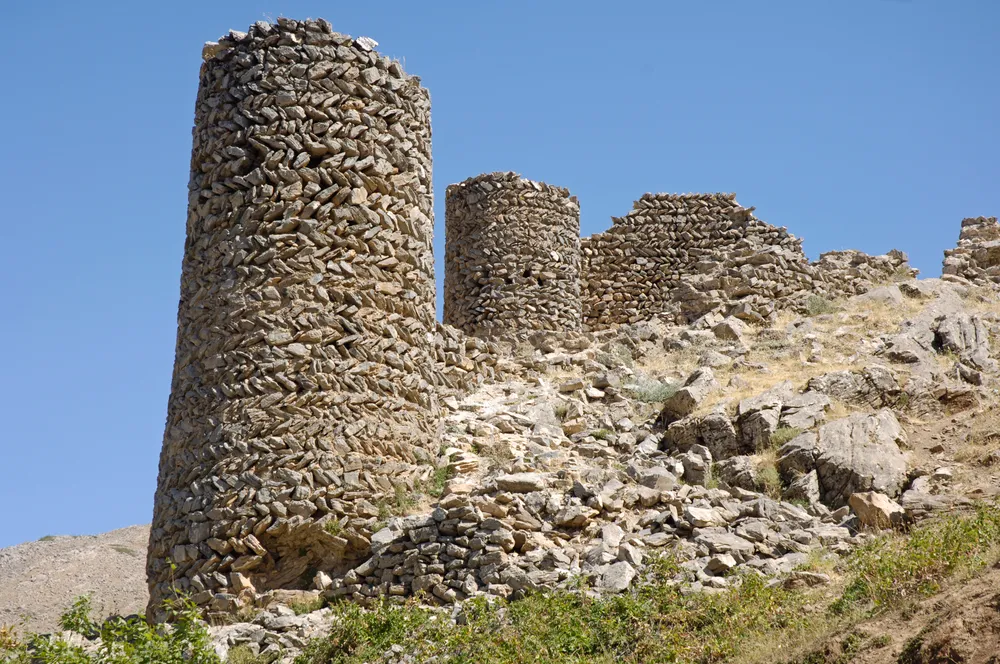
1 Grand Mosque, 3rd Sk 14. This was first built as an Armenian church in 979 AD, but re-built as a mosque in the 14th century. (updated Nov 2025) Hacı Şeref Mosque is on Gazi Cd 50 m east of Grand Mosque. It was built late 17th century as part of the older Aslanlı Han, with the minaret added in 1902. Yıldızlı Han is a traditional inn on Demirciler Sk just north of Hacı Şeref Mosque. It's been renovated into cafes and shops. Alaaddin Bey Mosque is north of Yıldızlı Han on Bitlis Cd. It's 18th century and named for the city governor. The minaret is in striking two-tone stone. Surp Marineh Church or St Mary's (Սուրբ Մարինէ եկեղեցի) is 100 m south of Grand Mosque on Fabrika Cd. Founded in the 6th century, it was the largest of 8 Armenian churches in town and had cathedral status. It was wrecked and its community massacred in the genocide of 1915, and only a few walls remain. 2 Muş Castle is now a park with cafes and a few ramparts to enhance the view over town. 3 Haspet Castle. 24 hours. Scrappy ruin of a castle of unknown date, you mostly come for the view. The access lane is rough and narrow, park near the prison and hike. Free. (updated Nov 2025) Muş Plain is the patchwork of fields stretching north of town: any high point will command a view. In May it's carpeted red with poppies. 4 Arakelots Monastery (Մշո Սուրբ Առաքելոց վանք) was founded in the 11th century, and wrecked and abandoned during the genocide. Only fragments remain as the ruin was blown up in the 1960s. Hike up the poor road from Kepenek village.
Further out
5 Murat Bridge is an elegant ten-arched bridge that may be 13th century; it was restored in the 19th and 21st. It's 15 km north of town along D300 / D955 and is now pedestrian-only. 6 Yukarıyongalı is a village 30 km west of Muş, on the site of the former monastery of Surb Karapet (Մշո Սուրբ Կարապետ վանք). Founded in maybe the 9th century, Surb Karapet means "Holy Predecessor" - John the Baptist - because of a legend that his
Do
Hamams are traditional Turkish baths. There's one on Karasu Cd near Grand Mosque. Bird-watching: watch for demoiselle cranes (Grus virgo; known locally as "telli turna") and hear their distinctive melodic song in March-April along the Murat River. 1 Muş ski resort (Muş kayak merkezi). This small ski area has good snow but the piste is too steep for most, uplift is inadequate and organisation is shambolic. (updated Nov 2025) Climbing and trekking: plenty of mountains. Tulip Festival is held at the end of April.
Buy
Lots of small supermarkets, typically open daily 09:00-22:00. Ceylan AVM is a shopping mall on Atatürk Blv between Dap and Sehir hotels.
Eat
Local dishes include:
hez (slowly cooked cabbage stuffed with meat cubes and rice), çorti (in winter; chopped cabbage), stuffed cabbage with tomato, hafta direği (sour meatballs), cağ brine (mountain plant collected in summer and preserved in jars; like pickles). mırtöge (fried egg in flour and oil), cavbelek (blending dried yoghurt; locally called “kurut”; with flour; bulgur; garlic; and onion), helimaşı soup (tender meat; boiled until it separates from the bones; with chickpeas; lentils and onions), herse (boiled boneless meat with boiled wheat), kırçik (cucumber peel; onion and pepper roasted in oil), served with "işkene" sauce (yoghurt; garlic; and butter), teter halva (bread soaked in molasses and topped with cream and hazelnuts). Eating places are strung along Atatürk Blv between the D300 junct
Overview adapted from Wikipedia, travel guide fromWikivoyage (CC BY-SA). Photography via Wikimedia Commons.