
Mount Kilimanjaro
Tanzania · Africa
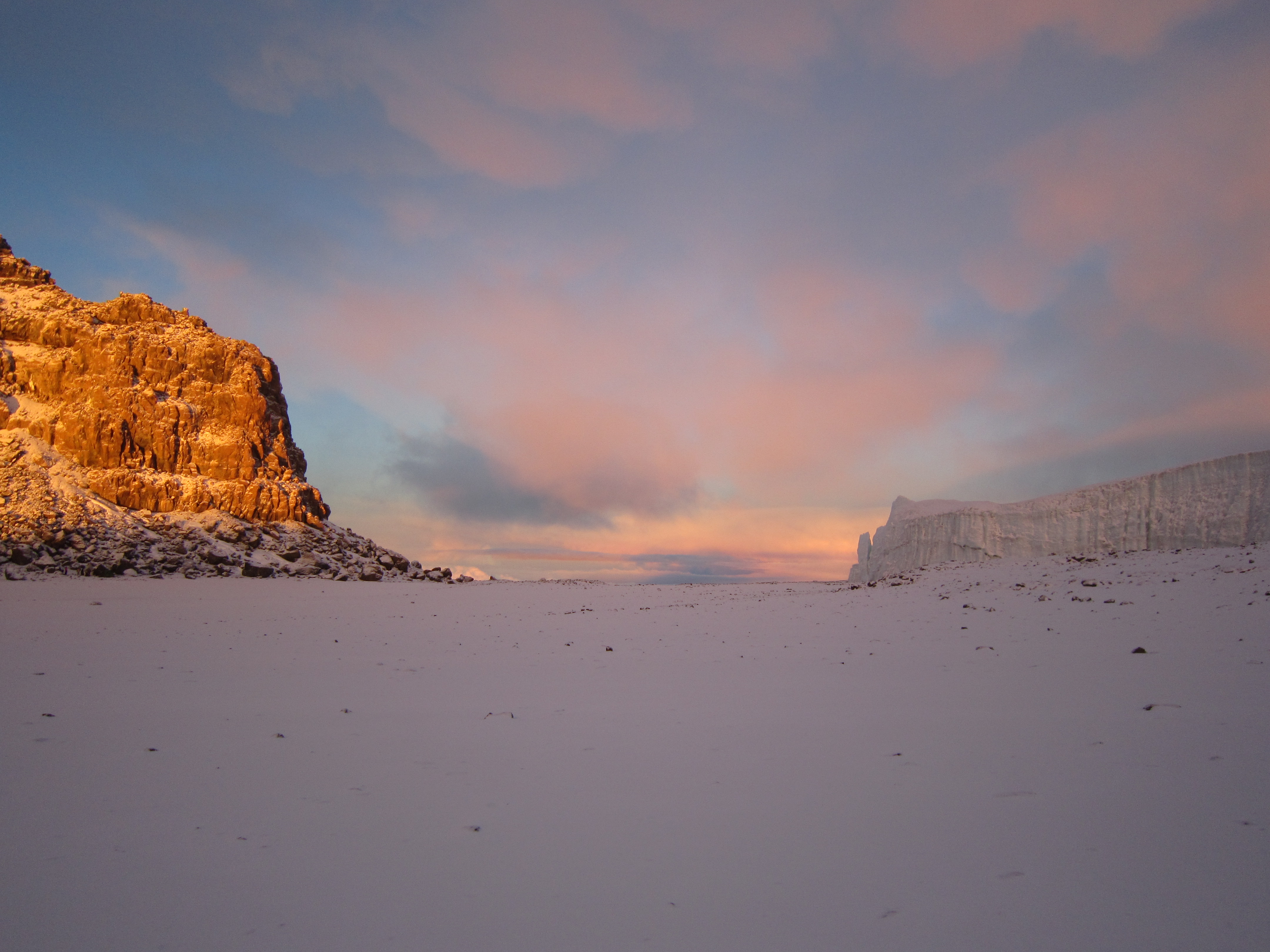
About Mount Kilimanjaro
Mount Kilimanjaro is an inactive stratovolcano in northeast Tanzania, near the border with Kenya. At 5,895 m (19,340 feet) above sea level, Kilimanjaro is Africa's highest peak and the world's highest free-standing mountain. Aided by its relatively easy ascent, Kilimanjaro has become a major destination for mountaineers and trekkers from around the world. It's also inscribed on the UNESCO World Heritage List.
Mount Kilimanjaro travel guide
Understand
Although positioned 330 km south of the Equator, Mount Kilimanjaro is famous as Africa's snow-capped mountain looming over the plains of the savannah. The snows have been fast disappearing. Kilimanjaro National Park protects the area above 2,700 m (8; 850 ft), on the mountain and includes the moorland and highland zones, Shira Plateau, Kibo and Mawenzi peaks. The Park also has six corridors or rights of way through the Kilimanjaro Forest Reserve. The Forest Reserve, which is also a Game Reserve, was established in 1921; the park was established in 1973 and opened in 1977.
History It is commonly said that Queen Victoria of England gave her grandson, Kaiser Wilhelm II of Germany, Mount Kilimanjaro as a birthday present. However, this is not the case. In fact, Karl Peters, a German traveller in Africa and one of the founders of today's Tanzania, sneaked into Tanganyika and persuaded various Chagga chieftains to sign treaties in which they agreed to cede their territories to his Society for German Colonization. During the First World War there was a campaign in German East Africa and the Germans fortified parts of Kilimanjaro.
Landscape The mountain has snowy peaks, which are well renowned, although they are quickly disappearing.
Flora and fauna Wildlife is abundant on and around Mount Kilimanjaro, much of which is unique to the region. The mount Kilimanjaro has five main vegetation zones from the lowest to the Arctic ice region on top: Lower slopes, montane forest, heath and moorland, alpine desert, and summit. The whole mountain including the montane forest belt is very rich in both animal and plant species like giant lobelias, everlasting flowers and mammals, many of them endangered species. For this combination of features but mostly its height, its physical form and snow cap, and its isolation above the surrounding plains, Mount Kilimanjaro is considered an outstanding example of a superlative natural phenomenon. The climb feels like walking from the tropi
Getting there
The closest International Airport is Kilimanjaro (JRO IATA) and, if coming from Europe, KLM has a daily non-stop flight from Amsterdam to JRO. If you are coming from Nairobi, Kenya, you can fly with Kenya Airways, which works with Precision Air, and that would cost you about USD$400/person for a return ticket. Alternatively, you can schedule shuttle buses, which are daily at 08:00 and 14:00, for about USD$25/person, one way, and it's a 5-6 hour bus ride. If coming from Dar es Salaam, you can fly into JRO for USD$320/person return; or take a 7-8 hr bus ride for USD$20/person one way to Arusha or Moshi. In addition, Ethiopian Airlines has nonstop flights from its hub in Addis Ababa Airport.
Cost It is required to have a licensed guide to climb Kilimanjaro. The guide can either be hired upon or before arrival. Park entry and camping/hut fees are over USD$100 per day. All inclusive trips range from about USD$800 to USD$5,500. Hiring just a guide upon arrival may cost as little as USD$200 with the expectation that each carry their own food and equipment (i.e. guides carry their food and equipment and you do the same). Over and above the amount you pay to the tour operator, one also needs to pay tips to the guides, and cooks and porters if those are used. Though there are no set guidelines as to how much you should pay, it is sufficient if you can pay around 10% of the amount you pay to the tour operators with the guide getting the major share and equal distribution of the remaining amount to the porters and cooks. It is not advisable to give the whole amount to one person and expect him to distribute it among the others. Chances are high that he may pocket the whole amount. It would be wiser to give tips directly to individuals. Also, the gear used by the porters is mostly substandard and in fact not at all fit for the trek, and many would be grateful if you could spare gear.
Do
1-day hike If you do not want to reach the summit but still want to experience a hike at Kilimanjaro, you can do a one-day hike from Marangu Gate to Maundi Krater. The hike is easy and you will cross the forest of Kilimanjaro. On the way, you can see monkeys and birds. If you are a good hiker, the walk is really easy and takes less than 2 hours and 30 minutes to go and 2 hours to come back. Note than, because of a strange law (usual in Tanzania to get more money from the tourists), you cannot go further than Maundi Krater, even if you paid for a full day at the gate. So it can be really frustrating. Moreover, as you have to hire a guide (which is really useless as the walk is really easy; there are no dangerous animals and there are lot of people walking), the price is really expensive for what you get. So if you are a good hiker and like or are used to hiking by yourself, there are probably less expensive and better places to go in Africa or even in Tanzania, like Udzungwa Mountains National Park. Price:
one-day entrance fee + taxes: USD 85 (august 2025) guide + private car from Moshi to Marangu Gate (go and back): around USD 85 + USD 10 of tip for the guide. Most of the tour companies will first give you a higher price, but bargain (august 2025)
Trekking routes to the summit There are six routes sanctioned for climbing Kilimanjaro and two routes used for descent. These are:
Machame Marangu Rongai Lemosho Umbwe Shira Northern Circuit Mweka (descent only) Warning: These ~6 day schedules are common but too fast – there is a very high risk (75%!) of altitude sickness, and it is quite likely that you will not be able to summit the mountain on these schedules. In order to safely acclimatize, you should ascend more slowly than indicated. Marangu Route Commonly called the Coca-Cola Route, because it is the easiest route and vendors sell Coca-Cola at some of the huts. Marangu is by far the most popular route to the summit of Kilimanjaro. Typical duration is eithe
Eat
The various food requirements are met by the cooks and porters who come along with you on the mountain. However, the quality of the food depends on the reputation of the tour operator you use. The quality of the food tends to decline towards the end of the trek due to the food becoming stale and the rations carried by the porters being reduced. It is recommended to carry some high energy food like nuts and chocolate in order to survive and successfully complete the trek. It would be worthwhile to carry some ready-made noodle packets and similar easy-to-cook meals, which can be cooked and eaten at the conclusion of the trek.
Drink & nightlife
A lot of water. Also, a lot of oral rehydration salts (ORS) are recommended for preventing dehydration while trekking on the mountain.
Sleep
Lodging Lodging options on the mountain are limited to designated camp sites. It is prohibited to sleep in the caves. There are huts available, but are generally not recommended. Pre-climb lodging is generally found in the cities of Arusha and Moshi.
Camping It is permitted to camp on Mount Kilimanjaro for as many days as
Overview adapted from Wikipedia, travel guide fromWikivoyage (CC BY-SA). Photography via Wikimedia Commons.