
Mooca District
Brazil · Americas
About Mooca District
Southeast is a region of São Paulo. It can be described as a "transition zone" between its three surrounding regions: the Historic Center (the Downtown), the "City of New Rich" (the South Central) and the "City of Workers" (the Far East), mixing characteristics of these three regions. In the past, the region was an industrial and working class residencial area, with population mostly composed of foreign immigrants.
The Southeast is divided into 15 districts, grouped into four subprefectures:
Mooca subprefecture: Pari, Brás, Belém, Tatuapé, Mooca, Água Rasa.
Ipiranga subprefecture: Ipiranga, Cursino, Sacomã.
Aricanduva subprefecture: Carrão, Vila Formosa, Aricanduva.
Sapopemba-Vila Prudente subprefecture: Vila Prudente, São Lucas, Sapopemba.
Mooca District travel guide
Understand
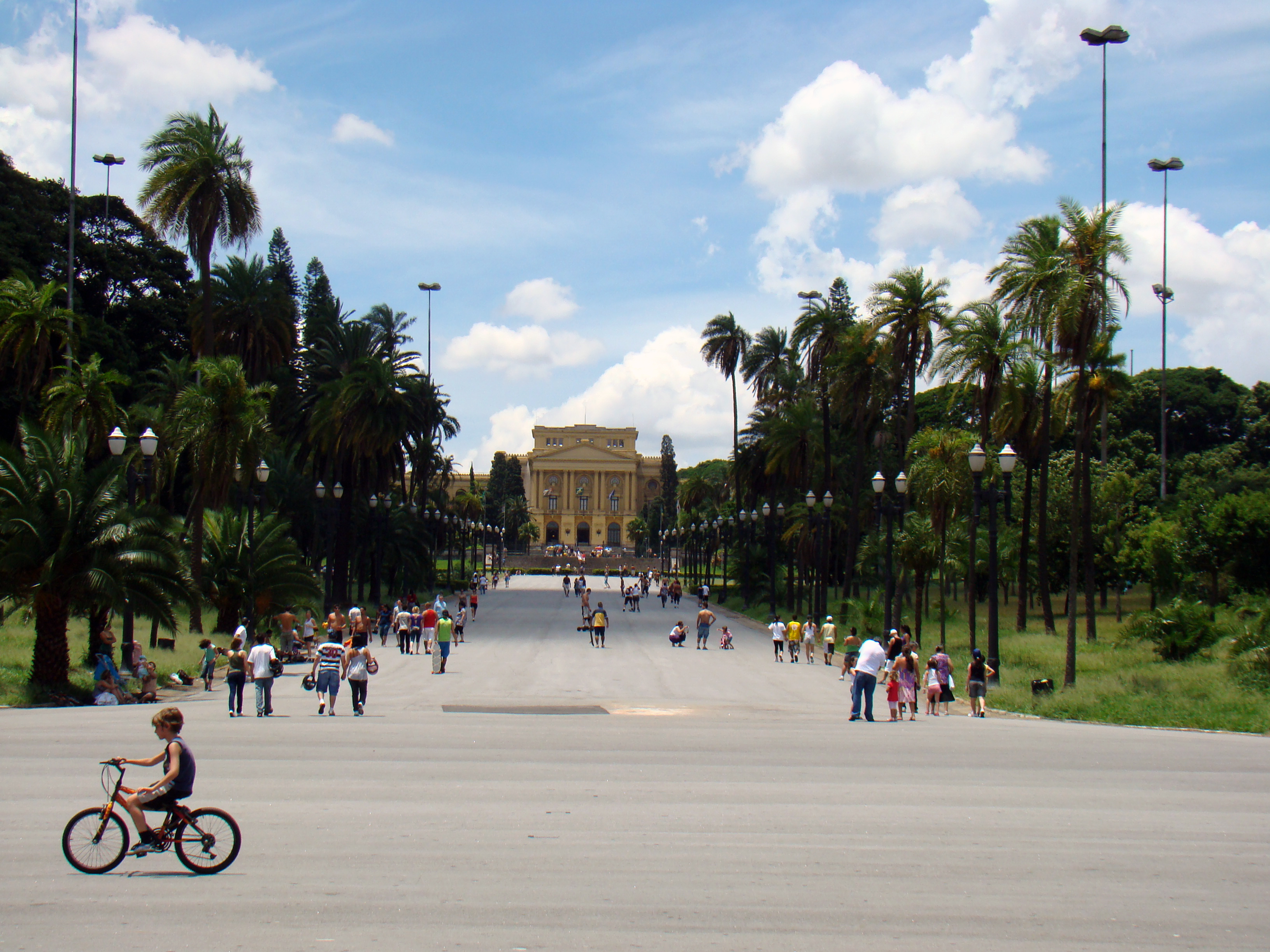
In the first half of the 20th century, the Southeast was mostly occupied by industries and working class neighborhoods, with a large number of foreign immigrants. During São Paulo's great economic and populational growth during the second half of the 20th century, industries have been replaced by services, or moved to peripherical areas of the city. Foreign immigrants and their descendants advanced to middle and high social classes. Nowadays, the Southeast remains heavily populated by immigrants and their descendants, mostly Italians, but also Spanish, Japanese (most from Okinawa), Portuguese, Lithuanian, Lebanese, Koreans and Yugoslavians. There is also a large number of migrants from the Northeast of the country. Verticalization is accelerate and progressing towards the east part of the region. This is attracting shops and restaurants to the area, but it is also causing problems, including increase of traffic and pollution. Besides, buildings from the industrial era of the region are disappearing, with a significant number of them only remaining in the Brás and Belém districts. Tatuapé is the center of gastronomy, shopping and nightlife in the Southeast, and Museu do Ipiranga, probably the most beautiful museum of the entire São Paulo state, is one of the primary reasons to visit the region. Brás is also one of the busiest centers of popular commerce in São Paulo, and it is particularly important for the Christian Pentecostal community: the district is home to the central churches of Congregação Cristã and Igreja Mundial do Poder de Deus, and the new colossal cathedral of Igreja Universal do Reino de Deus, a replica of King Solomon's temple, is being constructed there.
Getting there
By metro and train These are the metro and train stations located at each district:
Brás: Brás, Bresser-Mooca Belém: Belém Cursino: Imigrantes Ipiranga: Alto do Ipiranga Mooca: Mooca Tatuapé: Tatuapé, Carrão Vila Prudente: Ipiranga, Tamanduateí, Vila Prudente, Sacomã
By bus 8 of the 15 districts have no metro/train stations, making the bus the only available public transport to reach them. Some attractions are also not really close (or not close at all) to a metro/train station.
By car The Radial Leste-Oeste links the Southeast to the Far East and Center regions, Marginal Tietê links it to the Northeast, and Av. Dr. Ricardo Javet, together with Av. Pres. Tancredo Neves, links it to the South Central.
Getting around
By bicycle Cycleway Radial Leste (see São Paulo main section) is partly located in the Southeast. The other cycleway is:
Cycleway Adutora Rio Claro, from Av. Sapopemba w/R. Germínio Gomes da Silva to Praça Felibserto da Silvia. Cycleway in the more suburban district of Sapopemba. It has some serious slopes, making parts of it not very suitable for amateur cyclists. 7 km.
See
1 Aquário de São Paulo, Rua Huet Bacelar, 407 - Ipiranga (Near Imigrantes station), ☏ +55 11 2273-5500. Daily 09:00-18:00. The largest oceanarium in South America, with 1 million liters of seawater and 300 different animal species. A night visit, with flashlight and dinner included, can also be scheduled by groups (more costly than regular visit). R$45 for kids aged 2 to 12 years, and R$90 for the full ticket. (updated May 2019) Basílica Nossa Senhora da Penha (Our Lady of Penhaa), Rua Santo Afonso, 199. Penha. One of the oldest churches of São Paulo. 2 Cemitério da Vila Formosa, Praça Estevão Ribeiro Neto, Carrão. With 780,000 m², Cemitério da Vila Formosa is the largest necropolis of Latin America, with most of the 1.5 million buried people belonging to low and low middle classes. Interestingly, the cemetery is used for leisure and sports by locals, as it is the only green area of the surrounding neighborhoods. Santuário Santa Isabel Rainha, Alameda Rainha Santa, 322 - Vila Santa Isabel, ☏ +55 11 2781-1048. Perhaps the most beautiful church of the region, projected by Benedito Calixto and sitting in a small hill in a peaceful residential neighborhood between Carrão and Vila Formosa. It has Neoclassic-Roman style and a 90-meter-high tower, which can be visited. Teatro Sílvio Romero, Rua Coelho Lisboa, 334 - Tatuapé. 3 Vila Maria Zélia, Entrance at crossing between Rua dos Prazeres and Rua Cachoeira - Belém. The historical neighborhood was built in 1917 to be the home of workers of Companhia Nacional de Tecidos de Juta, a textile factory. The architecture and many buildings from that time remain, although only the church is completely preserved.
Museums
Casa do Sítio Tatuapé, Rua Guabijú, 49 - Tatuapé (15 min walk from Tatuapé station). Tu-Su 09:00-17:00. One of the oldest houses of São Paulo, constructed by an early explorer (bandeirante) between 1668-1698. Now it hosts cultural activities. Free. 4 Museu de Imigração do Estado de São Paulo (Memorial
Do
Football and other sports The association with football (soccer) is one of the most remarkable traits of the Southeast. The region is home to Corinthians Sport Club, the most popular football club of the state (and 2nd most popular of Brazil), Associação Portuguesa de Desportos, a club that also usually runs in the 1st division, associated with the Portuguese community, and Clube Atlético Juventus, a minor but traditional club, that is part of the history of the Italian community of the city. Besides football clubs, these clubs are also general sport and social clubs, so associating with them may be a good idea if plan to stay a long time in the city.
1 Estádio do Canindé (Estádio Doutor Osvaldo Teixeira Duarte), Rua Comendador Nestor Pereira, 33 - Pari (near Tietê station). Despite the association of the region with football, it contains only one stadium capable of hosting 1st division games, the Canindé, home to Associação Portuguesa de Desportos. Capacity for 27,000 people. 2 Estádio Alfredo Schürig, Rua São Jorge, 777 - Parque São Jorge (Accessible from Marginal Tietê), ☏ +55 11 2095-3000. The 158,000-m² area is the headquarters of Corinthians Sport Club. It is a private club with many sport facilities, including an impressive waterpark. It contains a museum of the football team, and a chapel where the supporters pray for its success in the various championships of the year. Parque Anália Franco (Former CERET), Praça do Trabalhador, Vila Formosa. A park with 286,000 m², including a patch of Atlantic rainforest and various sport facilities. Those include, among others, a swimming pool and Arena Paulista de Rugby, the first rugby field of the city.
Events Festa de San Gennaro, Rua San Gennaro, 160 - Mooca. The annual event of the Italian community, around the Church of San Gennaro, starts around September, and happens every Saturday and Sunday night for the next 4 weeks. Basically, it is a smaller version of Festa de Nossa Senhora Acheropita (in the ci
Buy
The Southeast has a rich and diverse shopping scene, not much behind Downtown, West and South Central.
1 Brás (Near Brás station). The Brás neighborhood is one of busiest centers of popular commerce in th
Overview adapted from Wikipedia, travel guide fromWikivoyage (CC BY-SA). Photography via Wikimedia Commons.