
Mid-Hudson and Catskills
United States · Americas
About Mid-Hudson and Catskills
Between New York City's suburbs and Upstate New York lies a transitional area, a place where many New Yorkers get away from it all to relax. West of the Hudson River lie the Catskills, a largely rural and wild area of mountains and valleys; along the river, on the other hand lie a number of Hudson Valley communities with rolling hills, an area that resembles New England in many respects.
Mid-Hudson and Catskills travel guide
Understand
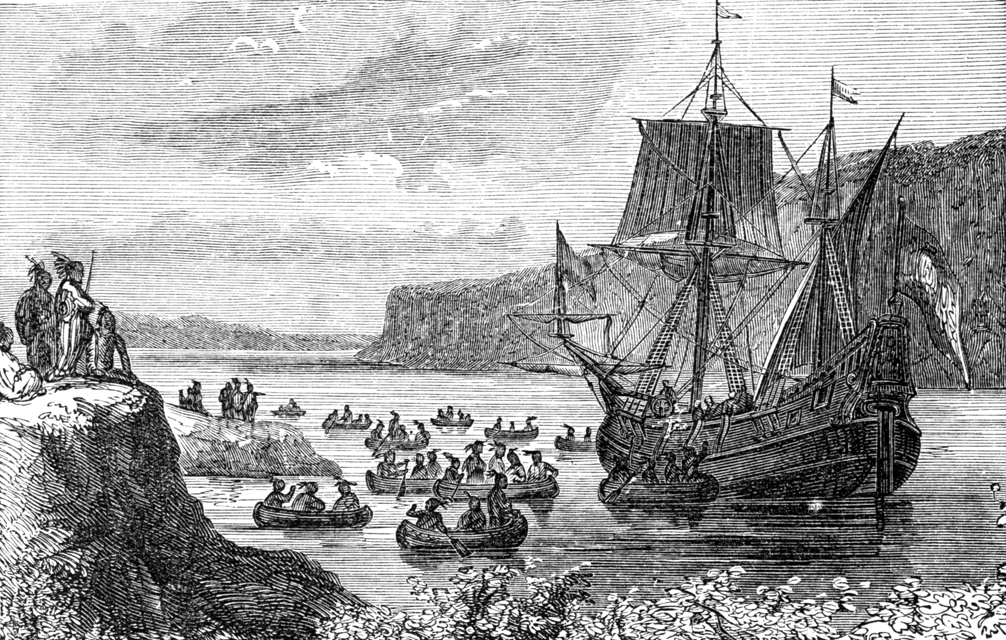
Henry Hudson and his crew were the first Europeans to sail up the river, on the Halve Maen in 1609. They thought they might have discovered the beginnings of the Northwest Passage, and traveled as far as the feature that gives present-day Glens Falls its name before they realized they had only found a tidal estuary 150 miles (240 km) into the interior. But the find was nevertheless useful for the Dutch, who established the colony of New Netherland along the river, with its capital, Fort Orange (today Albany) near the upper limit of his voyage, and the port city of New Amsterdam (New York City) at the river's mouth.
Other settlements, like Kingston and Schenectady, were established later. Many other Dutch placenames in the region reflect this era, which ended when the colony became English in 1669. Under both colonial powers, the river became a major trade route, with sloops plying it regularly and putting it at other riverside ports like Newburgh, Poughkeepsie and Hudson. During the Revolutionary War the river became a key strategic asset. The British sought to take control of it, in order to divide New England from the rest of the colonies. To prevent this, the Patriots forged a giant chain to block the river below the Hudson Highlands, and established the fort has since become the United States Military Academy at West Point. Benedict Arnold made his getaway down the river after his plan to sell out the fort to the British was exposed. After the war ended with American independence, the new nation found in the river and its surrounding valley its earliest cultural inspiration. Washington Irving lived on the river's banks and wrote his most famous story, Rip Van Winkle, about the Dutch inhabitants of the upper valley. Thomas Cole, Frederick Church and other painters of the Hudson River School found inspiration in the landscapes of the Highlands and the Catskills. Wealthy landowners like Robert Livingston built palatial estates on the east bank overlooking some of
Getting there
By boat Probably the best, most beautiful and historic view of traveling to and within the Hudson Valley is by boat up the Hudson River. There are a few tourist cruises you can do, but unless you have or use a private boat, the Hudson River won't be your primary method of travel in the Hudson Valley. One exception is NY Waterway, an operator of commuter ferries, that offers full day and weekend sightseeing cruises from New York City to several locations including Tarrytown and the United States Military Academy at West Point.
A different, but memorable, way to experience the Hudson Valley from the river is to go on one of the public sails run by Hudson River Sloop Clearwater, the Beacon-based environmental organization that works to protect the river. Between April and October, Clearwater, a National Register-listed replica of the 17th- and 18th-century Dutch sloops, and Mystic Whaler, a replica of a 19th-century whaling schooner, take on passengers at docks up and down the river between New York and Albany. During the excursions, passengers can take turns helping steer and operate the boat while the crew offers lessons on the history and environment. It's a popular family outing. Tickets are $50 for adults, $35 for Clearwater members and $15 for children 12 and under. +1 845 265-8080 x7107.
By air Westchester County Airport, 240 Airport Road, White Plains, +1 914 995-4860 (airlines). The largest airport of the lower Hudson Valley, other than the three New York City/New Jersey international airports. Stewart International Airport, 1180 First St, New Windsor, +1 845 564-2100. Serves the middle of the valley. Hudson Valley Regional Airport, 263 New Hackensack Road, Wappingers Falls, +1 845 463-6000. An option for private pilots and jets near Poughkeepsie. Albany International Airport, 737 Albany-Shaker Rd, Albany. Serves the upper portions of the valley. Newark Liberty International Airport, Newark, New Jersey, John F. Kennedy International Airport, and LaGuard
Getting around
Bridges The Hudson River can be both means of and impediment to travel. Historically it was wide enough that only ferries crossed it, but then a few rail bridges crossed the river in the late 19th century, followed by vehicle bridges in the 20th. Tolls are charged for all south of Albany. E-Z Pass electronic payment, common in the northeast United States, is accepted at all of the following Hudson River crossings, usually with a discount:
The New York State Bridge Authority operates:
Rip Van Winkle (NY 23) - Catskill, Green County to Hudson, Columbia County Kingston-Rhinecliff (NY 199) - Kingston, Ulster County to Rhinecliff, Dutchess County & Mid-Hudson (US 44/NY 55) - Highland, Ulster County to Poughkeepsie, Dutchess County & Newburgh-Beacon (I-84/NY 52) - Newburgh, Orange County and Beacon, Dutchess County & Bear Mountain (US 6/US 202) - Bear Mountain, Orange County to Peekskill, Westchester County All NYSBA bridges charge a toll of $1.50 ($1.25 with EZPass) eastbound The New York State Thruway Authority operates:
Castleton — Selkirk, Albany County to Castleton-on-Hudson, Rensselaer County ($1.05 ($1 with EZPass) both ways; included in Thruway toll collected at exits). Tappan Zee (I-87/I-287) - Nyack, Rockland County to Tarrytown, Westchester County ($5 eastbound; $4.75 with EZPass) The Port Authority of New York and New Jersey operates:
George Washington - Fort Lee, New Jersey to New York City ($13 eastbound; $10.25 with EZPass reduced to $8.25 off-peak and $4.25 with three or more people in vehicle).
Ferries
New York's Metropolitan Transportation Authority operates two ferry routes across the river in its service area, primarily for the benefit of commuters using Metro-North's Hudson Line; both operate only during rush hour. Service may be suspended in wintertime if the river has too much ice for crossings to be safe, particularly on the Newburgh–Beacon route.
Haverstraw–Ossining Ferry from St. Girling Drive in Haverstraw, Rockland County, to
See
Many sights are listed under their individual counties. If you have a limited amount of time in the region, here are the most popular and/or most important to understanding the Hudson Valley:
The United States Military Academy (West Point), north of Highland Falls, has much to see. The academy maintains one of the world's largest military museums, with many exhibits and battle dioramas. On campus there are the magnificent stone Gothic buildings, spectacular views of the river and surrounding mountains of the Hudson Highlands, and the military pageantry of the cadets, the "Long Gray Line" who will follow in the footsteps of their distinguished predecessors.
In Hyde Park, you'll find the Franklin D. Roosevelt Presidential Library & Museum, the Home of Franklin D. Roosevelt National Historic Site, and the Vanderbilt Mansion National Historic Site. Located a short distance apart, these are the most popular estates with visitors north of Westchester County. Vanderbilt's mansion is a lavis
Overview adapted from Wikipedia, travel guide fromWikivoyage (CC BY-SA). Photography via Wikimedia Commons.