
Maroochydore
Australia · Oceania
About Maroochydore
The Sunshine Coast, or the Sunny Coast as it's colloquially known, is a peri-urban area and a holiday city comprising of several settlements in South East Queensland. It has a population of around about 400,000, making it Queensland's third largest settlement behind Brisbane and the Gold Coast, and the ninth in Australia.
If the Sunshine Coast had to be described in six words, it'd be "budget alternative to the Gold Coast". Though it used to be a relatively quieter beachside destination, since the 2000s, the Gold Coast has been getting more expensive and almost unaffordable for budget travellers, popularising the Sunshine Coast into a popular holiday destination as it is now.
Maroochydore travel guide
Understand
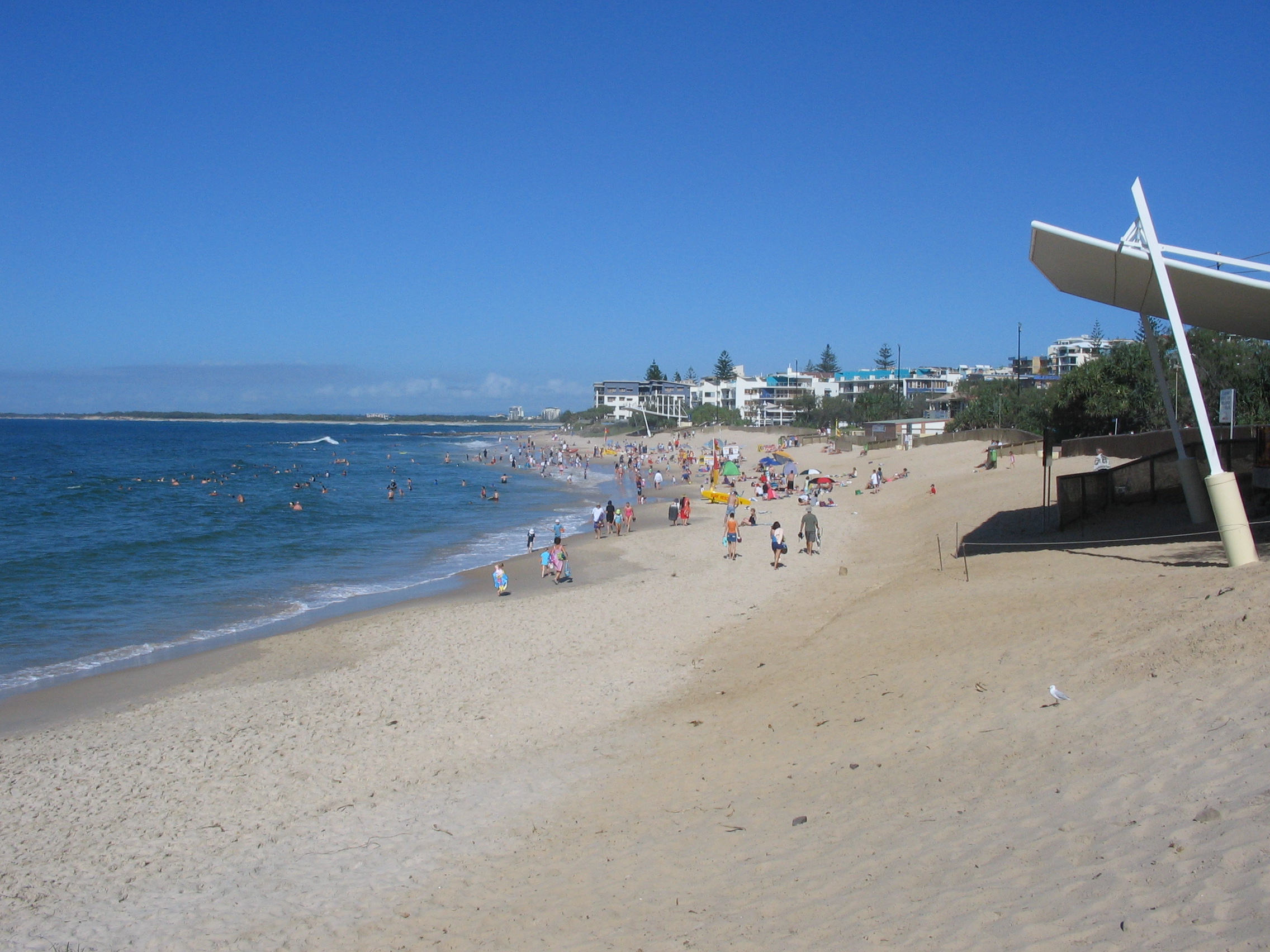
Renowned for its relaxed approach to Queensland life, the Sunshine Coast is famous for its uncrowded white sand beaches and green scenery. Stretching for nearly 70 km (43 miles), the Sunshine Coast falls within the Sunshine Coast Council's jurisdiction and provides for a great (and popular) escape from Brisbane, or the Gold Coast. The city is also a holiday spot even for Queenslanders and the Sunshine Coast is a great place to relax, unwind and taste the amazing local produce. One notable difference from other cities is that the Sunshine Coast is not one city, but rather a series of towns and cities that make up the settlement. Some parts of the Sunshine Coast like Caloundra, Maroochydore, Mooloolaba or Mudjimba can be described more as suburbs, while other parts like Maleny, Montville or Beerwah resemble more like towns, not suburbs, while some like Coolum Beach or Marcoola are somewhat in-between.
History The first bit of the Sunshine Coast that was explored by Europeans were the Glass House Mountains which were sighted by Captain James Cook from the deck of the HM Endeavour in 1770 when he was sailing along the East Coast. Many of the Sunshine Coast's towns began as simple ports and jetties for timber industry during the 1860s and 1870s, as the area once had magnificent stands of forest. Likewise, the region's road biggen snigging tracks for hauling timber. Timbergetters used the region's creeks, rivers and lakes as seaways to float out their logs of cedar - the resultant wood being shipped far afield as Europe. Today, the Sunshine Coast is one of the fastest growing regions in Australia. As the region became increasingly residential, most of the district's small farms, especially tropical farms have now disappeared. Instead business concerned with retail, catering and tourism are now of greater interest in this region.
Geography and orientation The Sunshine Coast is mostly flat near the coastal areas, where most of the population lives (within 10 km from
Getting there
By plane
1 Sunshine Coast Airport (MCY IATA) (10 km north of Maroochydore), ☏ +61 7 5453 1500. Has daily flights to Sydney and Melbourne. The airport has good facilities for an airport of its size, with multiple ATMs, rental cars, transfer services, and food and shopping outlets. (updated Jun 2025) There is a small cafe in the arrivals area, selling coffee and snacks, open from the first flight to the last. Most of the facilities are located after clearing security in the departures area, there is a cafe, a salad store, jewellery store, bookstore and a bar. There is an outside area next to the tarmac which can be an area to enjoy a drink while waiting for your flight. The Translink (Sunbus) 622 bus services the airport terminal hourly between Maroochydore and Noosa Junction, but somewhat inconveniently stops before the last flights arrive from Sydney and Melbourne. The 620 bus runs later and with greater frequency, but only stops on David Low Way outside the airport precinct. It is just over 1 km to walk from this stop to the airport terminal. Walk along Friendship Drive out of the airport, turn right onto David Low way and walk the short distance to the stop. Change at Sunshine Plaza in Maroochydore for points south. Change at Noosa Junction for Noosa Heads and Noosaville. The rental car chains are located in arrivals. Door to door transfers are available to the entire sunshine coast area, but should be pre-booked. Henry's operates north (to Noosa and Coolum), and Sun-air operates south to Maroochydore, and Caloundra. Discounts are available for groups – expect to pay around $20 per person. If you haven't pre-booked, Henry's has a desk inside the arrivals area, where you can see if there is availability on the next shuttle. Sun-air has no presence at the airport, and you'll have to call them to see if you can arrange a pickup. Sunshine Coast Taxis are available and operated by Suncoast cabs (☏ 131 008 (domestic)Country code missing). It can cost up to $100 to g
Getting around
By public transport Translink is responsible for all trains, buses, ferries and trams in South East Queensland and regional urban buses. The website and app can be used to plan a journey, including full navigation and real time updates. Apple Maps and Google Maps provide a similar experience.
Fares A 50-cent flat fare applies to any journey, regardless of mode or distance, with a limit of 3 transfers. The only exception is an Airtrain journey to or from Brisbane Airport which costs $22.30 (June 2025), with a 15% discount for booking online. Refer to the website for other discounted fares. You can be fined $261 for travelling without a valid fare. There are three ways to pay for your journey:
Contactless credit or debit card. A Mastercard or Visa is accepted, including those in a digital wallet like Apple Pay or Google Pay. Your fare is deducted from your card as you touch on and touch off each mode of transport. Trains and trams have fare gates or distinctive pink validators to touch before you board and after you alight. Buses and ferries have validators to touch as you board and alight. A failure to touch off each mode of transport will result in a fixed fare of $2.50. Go card. A go card is available at train station ticket counters, busway and tram fare machines, and selected newsagents and convenience stores. The card requires a $10 deposit. The card can be topped up with travel credit at the same locations, including train station fare machines. The maximum travel credit you can top up is $250. Refunding the deposit and travel credit can be a hassle. If you last topped up using cash it can be processed at Brisbane Airport and selected newsagents and convenience stores. If you last topped up using credit or debit card it can only be processed via an Australian bank account transfer. Paper ticket. A paper ticket is available at train station ticket counters and fare machines, and busway and tram fare machines.
By car Car is by far the easiest way to see
See
Museums and historic sites
1 Caloundra Lighthouses, 3 Canberra Terrace, Kings Beach. Two lighthouses both quite historic (at least; in Queensland terms), that were designed to light up the passage to the North-West channel. There's a volunteer organisation that manages the lighthouse, and on occasion, you can pay $2 to go to the top. (updated May 2022) 2 Eumundi Museum, 73 Memorial Dr, Eumundi (corner of Gridley Street and Memorial Dr), ☏ +61 7 5442 8762. Tu–Sa 10AM–3PM. A local history museum with many old photographs of historical Eumundi, Indigenous artifacts from the region, old documents etc. There is also a small art gallery, but behind the museum. (updated May 2022) 3 Landsborough Museum (Landsborough Historical Museum), 4 Maleny St., Landsborough, ☏ +61 7 5494 1755. W–F Su 9AM–3PM. A local history museum established in 1976 which preserves some collections on what life used to be like on the Sunshine Coast Hinterland, including plenty of old machinery from the farmlands. $5
Overview adapted from Wikipedia, travel guide fromWikivoyage (CC BY-SA). Photography via Wikimedia Commons.