
Malaysia
Malaysia · Asia
About Malaysia
Malaysia is a country in Southeast Asia, on the Malay Peninsula, as well as on northern Borneo. The country is one of Asia's tiger economies, having seen great economic and human development during the last several decades. While the capital Kuala Lumpur is a cosmopolitan city, deep jungles cover vast swaths of the land, and the offshore islands are home to pristine beaches and some of the world's best scuba diving sites. Malaysia is also a foodie's paradise, with its diverse ethnic groups contributing to an incredibly rich culinary heritage.
Malaysia travel guide
Understand
Malaysia is a mix of the modern world and a developing nation. With its investment in high technology industries and moderate oil wealth, it has become a rich nation in Southeast Asia. Malaysia, for most visitors, presents a happy mix: there is high-tech infrastructure and things generally work well and more or less on schedule, but prices remain more reasonable than in, say, Singapore. The demographics between the rich and poor can also be quite apparent: for example, a high rise luxury condominium building built right across the street from old, rundown shop lots or flats. However, you will not find extreme rural poverty or gigantic urban slums as in most other countries of Southeast Asia. In terms of attractions, peninsular (West) Malaysia contains islands with gorgeous beaches and a fraction of visitors found in Thailand's most popular beaches, mountain retreats surrounded by tea plantations, interesting historical cities, world-famous food, and the highly modern, multi-cultural capital of Kuala Lumpur. East Malaysia contains lush jungles with diverse native population and wildlife, as well as stunning natural attractions such as giant caves, beautiful mountains and fantastic diving sites. Notably, however, Malaysia is not as popular among backpackers as other Southeast Asian destinations such as Thailand, Cambodia and Vietnam, partly due to the relatively higher costs, and partly due to the more religious and conservative, albeit generally tolerant, culture. It also lacks the ancient Hindu and/or Buddhist temples and temple complexes of its neighbours, though it does have some large and impressive ones built since the 19th century.
History
Before the rise of the European colonial powers, the Malay Peninsula and the Malay archipelago were home to empires such as the Srivijaya (whose capital was near modern Palembang; Sumatra; but which included the entire Malay Peninsula and lands further north at its greatest extent), the Majapahit (centred in Java, now par
Getting there
Entry requirements
Visa
Most nationalities can enter Malaysia without a visa and can reside in Malaysia for 14 to 90 days, depending on their nationality. Refer to the Ministry of Foreign Affairs for current information regarding visa requirements and stay periods. The East Malaysian states of Sabah and Sarawak each maintains its own immigration system and separate controls: even Malaysians from other states require a passport or MyKad on arrival. Those who wish to enter Malaysia for purposes other than for a Social or Business visit still require a visa for any period except for US citizens who enter for the purpose of studying. Nationals of Bangladesh, Bhutan, Montenegro, Myanmar, Nepal, Pakistan, Serbia, and Sri Lanka need a visa but can apply for an e-visa, which is valid for 3 months for a stay of up to 30 days. You'll have to print out the visa once it's issued and bring proof of sufficient funds, a return ticket, and proof of accommodation when you enter the country. Citizens of India are exempted needing to have a visa for a stay of up to 30 days until December 31, 2026. Overstaying a visa will result in a US$10, €7.50 or RM30 fine per day. However it's fairly simple to avoid overstaying a visa by doing a "visa run" to a neighbouring country overland or via a cheap flight. Malaysia may impose caning as a punishment for overstaying a visa. Malaysian Immigration may take your fingerprints and/or photograph on arrival and departure.
Malaysia Digital Arrival Card Since 2024, all foreign travellers except citizens of Singapore must complete the Malaysia Digital Arrival Card (MDAC) online for every visit to Malaysia. It is completely free to fill out the arrival card. You can only complete this card a maximum of 3 days ahead of your arrival — in practice you can even submit it on the day of arrival while in the queue to immigration. At KLIA there are also PCs available before immigration where you can complete the card.
Autogates Travellers from most
Getting around
Immigration controls are in place for travel between Peninsular Malaysia and East Malaysia, as well as between the East Malaysian states of Sabah and Sarawak. Malaysian citizens need to present their ID cards, while foreign citizens are required to present their passports in order to travel.
By plane Flying is the only practical option for traveling between Peninsular Malaysia and Borneo, as well as reaching some of the more remote outposts of Borneo. Largely thanks to budget carrier AirAsia, Malaysia is crisscrossed by a web of affordable flights with advertised promotional prices starting at RM9 for flights booked well in advance. State carrier Malaysia Airlines also has competitive fares which now include equally or even lower-priced tickets if booked in advance through the internet, with a few more frills. Their offshoot Firefly operates a handy network of turboprop flights radiating out of Penang and Kuala Lumpur's second airport Subang (Sultan Abdul Aziz Shah). In Sabah and Sarawak, Air Borneo, operates turboprop services linking interior communities, including those in the Kelabit Highlands, with coastal cities.
By bus
The cheapest way to travel in Malaysia is by bus. All towns of any size have a bus terminal offering connections to other parts of the country. There are many companies of varying degrees of dependability, but two of the largest and more reliable are Transnasional and NICE/Plusliner. 24-seater "luxury" buses are recommended for long-distance travel. Air conditioning on some buses can be extremely cold so don't forget to bring a good sweater, pants and socks, especially for overnight journeys on luxury buses! If travelling on holidays or even over the weekend, it is advisable to reserve your seats in advance. Many bus companies allow for you to book online directly through their website. However, some only allow online booking for individuals with Malaysian credit cards, which is not really convenient for international visitors. With some
See
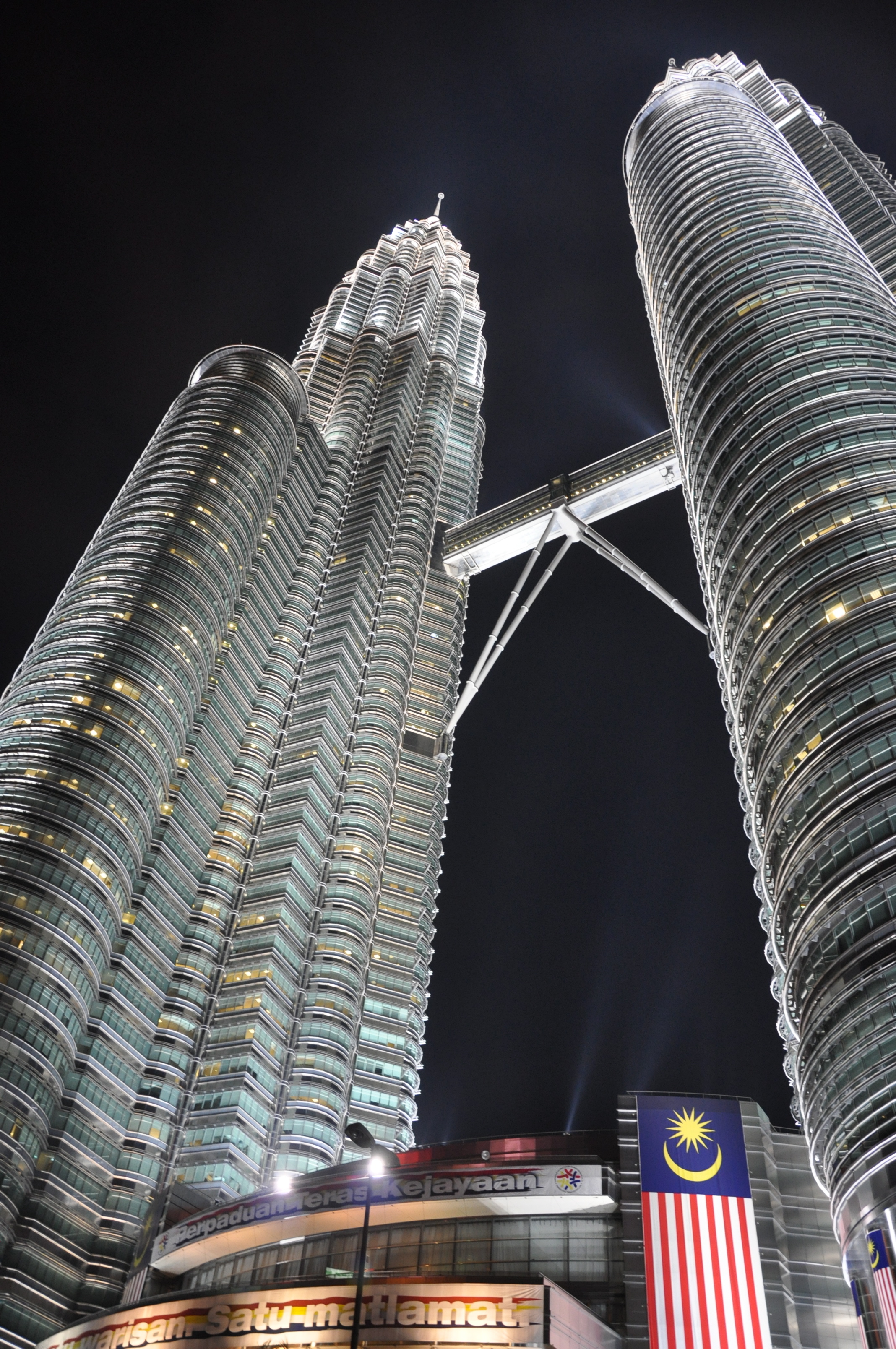
Malaysia is a fascinating country with many faces. It's multi-ethnic and multi-cultural, and its attractions vary from the iconic Petronas Towers in bustling Kuala Lumpur to perfect sandy beaches lined with palm trees and dense jungles with orangutans and tigers. There are various impressive national parks. Expeditions range from those where you hardly lose sight of the hotel to those where you are fully immersed in the jungle for weeks, with only the guide and yourself. To spot a tiger or wild elephant in its natural habitat you might have to spend more than a few days in the wild, but you'll have no trouble seeing smaller wildlife. Bako National Park is the oldest national park in Malaysia and one of the best places to see proboscis monkeys. The vast jungles of Taman Negara have become a popular destination for nature travellers, just like the remote but gorgeous Gunung Mulu National Park, a World Heritage Site famous for its limestone karst formations, stone pinnacles and huge caves
Overview adapted from Wikipedia, travel guide fromWikivoyage (CC BY-SA). Photography via Wikimedia Commons.