
Mainland Southeast Asia
Malaysia · Asia
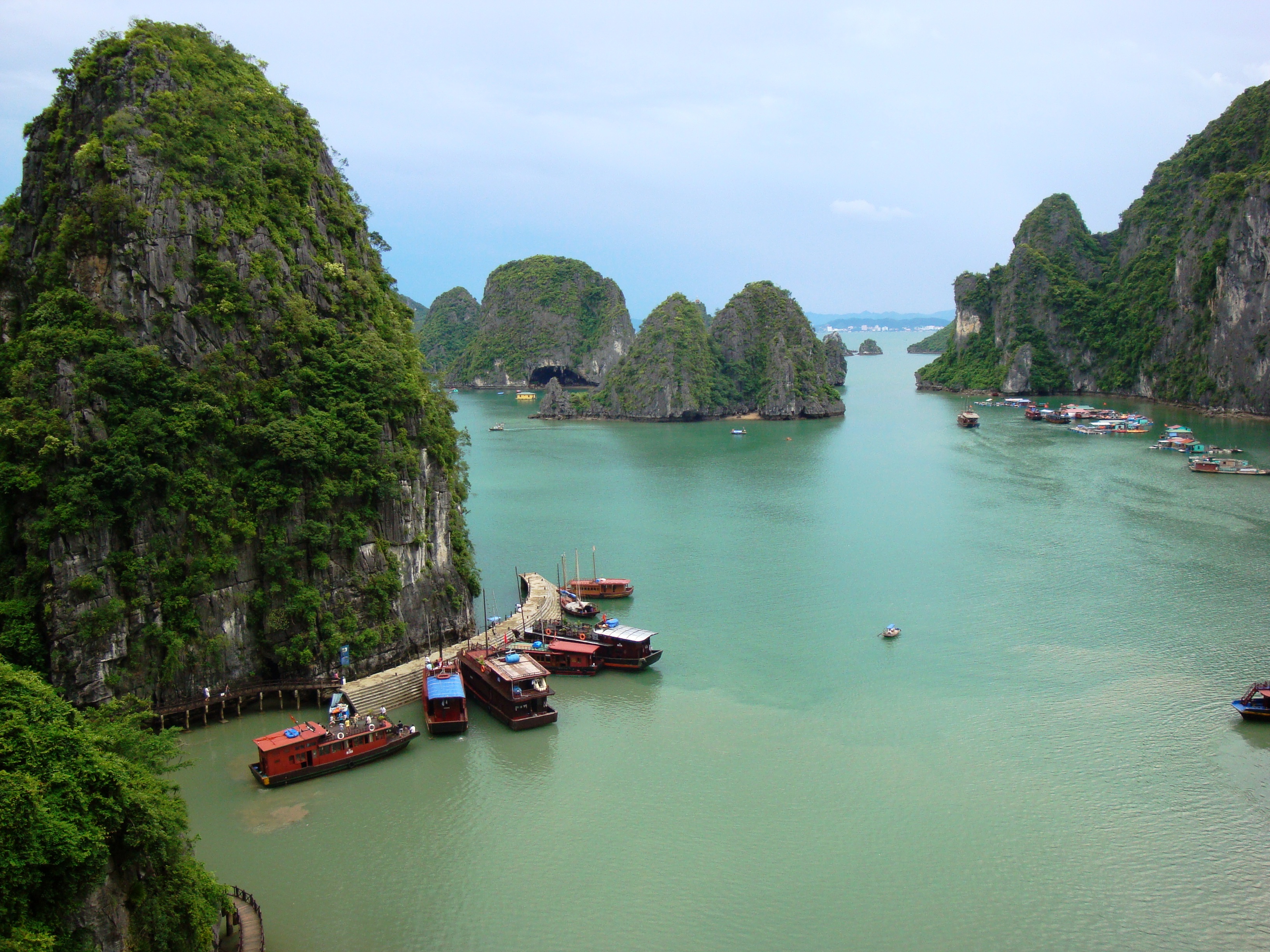
About Mainland Southeast Asia
Indochina is a region of Southeast Asia. It has no fixed definition. Most narrowly, it is the former French colonies of Vietnam, Cambodia and Laos, which were collectively known as French Indochina during the colonial period until the Indochina wars. However, it is sometimes considered to also include Thailand, which was never colonised, and Myanmar, a former British colony, both of which share many cultural similarities with the other three countries, which include the dominance of Buddhism as the main religion. Peninsular Malaysia is sometimes included, but only rarely, as it does not share the same cultural similarities as the other five.
This article focuses on the former French colonies of Vietnam, Cambodia and Laos.
Mainland Southeast Asia travel guide
Understand
Indochina's culture is, as its name suggests, influenced by the Indians and Chinese, as well as its colonizers. For at least 2000 years (and to this day), Indochina, alongside other countries of Southeast Asia, has acted as a conduit for trade between India and China. Cambodian and Lao culture are heavily Indian-influenced in areas such as faith, folklore, language and writing. Vietnam is the most Chinese-influenced. All three countries have substantial Chinese influence in their cuisines, not least due to significant Chinese immigration to the region during the colonial era. Buddhism is the dominant religion in the region, with Mahayana Buddhism being the dominant form in Vietnam, and Theravada Buddhism being the dominant form in Cambodia and Laos. In Indochina, the seasons can be broken down into hot, wet and dry, with the relatively cool dry season from November to February or so being the most popular with tourists. The scorching hot season that follows can see temperatures climb above 40°C in April, cooling down as the rains start around June. However, even in the "wet" season, the typical pattern is sunny mornings with a short (but torrential) shower in the afternoon, not all-day drizzle, so this alone should not discourage you from travel. There are, however, regional deviations from this pattern. Northern Vietnam, for instance, has four distinct seasons, with chilly winters; a climate similar to that of Hong Kong.
Getting there
Cambodia and Laos offer visas on arrival at most points of entry. Vietnam requires advance paperwork for most visitors.
By plane The main international airports of Indochina are at Ho Chi Minh City (SGN IATA) and Hanoi (HAN IATA), which serve numerous intercontinental flights to Europe and Australia. The airports at Vientiane (VTE IATA), Phnom Penh (PNH IATA), Siem Reap (REP IATA) and Da Nang (DAD IATA) also serve international flights to other Asian destinations.
By train There are two railway lines into Southeast Asia; one between Hanoi, Vietnam and Nanning, China, and onward to Beijing, Russia and even Europe, and another from Kunming to Vientiane, Laos. An extension of the latter onward to Bangkok is under construction, but completion is a long way away. There are no connections between Vietnam and other Southeast Asian countries yet, although there are plans for links through both Cambodia and Myanmar onward to the existing Thailand-Malaysia network. Such plans have existed since the colonial era, but China's "Belt and Road" initiative has injected them with new vigor and capital. Laos also has a single railway station in Vientiane connected to the Thai railway network.
Getting around
Public transport networks in Indochina tend to be underdeveloped. However, due to reckless driving habits, driving is also usually not for the faint-hearted. Most of the time, plane, bus or rail travel tends to be the best way to get around. There are local means of transport based on converting a motorcycle, truck, van or even bicycle to haul passengers. Unmodified motorcycles also provide taxi services in various places. All these modes of transport are generally cheap and rather colorful, but somewhat uncomfortable and perhaps dangerous. Be aware of various scams when crossing national borders. If someone offers to help you obtain a visa for the next country, or tries to direct you to a "health check", you can be certain that that person is trying to scam you. In Indochina, it is not uncommon for immigration officers to ask for bribes to stamp you in or out of the country; this is not a problem at airports, but bribes of up to US$10 per person are often demanded at land borders.
By plane Much of Indochina is now covered by a dense web of low-cost carriers, making this a fast and affordable way of getting around. Due to the popularity of budget carriers, flights on full-service carriers are not as widespread as they used to be, with many routes now being served solely by budget carriers. Nevertheless, the respective national airlines still offer options between major cities in the region. The larger multinational budget airlines and most national carriers are respectable, but some of the smaller airlines have questionable safety records, especially on domestic flights using older planes. Do some research before you buy.
By train Due to the high rates of road accidents in most the region, trains in Southeast Asia are generally considered to be a safer option than buses, especially during the night, although in several cases the journey by train takes longer than by bus. Vietnam has a line linking the country from north to south but speeds are rather low. Camb
See
Traditional architecture
Colonial architecture
Nature
Eat
Cuisines differ significantly between the three countries, and often between different part of the same country as well. As a result of the legacy of French colonial rule, all three countries share a love for baguettes, which are typically stuffed with meat (usually pork) and/or pâté, as well as various local herbs.
Drink & nightlife
Coffee is a popular beverage in all three countries due to their French colonial heritage. Beer is widely available in all three countries, with each one having its own local brands.
Go next
China — The world's most populous country and one of the oldest civilizations, with a vast array of cultural and natural treasures among the frenzied development. Myanmar (Burma) — Ancient country west of Indochina with staggering ethnic diversity, whose history includes both an indigenous empire and being part of the British Empire, now emerging from isolation under a strict military junta. Thailand — Located at the west of Indochina, Thailand is known for rich culture and cuisine with frenetic cities, chilled-out beaches, and remains of Buddhist kingdoms, making it a very popular destination with visitors returning time and again.
Overview adapted from Wikipedia, travel guide fromWikivoyage (CC BY-SA). Photography via Wikimedia Commons.