
Lower Ninth Ward
United States · Americas
About Lower Ninth Ward
The Lower 9th Ward is a section of New Orleans, east of the Bywater neighborhood (from which it is separated by the Industrial Canal), north of the Mississippi River, and west St. Bernard Parish, Louisiana.
Lower Ninth Ward travel guide
Understand
This neighborhood of predominantly African-American working-class homeowners became tragically famous when it was smashed by floodwaters with the catastrophic failure of the federal levees during Hurricane Katrina. Some six years later, few businesses had reopened, and a fraction of the population had returned (some still in "temporary" trailers while they worked to rebuild their homes). Sections of the area still show signs of damage or are simply empty lots where rows of houses once stood.
Historical background The area on the river side of St. Claude Avenue developed during the great expansion of New Orleans in the 19th century. The land further away from the river contained scattered houses on plots of farmland; much of the area maintained a more "rural" look into the start of the 20th century. In the 1910s, the Industrial Canal, a shipping and navigation canal between the Mississippi River and Lake Pontchartrain, was built. It bisected the city's 9th Ward; after the Canal was built people started talking about the two sections as the "Upper 9th Ward" (meaning upriver from the Canal) and "Lower 9th Ward" (meaning downriver from the Canal; contrary to assumptions of people from elsewhere after the Katrina disaster; it has nothing to do with elevation). The Canal led to much more development of the "back" portions of the Ward; many laborers in the port facilities built their houses here.
In the 1940s, musicians of this area created a new musical style of what was then called "rhythm & blues". Fats Domino became the most famous; many of his neighbors also made records in the 1940s and '50s, including the bands that accompanied artists from elsewhere like Little Richard who came to New Orleans to record their hits. Some music historians argue that if the origin of rock & roll can be pinned to any one neighborhood, it would have to be the Lower 9th Ward. Hurricane Betsy struck Louisiana in 1965. The new MRGO Canal channeled in storm surge from the Gulf o
Getting there
The two main roadways are Claiborne Avenue and St. Claude Avenue, both of which have bridges over the Industrial Canal connecting them to the Bywater neighborhood and the rest of New Orleans. Heading further southeast are St. Bernard Parish and Chalmette. Car is by far the most practical way to visit, but you can also take Bus 88, St Claude-Delery: you can catch this bus on any corner of St Claude; it runs along St Claude and Rampart through Marigny, French Quarter, and the CBD to the west, the Lower 9th Ward and Arabi in the east.
See
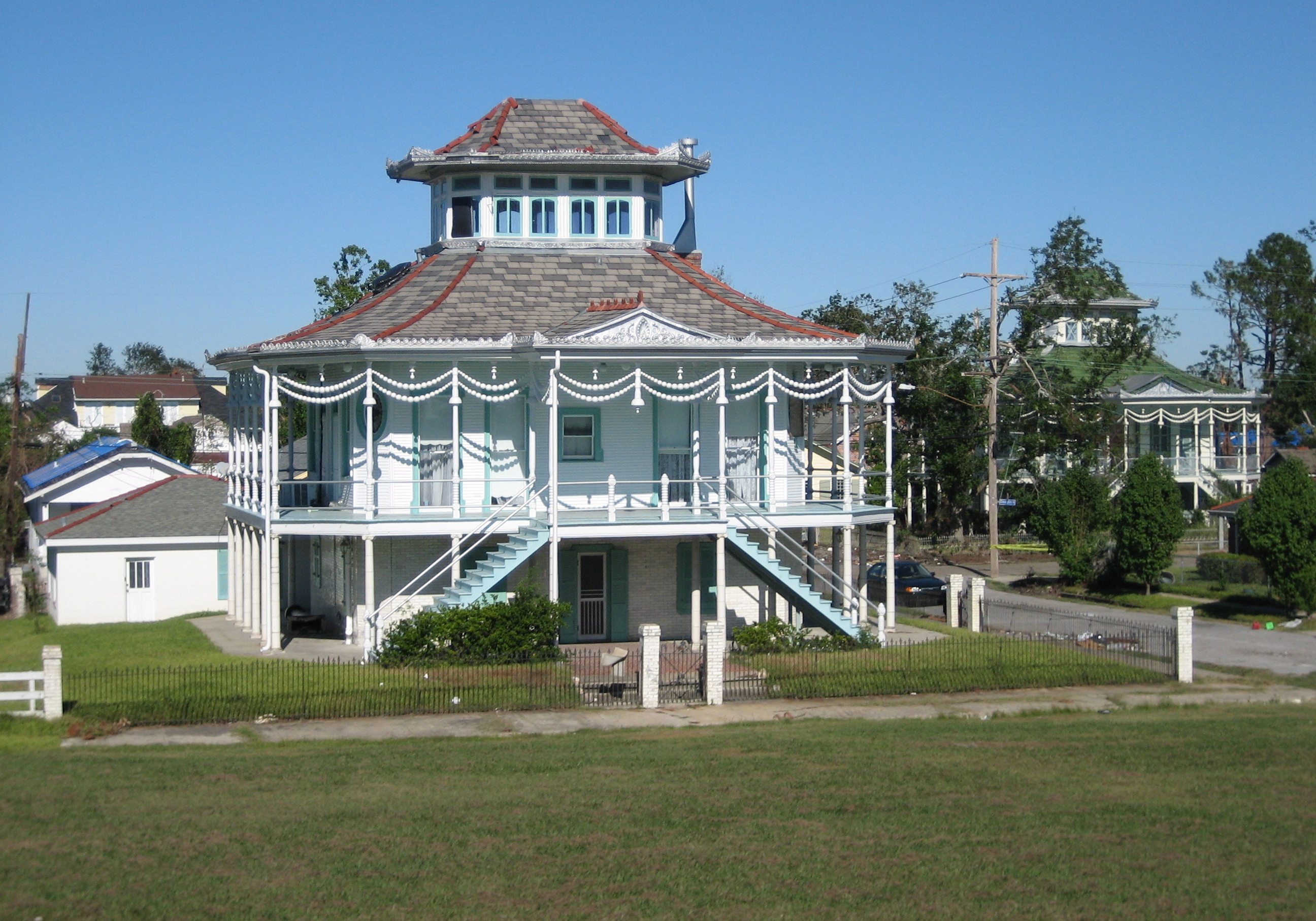
Katrina National Memorial Foundation Museum, 5909 St Claude Ave, ☏ +1 504-444-9249. M-Sa 11am-5pm. Commemorates the natural disaster that struck here. suggested donation of $20. Fats Domino House, 1208 Fats Domino Ave. Those wishing to drive by the house of music legend will find it on Caffin St between St. Claude and Claiborne; you can't miss the large letters "F D" on the front. House of Dance and Feathers, 1317 Tupelo St, ☏ +1 504 278-8242, [email protected]. 1317 Tupelo Street. Small museum dedicated to local Mardi Gras Indians and Second Line culture. Curator Ronald W. Lewis has interesting stories. Open by appointment only; contact in advance. Dan Baum's critically acclaimed book, "NIne Lives, Death and Life in New Orleans", which spans the 40 year history between Hurricane Betsy and Katrina, appropriately begins and ends with Ronald Lewis. If you are coming to New Orleans to just drink on Bourbon Street, there is no need to stop here. If you are coming to find a piece of the puzzle that makes The Big E what it is, Ronald's museum and history are worth an hour or two of your time. Have him sign your "Nine Lives" and consider purchasing his own wonderfully documented history of Mardi Gras and the Mardi Gras Indians with help from Neighborhood Story Project. Good stuff. donations. 1 Jackson Barracks Military Museum, 6400 St Claude Ave, ☏ +1 504 278-8242. M-Sa 10AM-4PM. Jackson Barracks military base has been here since the 1830s. This is an unorthodox choice for most Lower 9th visitors, but the Louisiana National Guard has an interesting military museum, with artifacts, weapons and memorabilia from every major American war. Free. Steamboat houses on Egania Street at the Mississippi River. A visitor attraction long before Katrina, these over-the-top ornate Victorian wooden houses in steamboat-baroque style are on the high ground of the least affected portion of the Lower 9th (with only a few feet of floodwaters for a few days, as opposed to over th
Do
Zeitgeist Multi-Disciplinary Arts Center, 6621 St Claude Ave, Arabi, ☏ +1 504-352-1150. This is a really cool complex with art films/indie films shown nearly every night. Check the calendar before coming, but mostly just to see what's on—it's a busy, thriving arts complex! On the second Saturday of each month 11AM-4:30PM, Zeitgeist opens the Och Gallery, which always has interesting art exhibits. The store is a great browse too, and is open one hour before nightly events. $7.
Sleep
Accommodations in the Lower 9th are available only for volunteers, but they are quite nice.
Common Ground Relief, 1800 Deslonde St, ☏ +1 504 312-1729. Short-term and long-term volunteers stay at one of two buildings Bernell's Lower 9th Ward Market, 2036 Caffin Ave, ☏ +1 504 319 5886. Check-in: M-F 8AM, Sa 9AM, check-out: M-F 8PM, Sa 6PM. $. (updated Feb 2019)
Go next
The closest fully functioning neighborhood with places to eat and drink is the Bywater, just west across the St. Claude Avenue Bridge. Saint Bernard Parish is to the east along Saint Claude or Claiborne Avenues. The Lower 9th has received far more attention than the rest of the city and surrounding areas for being the worst hit, and therefore has had the biggest volunteer effort. In some ways, this has left it looking a bit better than worse off neighbors, which have yet to be visited by Brad Pitt with hammer and plywood in hand. Arabi is just across the city line to the east, and remains largely destroyed, along with much of the rest of Saint Bernard Parish. Just beyond Arabi, Chalmette is functioning, but a drive through many residential sections will show vacant lots and boarded houses sometimes more numerous than those rebuilt and reoccupied. For that matter, huge sections of New Orleans such as Lakeview, Gentilly and Eastern New Orleans continue to struggle. If you truly want to understand what happened in this city, you should make a point to see what happened beyond this one small section.
Overview adapted from Wikipedia, travel guide fromWikivoyage (CC BY-SA). Photography via Wikimedia Commons.