
Kyrgyzstan
Kyrgyzstan · Asia
About Kyrgyzstan
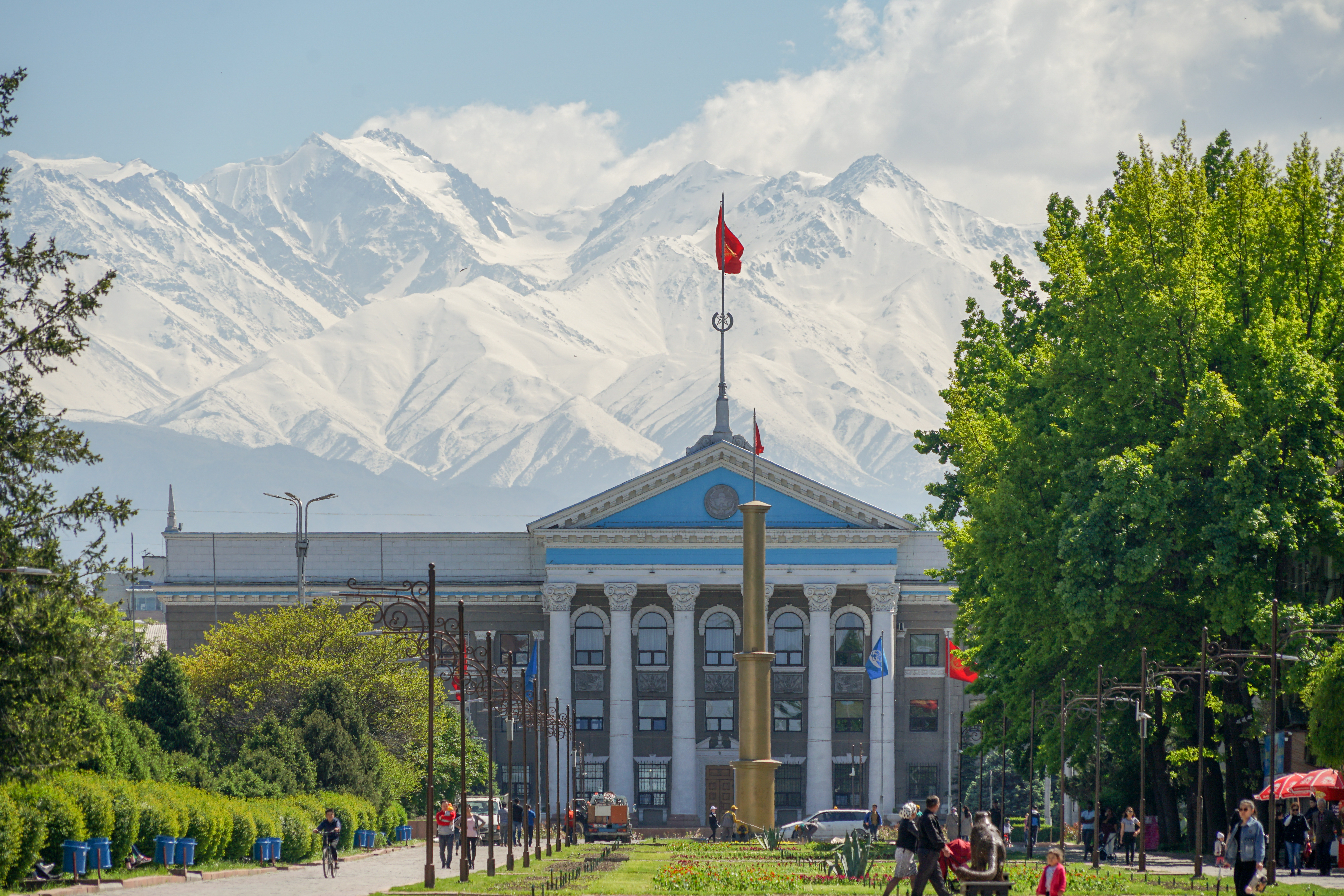
Kyrgyzstan (Kyrgyz and Russian: Кыргызстан), a Central Asian country, is often called as the "Switzerland" of Central Asia due to its mountainous terrain. The country offers breathtaking landscapes, including the Tien Shan Mountains, crystal-clear lakes such as Issyk-Kul and Song Kol, and beautiful valleys like the Ala-Archa National Park. These areas provide excellent hiking, trekking, horseback riding, and camping opportunities.
You can experience the hospitality of Kyrgyz nomads by staying in yurts, sample Kyrgyz cuisine, featuring hearty dishes like beshbarmak and manti, and sip on fragrant tea while listening to traditional music and folklore. The country celebrates cultural events and festivals throughout the year which showcase the country's traditions, arts, and sports.
Kyrgyzstan travel guide
Understand
Annexed by Russia in 1876, Kyrgyzstan, formally the Kyrgyz Republic (Kyrgyz: Кыргыз Республикасы; Russian: Кыргызская Республика), became an independent nation in 1991. Long hobbled by political instability, Kyrgyzstan is now one of the most progressive post-Soviet countries.
History
The ancient Scyths inhabited much of present-day Kyrgyzstan. With their disappearance the Kyrgyz people moved from Siberia. The Kyrgyz are descendants of tribes from the Tuvan region of Russia, which migrated to the area now known as Kyrgyzstan in the 13th century, during the rise of the Mongol empire. In 1876, with the destruction of the Khanate of Kokand, the area of today's Kyrgyzstan was incorporated into the Russian Empire. The natives of the region were known to the Russians (and; through them; to the Westerners) as the "Kara Kirghiz", the name "Kirghiz" being used to refer to the people who are now known as the Kazakhs. At about the same time, a widespread Muslim Rebellion against the Qing rule failed in the northwestern China, and a number of Uighur and Dungan people (Chinese Muslims) fled to the Russian Empire, finding new homes in what is now Kyrgyzstan and Kazakhstan. With the tsarist annexation came numerous Slavic immigrants that displaced many of the Kyrgyz and planted crops on their pasture lands. During World War I, many Kyrgyz refused to support the tsarist troops and many were massacred. Following the creation of the Soviet Union, the Kara-Kirghiz Autonomous Soviet Socialist Republic was established within the Russian Soviet Federative Republic. A small town, earlier known as Pishpek, was chosen as the capital of the republic, and renamed Frunze in honor of a Red Army commander. (This was not a name easy to pronounce; as there is no “f” sound in native Kyrgyz words) Two years later (1926), the Soviets tried to sort out the names of their ethnic groups: the Kara-Kirghiz Republic became the Kirghiz Republic (and the erstwhile Kirghiz Republic became the Kazakh Re
Getting there
Citizens of all countries, including Hong Kong, Macau and Taiwan, may apply for tourism, business and group tourist types of visa for 30 or 90 days online through the Kyrgyz Republic eVisa system.[1] Evisa holders must arrive via Manas International Airport, Osh International Airport or the Ak-jol checkpoint on the Kyrgyzstan-Kazakhstan border.
By plane The main hub for Kyrgyzstan is the Manas airport in Bishkek (BSZ IATA), but Osh Airport (OSS IATA) is increasingly well linked with great flight offers. Both airports have regular services to the international hubs in Istanbul and Moscow. In addition there are several flights a week to regional hubs in Tashkent, Ürümqi and a weekly service to Dubai. Other destinations close to border include Almaty in Kazakhstan or Tashkent in Uzbekistan, each a 5-hour drive away. Note that since 2018, a Russian transit visa is needed if changing plane in Russia, when traveling to or from Kyrgyzstan.
By train
Trains to Bishkek depart from Moscow and other stations in Russia a few times a week (3714 km; trip takes more than 3 days). This train goes through western Kazakhstan (Kazakh transit visa is required for those who need it), and is useful as such, as you can use it to get Turkestan or Aral. Details can be found at poezda.net [2] or rzd.ru [3] (you can also buy the tickets on the latter). The journey all the way from Moscow cost around 150€ in the third class. On the train it is forbidden to carry portable stove fuel cans.
By car The highway from Osh to the Chinese border at Irkeshtam and from the village of Sary Tash to the Tajikistan border is being reconstructed in stages to international standards. Many other highways are likewise being rehabilitated as funding permits. From Kazakhstan, the road from Almaty to Bishkek is the busiest. The border at Kegen may be more difficult to get across. Frequent and obvious smuggling happens in this border, and it's quite obvious that the immigration and the border guards are in
Getting around
By bus or marshrutka Minibuses, called marshrutka, in Kyrgyzstan are basically cargo vans (like Mercedes Sprinter) converted into buses with windows and seats. They are amazingly inexpensive and congregate at every village center or bus station. The prices for them are set and straightforward, but sometimes they will not leave until full. However, nowadays it seems that timetable are much more reliable and enforced than in the past. Always get your ticket at the kassa (if possible), where you will pay a fixed and pre-determined fare independently of the season, mood of the driver, or fact that you are a tourist. If there is no kassa, ask some (uninvolved) locals to determine the proper fare for your destination and hand the driver the exact amount when paying. Often the drivers stack up the price a little when they see you are a tourist. Sometimes they say that it is extra for the luggage and so on. Do not believe them, just pay the normal fare and say njet or jok. Also, always demand your change right away. Sometimes they take your money, believing you do not know the right fare, or pretend to give the change later, just to make you forget about asking for it. Either way, if not starting from a bus station with kassa, always give the fare to the driver directly and no intermediate pretending to "help" you. Marshrutkas can be hailed anywhere but in Bishkek it makes sense to stick to the bus stop where everyone is waiting. For connections checkout the 2GIS app and website, which is great for finding the right marshrutka or bus number in Bishkek and all over Kyrgyzstan. The service is used extensively by locals.
By autostop
Hitch-hiking, commonly called autostop in Kyrgyzstan, is the most undervalued form of travel in this country. It is the most efficient and authentic way to see Kyrgyzstan, equally popular with locals and visitors. You can see many locals, often traditionally clothed babushkas hitch-hiking without any fear. Almost everyone who has free space i
See
The capital Bishkek is buzzing with busy people, infinite traffic, bazaars, Soviet monuments, large plazas and a growing cosmopolitan population. The city of Osh boasts the famous bazaar, mosques and a distinct Soviet architecture. Issyk Kul in eastern Kyrgyzstan is surrounded by mountains, the world's second largest alpine lake and a popular summer destinations for guests from all surrounding countries. Tash Rabat, the ruins of an ancient caravansarai in the Naryn Region. Al-Archa National Park with mountain peaks of over 4,000 m is a half-hour drive from Bishkek. Arslanbob, nestled in a beautiful valley and famous for its walnut forest, balancing effortlessly between pastoral life and a popular destination with Kyrgyz and Uzbek families. Kyrgyzstan's only World Heritage Site is the Sulaiman-Too mountain in Osh.
Do
Wander around Osh Bazaar – Traditional Eastern market in Bishkek selling everything from spices to dishwashers. Buy cheap Chinese goods in Dor Doi Bazaar – The largest market i
Overview adapted from Wikipedia, travel guide fromWikivoyage (CC BY-SA). Photography via Wikimedia Commons.