
Khyber Pass
Afghanistan · Asia
About Khyber Pass
The Khyber Pass is the main route between Pakistan and Afghanistan. The pass is entirely within Pakistan. The nearest major cities on the route that goes over the pass are Jalalabad in Afghanistan and Peshawar in Pakistan, with Torkham as border crossing point.
The only alternate route is the Bolan Pass, further south near Quetta, which crosses the same mountain range.
Khyber Pass travel guide
Understand
Crossing the Khyber has always been something of an adventure. Even in peacetime, this was a fairly wild region where banditry and tribal warfare were part of local history and almost every adult male went armed. Today, with the region in the centre of an ongoing armed conflict, it is clearly far too dangerous for most.
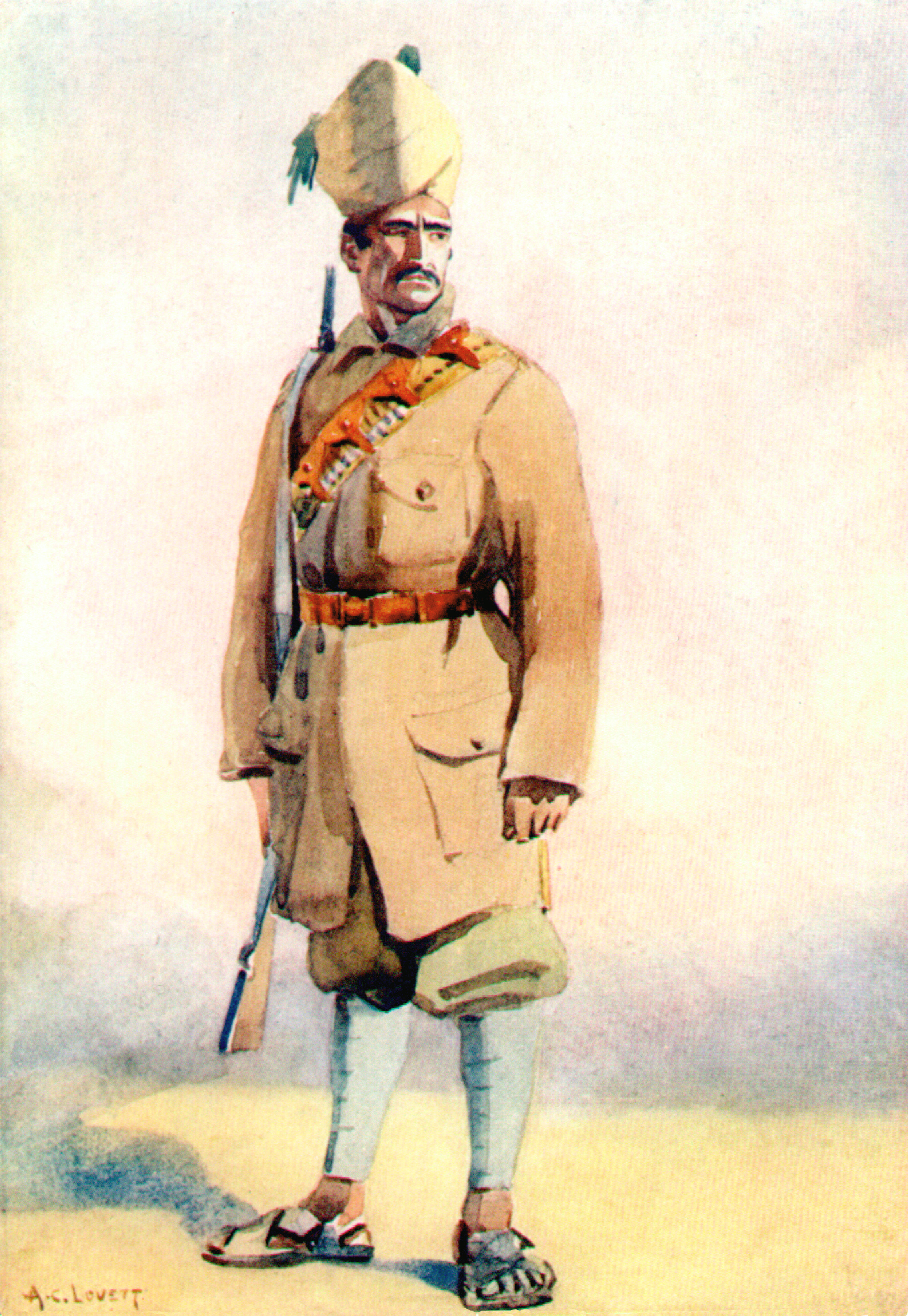
The area is inhabited by Pathans or Pashtuns, rather fierce Pashto-speaking hill tribes. On the map, it was a border region of the British Raj and is now part of Pakistan, but neither the British nor the Pakistani government have ever fully controlled it; Pathan tribal chiefs run everything. Pashtun territory spans the border. 60% of them live in Pakistan, 40% in Afghanistan. In Afghanistan, they are the largest ethnic group at 40-odd% of the population and have often dominated government and business. The Pashtuns have twice defeated the greatest armies of their day. When Alexander the Great wanted to cross the pass, he could not manage it until he bribed some Pashtuns to assist him against others. Later the pass was the border of the British Raj; Britain fought several wars in the area and never completely subdued it. In the first Afghan war (1839-1842), at the height of British power in Queen Victoria's reign, a force of 16,000 (4500 soldiers plus grooms, cooks, etc.) tried to retreat from Kabul to Jalalabad and only one man reached Jalalabad alive. Pashtuns were also recruited into the British military, where many of them were excellent soldiers. There were several famous regiments, mainly cavalry, that were entirely Pathan except for the British officers. Today, the Pakistani military includes many Pashtuns. The Pashtuns provided most of the adherents of Taliban. That movement originated in Pakistan and only later — with help from the CIA and Pakistani Intelligence, who saw it as a counter to Mujahideen warlord power — took over Afghanistan. Among its strongest influences are the traditional Pashtun code of ethics, Pashtunwali, and the Deobandi
Getting there
Except for trails which only locals can use safely, the only way in or out is via the main road through the pass. From Peshawar to Torkham (the border town) you are required to obtain a permit and travel with an armed guard, and you will receive a similar escort in the opposite direction if arriving in Pakistan via the pass. Taxis and buses are available on both sides of the border. See the Afghanistan and Pakistan pages for detailed info on crossing the pass. The pass is on the Istanbul to New Delhi over land itinerary, though the current recommended route avoids it. The pass forms part of the Grand Trunk Road, a historic highway that runs through parts of four countries — Bangladesh, India, Pakistan and Afghanistan.
Getting around
Travelling by car or taxi is common. Traffic can be heavy and the roads are not in the best condition.
See
At the top of the pass is the town of Landi Kotal, famous for smuggling everything from consumer electronics to AK-47s. Attractions for the intrepid tourist include weapons factories and hashish warehouses.
1 Bab-e-Khyber. Monument situated at the entrance of the Khyber Pass. The gate is located immediately west of Peshawar, with the historic Jamrud Fort lying adjacent to it (updated Jun 2022) 2 Jamrud Fort. (updated Jun 2022) 3 Khyber Rifles Museum. Located within the Landi Kotal Fort, this fascinating museum tells the story of Khyber Rifles paramilitary force, with a treasure trove of artifacts and memorabilia. (updated Jun 2022) 4 Ali Masjid Fort. (updated Jun 2022) 5 Shagai Fort. (updated Jun 2022) 6 Taimoor Fort. (updated Jun 2022)
Buy
Afghan men often carry guns, at least in the countryside. Older Afghan weapons might interest gun collectors; see Afghanistan#Guns for details. The pass region is one of the best places to find these.
Eat
There is a small restaurant at the Torkham border post with good cheap Pakistani food.
Drink & nightlife
Alcohol is forbidden to Muslims and is frowned on throughout Pakistan. It is tolerated to a considerable extent in some of the cities, but much less so in this conservative tribal area. Do not bring booze here or, if you decide to take the risk, then keep it well hidden.
Sleep
There is no accommodation for travellers in the pass, and camping would be extremely foolhardy. The nearby cities of Jalalabad and Peshawar do have accommodation.
Go next
On the Pakistan side, the pass leads to Peshawar which is well-connected to anywhere else in the country. Important tourist destinations reasonably nearby are the archeological site at Taxila and the Mughal city of Lahore. On the Afghan side, the first city is Jalalabad. From there a rather perilous drive up the Kabul Gorge will bring you to Kabul.
Overview adapted from Wikipedia, travel guide fromWikivoyage (CC BY-SA). Photography via Wikimedia Commons.