
Kazakhstan
Kazakhstan · Asia
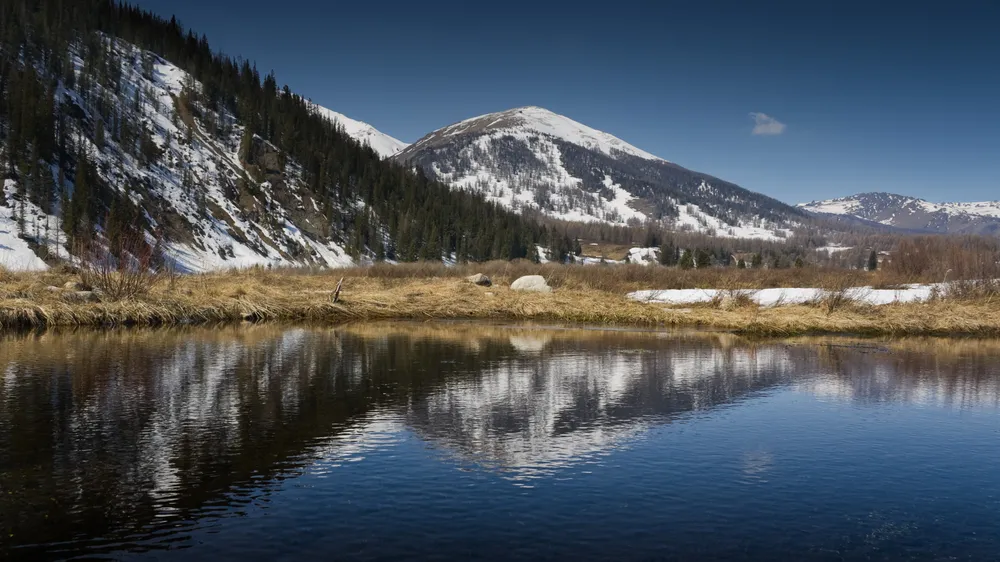
About Kazakhstan
Kazakhstan is the largest of the states of the former Soviet Union apart from Russia, and it dwarfs the other countries of Central Asia and stretches into Eastern Europe. Kazakhstan is the richest country in the region due to its large oil and natural gas reserves and is also the largest in Central Asia. And while the endless, featureless steppe might repel some visitors the emptiness and mystery of this goliath state keeps many others captivated.
Kazakhstan travel guide
Understand
History Ethnic Kazakhs, a mix of Turkic and Mongol nomadic tribes who migrated into the region in the 13th century, were united as a single nation in the mid-16th century. The area was conquered by the Russian Empire in the 18th century, and Kazakhstan became a Soviet Republic in 1936. The traditionally-nomadic Kazakhs were forced to sedentarize as part of Stalin's collectivization policies. While it became independent following the collapse of the Soviet Union in 1991, the country is still home to a large ethnic Russian minority, and the Russian language continues to be widely spoken. During the launching of the 1950s and 1960s agricultural "Virgin Lands" program, Soviet citizens were encouraged to help cultivate Kazakhstan's northern pastures. This influx of immigrants (mostly Russians; but also some other deported nationalities; including the Volga Germans) skewed the ethnic mixture and enabled non-Kazakhs to outnumber natives. Independence has caused many of these newcomers and their descendants to emigrate. Modern Kazakhstan is a neo-patrimonial state characterized by considerable nepotism and dominance over political and economic affairs by President Nursultan Nazarbayev, who stepped down in March 2019 after a 29-year-tenure. However, it is not a severely authoritarian government compared to bordering Turkmenistan, Uzbekistan and China and opposition is not usually sacked or imprisoned. Since independence from the Soviet Union in 1991, the Kazakh government has allowed foreign investment to flow into the capital to develop. The development of significant oil and gas reserves, particularly in the north and west, has brought a large amount of wealth to the country, though the money falls into the hands of just a few people. Nevertheless, Kazakhstan is now labelled a middle-income country, and is already classified with a high Human Development Index. Corruption in Kazakhstan is ubiquitous compared to China, but it is not as widespread as other countries in the
Getting there
Entering Kazakhstan is no longer the hassle it used to be. The Kazakh government is keen on opening up Kazakhstan to the rest of the world, and most people can enter the country without a visa.
Entry requirements Citizens of the following countries (ordinary passport holders) may enter Kazakhstan without a visa for up to a certain number of days:
14 days: China (mainland), Hong Kong, India and Iran 30 days: Australia, Austria, Argentina, Bahrain, Belgium, Bulgaria, Brazil, Vatican City, United Kingdom, Hungary, Vietnam, Germany, Greece, Denmark, Israel, Indonesia, Ireland, Iceland, Spain, Italy, Canada, Qatar, Cyprus, Colombia, South Korea, Kuwait, Latvia, Lithuania, Liechtenstein, Luxembourg, Malaysia, Malta, Mexico, Monaco, Netherlands, New Zealand, Norway, United Arab Emirates, Oman, Poland, Portugal, Romania, Saudi Arabia, Serbia, Singapore, Slovakia, Slovenia, United States, Thailand, Turkey, Uzbekistan, Philippines, Finland, France, Croatia, Czech Republic, Chile, Switzerland, Sweden, Ecuador, Estonia and Japan 90 days: Azerbaijan, Armenia, Belarus, Georgia, Kyrgyzstan, Moldova, Mongolia, Russia, Tajikistan and Ukraine Check the Kazakh government website for the latest list. All other nationalities are required to obtain a visa in advance, which will require you to present a letter of invitation from a resident of Kazakhstan. If you are joining a package tour, the tour company can usually procure the letter of invitation for an additional fee; check with the company to be sure. If you know in advance that your stay will be longer, e.g. for work, then you need a visa, which will need to be supported by an official Letter of Invitation from the employer or agency in Kazakhstan. For more information see Ministry of Foreign Affairs of Kazakhstan. For tourist visits where you're enjoying the country so much that you want to stay on, the simplest way is to take a trip to neighbouring Kyrgyzstan, which also has no visa requirement for many countries, and come st
Getting around
You can travel within the country using taxis, buses, trains and planes, it depends on your budget and demands.
By bus In Semipalatinsk (Semey) a marshrutka costs 35 tenge, and a large bus costs 35-40 tenge. In Astana it ranges between 60-65 tenge.
Public buses Public transportation in big cities is rather popular. You can use buses, trolleys, trams and minibuses. One big minus of all of them is that they never come on schedule and very crowded on peak time. Moreover, there is absolutely no plan with bus stops and schedule whatsoever. If you don't speak Russian, taking the bus will be quite tricky but not impossible.
Marshrutkas Similar to regular buses and another cheap way to get around is by taking a marshrutka. These are the dilapidated transport vans that cruise around or between towns. They usually have a sign (in Russian) listing the destination, and the driver will usually call out where they are going. However, you will not find them operating inside of Almaty city.
Long-distance buses
They're a popular alternative to trains and are faster, but less comfortable. Similarly to train travel, you will need to buy your ticket in advance and will be given a seat number. Be careful when the bus makes a toilet stop, the driver often does not check whether all the passengers are on board before driving away! Fares are relatively low, for instance a single from Almaty to Karaganda (14 hr) will cost you 2,500 tenge—much cheaper than a flight ticket.
By taxi Use taxis as they are very cheap (€2-6 within the city). You don't have to use official taxis in most cities, basically you can stop almost any car on the street by raising your hand. It works well in Almaty & Astana, but in Karaganda the best way is one of taxis by phone. It some cheaper and even faster than hitch-hike waiting. Apps such as Uber or Bolt do not work in Kazakhstan, but you can download Yandex Go and use this for everything. If you are staying there for any length, this is highly adv
See
As the Kazakhs were traditionally nomads who lived on horseback, Kazakhstan for the most part lacks the monumental Islamic architecture of neighboring Uzbekistan. However, Kazakhstan makes up for this with its wealth of natural beauty, which can be seen in the wide open spaces between its cities. Visitors wanting to experience the traditional Kazakh nomadic lifestyle will likely be disappointed. Under Stalin's collectivization policy during the period of Soviet rule, the Kazakhs were forced to sedentarize and become farmers, all but wiping out the nomadic tradition within the borders of modern Kazakhstan. There are opportunities for tourists to stay in Kazakh yurts, but these were re-created in the post-Soviet era as tourist attractions, and are not an authentic part of the daily lives of regular Kazakh people. Nevertheless, traditional Kazakh clothing still reflects that nomadic heritage and traditional life on horseback, the horse remains an important part of Kazakh culture, which vi
Overview adapted from Wikipedia, travel guide fromWikivoyage (CC BY-SA). Photography via Wikimedia Commons.