
Kamalapura
India · Asia
About Kamalapura
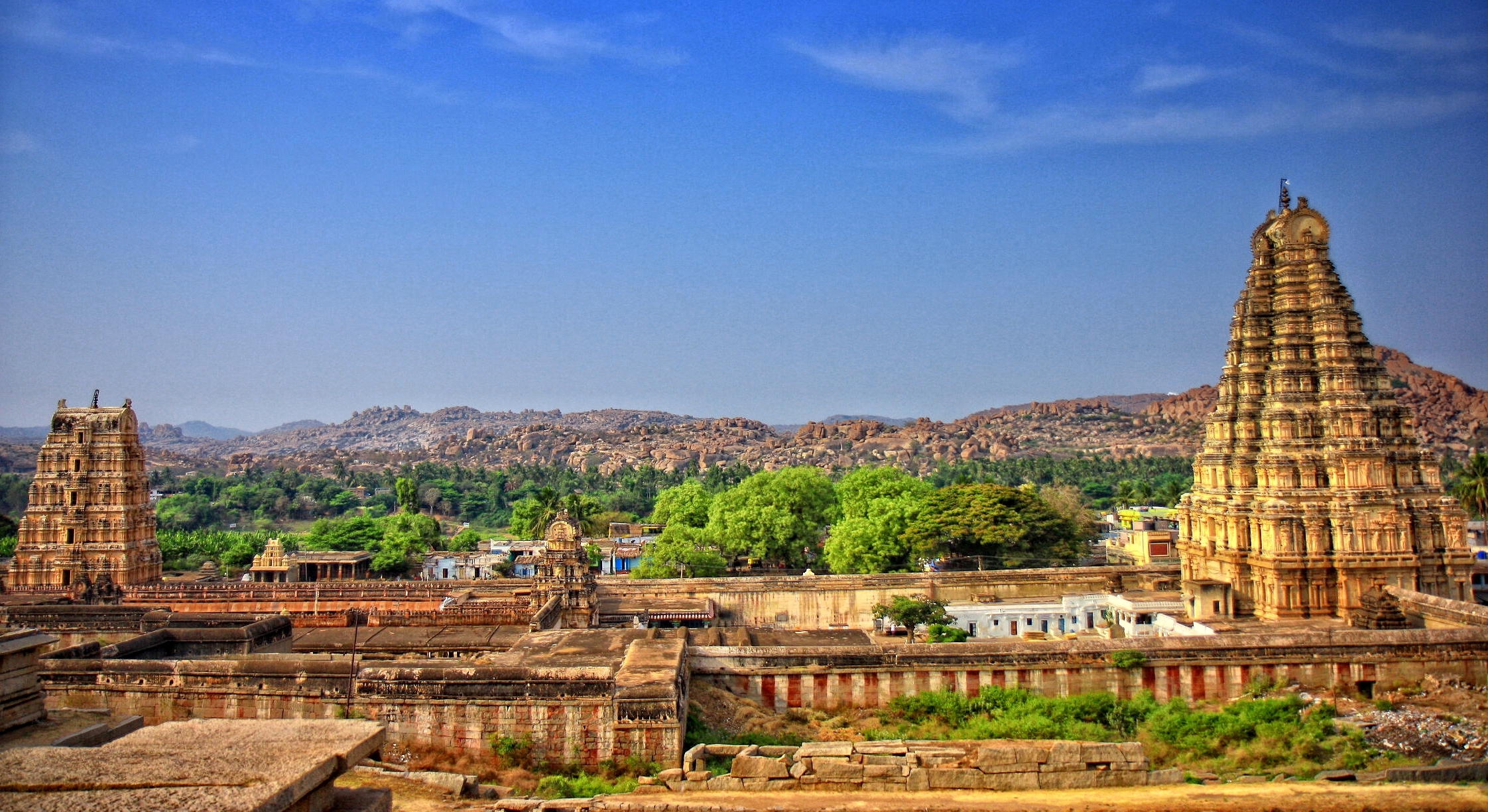
Hampi, in the state of Karnataka, India, is the site of the once-magnificent capital of the Vijayanagara Empire. The ruins are a UNESCO World Heritage site.
Kamalapura travel guide
Understand
Hampi was the capital of South Indian Vijayanagara Empire from the fourteenth to seventeenth centuries. As a UNESCO World Heritage site, Hampi attracts many visitors, many from other countries. For first-time visitors, it is highly recommended to hire a guide to help understand the magic and grandeur of Hampi by explaining its history and associated legends. Before the fall of Vijayanagara Empire, diamonds were sold on the streets. The main street selling diamonds and other precious stones was surprisingly called Pan Supaari Street. A visitor can still see the exact location of Pan Supaari Street in Hampi, which has been marked with a board by Archaeological Survey of India (ASI). Hampi is well worth at least one visit. The area is simply stunning and you will be in awe of the millions of boulders surrounding the area, many of which are scaled by climbers from all over the world. Within this landscape lies a little oasis with lush palm, banana, and mango trees and rice paddies nestled near the river. Hampi is a great place to spend a few days wandering around and discovering the rich, vibrant history while also having a bit of 'your' time. Hampi hosts the 'Hampi Utsav' (literally 'Hampi Festival') every year during the first week of November. It is a visual delight as all the monuments/ruins are lighted in the night and it is a cultural extravaganza of dance and music.
Read A Forgotten Empire (ISBN 1419101250), Robert Sewell — a dated text (published over a century ago), but a thorough and interesting exploration of the rise and fall of the Vijayanagara Empire. The New Cambridge History of India: Vijayanagara (ISBN 9781107022676), Burton Stein — part of Cambridge's gigantic multivolume work on the history of India, this is a definitive text on the Vijayanagara Empire's historical import.
Getting there
By plane The closest airport is Vidyanagar Airport (VDY IATA also known as Jindal Vijaynagar Airport), about 35 km to the east, near the village of Toranagallu. TruJet, a regional airline, offers regularly scheduled flights from Hyderabad and Bangalore as of April 2018. Bangalore is the nearest international airport, 350 km away from Hampi. Private taxis cost more than ₹6000 for Bangalore to Hampi.
By train The nearest railway station is Hosapete Junction (IR station code: HPT), 13 km away. Overnight trains run several times a week from Bangalore, Hyderabad and Goa. The trains are a much cheaper and more comfortable route than the tourist buses most people are led into (2 AC - bed with linen - costs ₹750 from Bangalore to Hampi). You can also catch an overnight train from Mysore to Hubli and from there to Hospet/Hampi. Here are some useful trains to get into Hampi:
From Hospet it's convenient to take a rickshaw to Hampi (₹250) or Virupapura Gaddi/Hanumanahalli (the northern side of the river), which is a much longer drive, hence costs ₹1,200. Rickshaw drivers can be persistent and will poke their heads in the train before you even get off, but they may very well be the best option. Buses to Hampi are cheaper. It's about a kilometre and a half walk from the train station to the bus station. Take an Auto-rickshaw up to bus-stand (₹5 per head) and you can easily get frequent government buses for Hampi (₹10 per head). Also see Rail travel in India
By car Bangalore: 350 km; drive the 200 km till Chitradurga (featuring a fort from 10th century AD and a dam from 1907) on NH-4, take a right turn on NH-13 towards Sholapur till Hospet, and then drive another 13 km to reach Hampi (direction towards Hampi is well marked). The road is in excellent condition till Chitradurga but then deteriorates rapidly. You are also likely to encounter traffic jams due to ore-laden trucks plying on NH-13. Hubli: 150 km Hospet: 13 km Hyderabad: 360 km. Take NH-7 till Jadcharla X-Road,
Getting around
The real pleasure in exploring Hampi comes from on the bicycle or by walking around. Virtually every rock in Hampi has a story to tell. This story is best heard if you give it time and walk around from rock to rock. Do note that the weather in Hampi can be a big factor. With all the boulders, big and small around, with soil from years of erosion, there is a lot of dust that blows in the air. There are open spaces with strong winds and while the wind keeps you pleasant, you can have a lot of dust blowing into your nose and mouth. In many of the monument areas, there are no trees or anything to provide shade (except the monuments themselves). So walking or cycling around the area involves a lot of exposure to direct sunlight. Keep your sunblock creams, hats, wet towels around your neck and bottles of water with you all the time.
By auto rickshaw A convenient way to see all the sights without climbing the hills is by rickshaw, as the very aggressive drivers will very insistingly suggest as soon as you show your face anywhere. Bargain with your rickshaw driver for a fixed rate (₹400-500 for a full day seems to be okay) and then hire an official Karnataka Travel guide (at the tourist office; they have fixed rates: 4 hr costs ₹500; 8h is ₹800) It costs a little bit, but the explanations help you to see more than just stones and temples. To get an estimate of cost and content, you can talk to the guides before coming down to Hampi. The guides willingly share their cellular numbers and email addresses. As of Nov 2023, the full day charge for an auto-rickshaw varied from ₹1500 to ₹2000 depending on your negotiation skills.
By bus The rickshaw drivers will tell you that there is no bus service with a straight face, but it's a lie. There are frequent buses between Hospet and Hampi, through Kamalapur where half of the ruins are located. So it's completely possible, for those who can bear long walks in the scorching sun, to visit Hampi without using a single rickshaw.
See
Hampi is a visual delight, especially due to its stark contrast from most other places. Rocks are all you see whichever direction you look. Vegetation is visible in the wet months; but again it never dominates the landscape. It is an ideal spot for people who are interested in history and/or nature. There are many sites of interest in and around Hampi. The following list of must-visits is sorted by the number on the map you see in the temples (from 1 to over 80 sites!): 1 to 35 being around Hampi; 40s to 70s in the southern part towards Kamalapura. Most sites are free, but the Vithala temple, the Lotus Mahal (incl. Zanana enclosure and Elephant Stables) as the Archeological museum have a combined ticket (₹600) valid for one day, so you have to plan your journey a bit! For instance, if you rent bicycles and start early in the morning, you can cover the southern temples in the morning, spend the hot hours of midday in the museum and go in the late afternoon to the Vithala temple! And eventually keep all sites closest to Hampi for a second day.
1 Hemakuta Hill temples. 4 (updated Jan 2023) 2 Virupaksha Temple. 5. Contrary to most other temples, this one is still
Overview adapted from Wikipedia, travel guide fromWikivoyage (CC BY-SA). Photography via Wikimedia Commons.