
Jishou
People's Republic of China · Asia
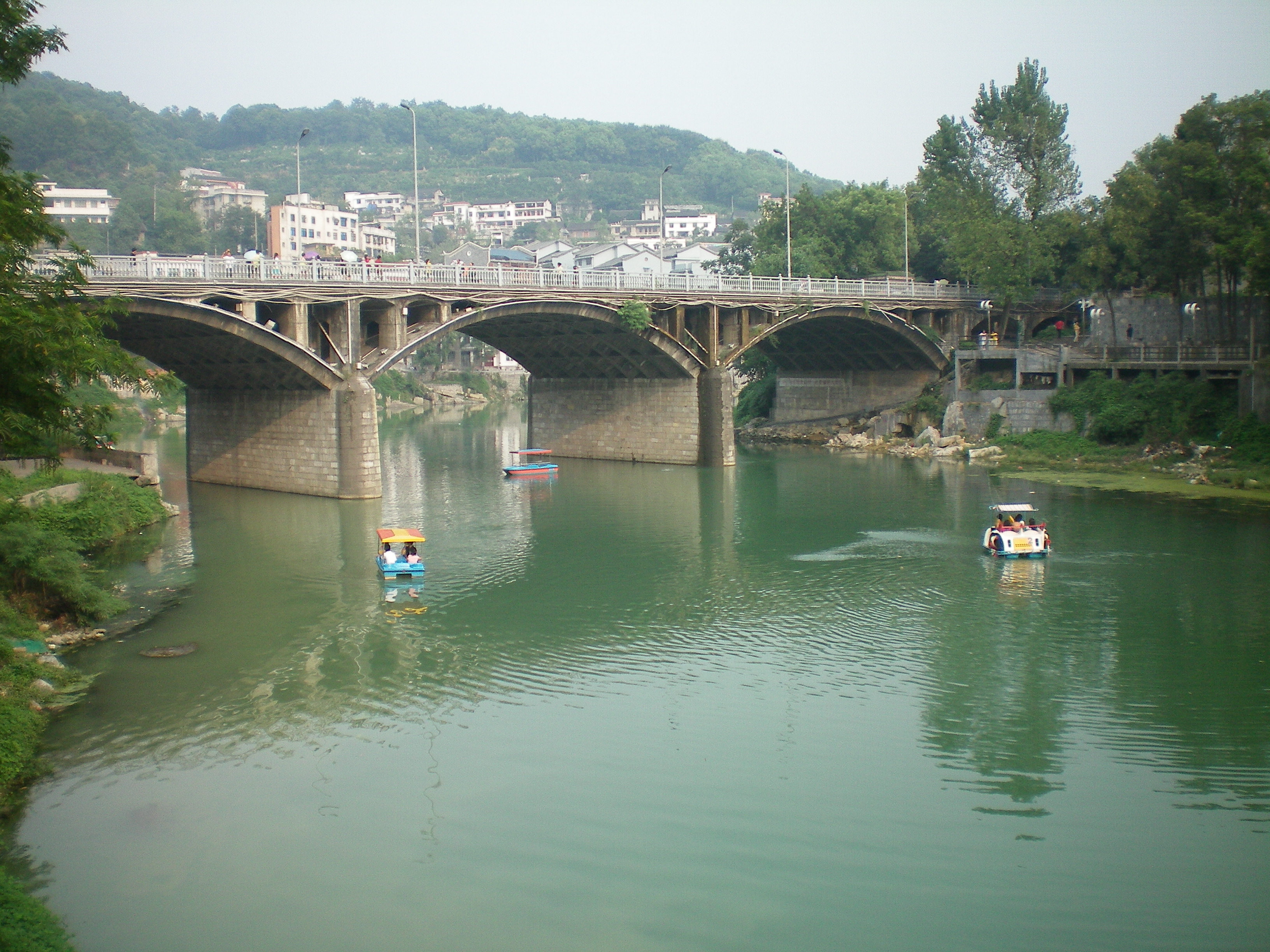
About Jishou
Jishou (Jíshǒu) is in Hunan, and is the capital of the Xiangxi Tujia and Miao Autonomous Prefecture.
Jishou has little to offer the tourist, but it is the jumping off point for scenic spots like Dehang and Fenghuang. Most people do not speak English, so bring a Chinese phrasebook or practice your Chinese. Hotel clerks may speak a smattering of English, though.
Jishou City, referred to as "Ji", belongs to Xiangxi Tujia and Miao Autonomous Prefecture in Hunan Province, is the capital city of the autonomous prefecture and the central city of Wuling Mountain area. It is located in the west of Hunan Province and the south of Xiangxi Tujia and Miao Autonomous Prefecture, between 28°08'~28°29'N latitude and 109°30'~110°04'E longitude, belonging to the subtropical humid monsoon climate zone, with mild climate and four distinct seasons, with a total area of 1094.67 square kilometers. As of the end of 2023, Jishou City has a permanent population of 432,400. As of June 2023, Jishou City has jurisdiction over 6 streets, 5 towns and 1 township, and the Municipal People's Government is located at No. 823, Building B, Municipal Building, Qianzhou New District.
In the third year of Xining in the Northern Song Dynasty (1070), the town of Xizhai was placed in Jishou City. In the thirtieth year of Hongwu in the Ming Dynasty (1397), the Zhenxi military and civilian thousands of households wer
Jishou travel guide
Getting there
Jishou has no airport. The nearest ones are in Zhangjiajie and Changde, about two hours away. The city is easily accessible by bus or train, however.
By train Jishou train station lies north of the city center. Several direct trains leaving each day connect it to Huaihua and Zhangjiajie, each about two hours away, and Changsha, about seven hours away. Tourists coming out of the train station will be greeted by eager taxi and bus drivers offering rides to Dehang, Fenghuang and other places. Their prices may be higher than those at the city's two bus stations, however.
By bus Jishou has two bus stations. The North Station is just a few blocks east of the train station. The east station is on Wuling East Road (Wuling Donglu), in the city center a short taxi ride away. From the North Station (běizhàn), frequent motorcoaches connect to Changsha, Dehang, Yueyang, Changde, Zhangjiajie and other cities to the north and east. Fares vary depending on the day and whether it is a holiday. The trip to Changsha usually costs between ¥90 and ¥140 and takes about four to five hours, with a short rest stop at the halfway point. From the East Station (dōngzhàn), buses leave for Fenghuang, Huaihua and other cities to the south and west. Fares vary depending on the day and whether it is a holiday. Motorcoach service to Chongqing began with completion of a new expressway in 2012. The ride takes about seven hours and costs about ¥150. There are nine bus lines, including No. 17, No. 21, No. 22, No. 23, No. 15, No. 17, No. 19, No. 20 and No. 21, which go directly to Jishou East Station
Getting around
Jsihou is a small city, and walking around the city center can be done on foot. There are many taxis cruising the streets, however. Fares begin at ¥3. Four bus transit lines travel along the main north-south road and east-west road. Fares are ¥1.50 for non-air-conditioned buses and ¥2 for air-conditioned ones.
See
Jishou is primarily a commercial and transportation hub for the Xiangxi autonomous area, and has few tourist attractions of its own. However, you can take a city bus (#1 or #6) or taxi to two nearby attractions. South of Jishou is Qianzhou, a newly developed commercial complex. There are two attractions: the Miao Museum and the reconstructed Qianzhou Old Town. Jishou University (Jishou Daxue), which is midway between the train station and Qianzhou, is home of the Huang Yongyu Art Museum. Most tourists coming to Jishou are on their way either to Dehang or Fenghuang. Other old towns include:
1 Dwarf Bridge, Hunan Xiangxi Dwarf Town (by bus), ☏ +86 743-8758777. 08:30-17:30. The large suspension bridge is located in Xiangxi, Hunan Province, where the Detam River flows through the valley floor, and the design elevation of the bridge deck is about 330 meters above the ground. The bridge type scheme is a steel truss stiffened beam single-span suspension bridge with a total length of 1073.65 meters, and the main span of the suspension bridge is 1176 meters. At the end of March 2012, the large suspension bridge was officially opened to traffic.The bridge is very majestic, and the project is very difficult. The bridge is surrounded by steep valleys, often surrounded by fog in the valleys. The bridge is a section of the expressway, tourists can not walk directly on the bridge, you can take the sightseeing bus and sightseeing elevator provided by the scenic spot, arrive at the viewing platform, and watch the bridge up close. 100CNY. (updated Oct 2024) 2 Liye old town, Liye Town, Longshan County, Xiangxi Tujia and Miao Autonomous Prefecture (bus), ☏ +86 743-6612266. 09:00—16:30. situated in the hinterland of Hunan province's Wuling mountain, under the jurisdiction of Xiangxi's Longshan county The ancient city of Liye was originally the county seat of Qianling County under the jurisdiction of Qianzhong County of Chu State in the Warring States Period, an
Buy
Jishou has one major shopping mall, Heshengtang, near the walking street, Buxingjie. Both offer Chinese name brand items.
Fenghuang Crispy Candy Fenghuang Crispy Candy is a traditional delicacy in Jishou City, known for its crispy and delicious taste, as well as its sweetness without being greasy. This type of candy is made from high-quality glutinous rice, maltose and other raw materials, with a golden appearance and distinct layers, making it an essential delicacy for festivals and celebrations.
Miao silver jewelry The Miao silver jewelry in Jishou City also enjoys a high reputation. Miao people are skilled in making various silver jewelry, such as silver bracelets, silver necklaces, silver earrings, etc. These silver ornaments are exquisitely crafted and uniquely designed, making them an important part of Miao culture and a beloved souvenir for tourists.
Jishou cured meate Jishou cured meat is a very famous specialty food in the Xiangxi region, known for its unique pickling and smoking techniques. High quality pork is locally selected and processed through multiple steps such as pickling, drying, and smoking. The meat is firm, bright red in color, and has a unique flavor, which is highly favored by consumers.
Xiangxi kiwifruit Xiangxi region is one of the main production areas of kiwifruit in China, and Jishou city also has large-scale cultivation. The kiwi fruit here has excellent quality, full fruit, moderate sweet and sour taste, rich nutrition, rich in vitamin C and various trace elements, making it a healthy natural fruit.
Huayuan chili Huayuan County is under the jurisdiction of Jishou City, and the chili here is famous for its strong spicy flavor and pungent aroma. Huayuan chili is not only an indispensable seasoning on the local dining table, but also a high-quality raw material for making chili sauce, chili oil and other chili products.
Jishou Tea Jishou City is located in a mountainous area with a humid climate, which is very suitable
Eat
Only one Western food chain, KFC, has a restaurant here -- in Heshengtang Mall. There are many restaurants offering Hunan's spicy cuisine, however.
Jishou Rice noodles Every native of Jishou must go to the Rice noodles shop in Jishou to eat a large bowl of fragrant Rice noodles when he comes home from other places.Jishou's Rice noodles are all made from beaten rice. Nothing particularly special. Especially its seasoning. The seasoning in other places is simply adding a few pieces of meat or some cooked things.The pork, beef or other meat in the Jishou Rice noodles seasoning must be boiled for a long time, and more than N materials are added, and no soup will be added.
Rice Tofu Rice tofu is a famous local snack. This dish is smooth, tender, sour, spicy and delicious.it is made by washing and soaking rice, grinding it into rice slurry with water, then boiling it with alkali, cooling it, and forming block shaped "tofu".
Qianzhou salted duck Jishou is a famous traditional specialty As early as the Qing Dynasty, it was exported to Japan and Southeast Asia.Tourist
Overview adapted from Wikipedia, travel guide fromWikivoyage (CC BY-SA). Photography via Wikimedia Commons.