
Jinjiang
People's Republic of China · Asia
About Jinjiang
Jinjiang is a mainly industrial city just across the river from Quanzhou in Fujian. Administratively, it is a county-level city in Quanzhou Prefecture, but for practical purposes it can be thought of as a suburb of Quanzhou. Population was a bit over two million as of the 2020 census.
Jinjiang travel guide
Understand
History Jinjiang has a history dating back over 1,300 years. It was established during the Tang Dynasty and developed as a significant port in the Song and Yuan Dynasties, playing a role in trade along the Maritime Silk Road. Known for its cultural heritage and thriving modern industries, Jinjiang is a blend of historical significance and economic vitality.
Climate Jinjiang experiences a subtropical monsoon climate, similar to nearby cities like Quanzhou and Xiamen. Compared to northern Fujian cities, Jinjiang's climate is milder and more humid throughout the year. Its weather is primarily influenced by monsoons, with hot, humid summers and mild, wet winters. Summers in Jinjiang are typically warmer than in Xiamen but slightly cooler than in Quanzhou. The city experiences high humidity during summer, with levels often exceeding 80%, making the heat feel more intense. Winters are relatively mild, with temperatures rarely dropping below freezing, though occasional cold snaps can occur. The annual rainfall in Jinjiang ranges from 1,200 to 1,800 mm, with most precipitation occurring during the rainy season from April to June and in typhoon months from July to September. The city is prone to heavy rains during typhoons but has implemented effective drainage systems to mitigate flooding risks.
Getting there
By plane
1 Quanzhou Jinjiang International Airport (JJN IATA). Jinjiang is home to the main airport serving Quanzhou. However, it is a fairly minor airport; there are flights to Hong Kong and some mainland cities and some international flights to other Asian cities, but not a large choice of flights. The usual way to fly into the region would be via Xiamen or Fuzhou, both of which have larger airports with a broader range of flight choices.
By train 2 Jinjiang railway station. Jinjiang is served by Fujian's coastal high-speed railway, with frequent service to points along the Fuzhou-Xiamen axis. Some trains continue north (to Hangzhou and Shanghai; or to the interior of China), or south (to Shenzhen).
By bus From Quanzhou, you can reach Jinjiang by city bus (801 and 802 are two of the numbers), or by taxi. To get there by bus from Xiamen, take a Quanzhou bus and get off when it passes through Jinjiang.
Getting around
Shared Bicycles
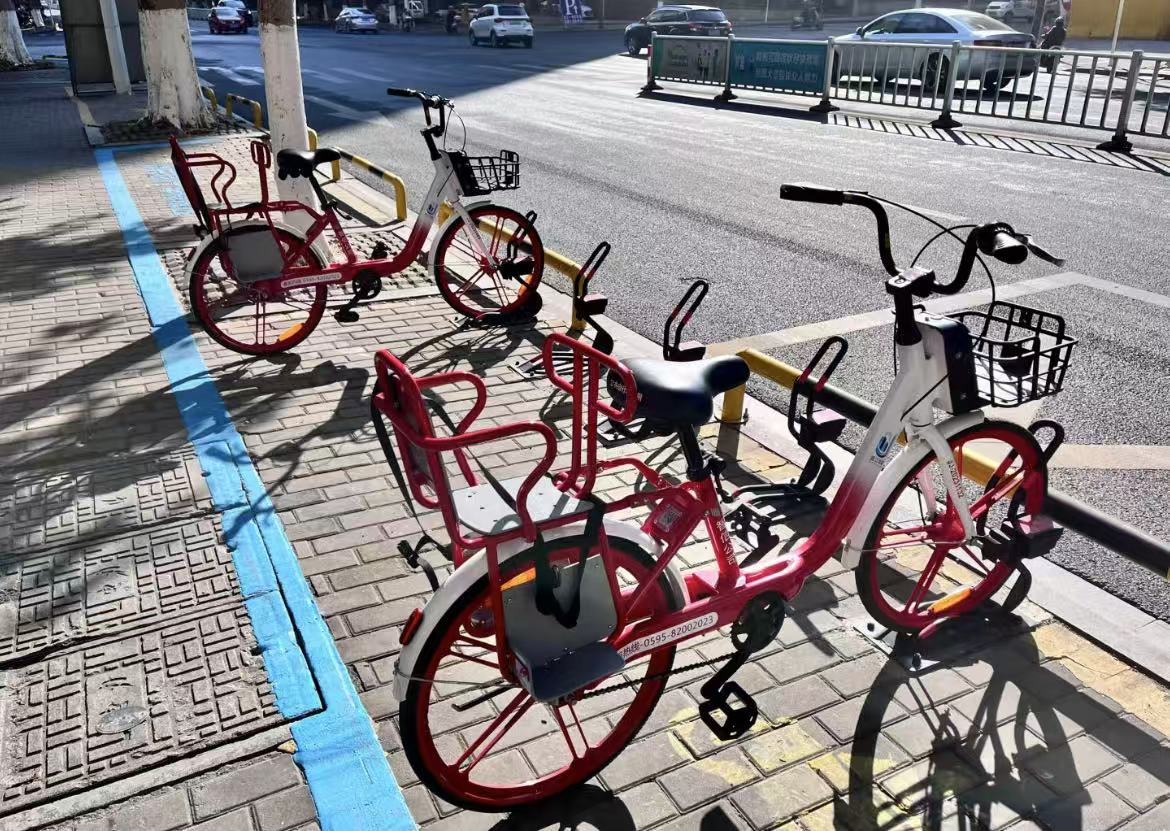
In Jinjiang, cycling is an excellent way to explore the city. Several shared bicycle services, including "Mobike" and "Hello Bike," allow visitors to rent bicycles through a mobile app. This convenient and eco-friendly option makes it easy to
City Sightseeing Bus Jinjiang’s city sightseeing bus operates year-round, with schedules and routes adjusted seasonally. The bus typically stops at major attractions such as the Wudianshi Traditional Street, Jinjiang Museum, and Qingyang Temple. Several routes are available, including one that highlights the city’s cultural landmarks and another focusing on scenic natural areas. Visitors can board at designated stops, and advance reservations are recommended through the official website or phone.
Taking a Taxi In Jinjiang, taxis are a common and convenient mode of transport. The base fare for regular taxis starts at approximately ¥10-15 (RMB), with additional charges depending on distance and time. Taxi stations are usually located near major transport hubs, shopping centers, and tourist attractions, ensuring easy access for visitors.
See
1 Cao'an Temple. The world's only surviving Manichean temple is on Huabiao Mountain in Jinjiang. (updated Apr 2018) 2 Anping Bridge (Between Jinjiang's Anhai Town and the neighboring Shuitou Town.). One of the ancient bridges on the old coastal road. Well restored. Free. (updated Apr 2018) 3 Jinjiang Museum, 382 Shiji Avenue (382) (Bus routes K902; 3; 9; 16; 29; 31; 33; 35; and 45), ☏ +86 595 85681046. 09:00-11:30, 14:30-17:00 (October to May), 09:00-11:30, 15:00-17:30 (June to September), closed on Mondays. Free. (updated Sep 2019) 4 Wudianshi Traditional Street Blocks, Meiyuan Road, Meiling Subdistrict (Bus routes 4; 6; 7; 11; 17; 18; 22; 35; 45), ☏ +86 595 36771558. Open all day. The heart of old Jinjiang, with many well-preserved historical buildings. Entry to the general area is free. (updated Sep 2019) 5 Longshan Temple (Longshan Temple), No. 242, Hai Bazhong Road (242), ☏ +86 595 579 5035. free. (updated Sep 2023) 6 Sanli Street, East of Anpingqiao Scenic Spot (bus no.3). free. (updated Sep 2023)
Do
Festivals Jinjiang Temple Fair The temple fairs in Jinjiang are an integral part of the local cultural heritage, especially during major festivals like the Lantern Festival and Mid-Autumn Festival. These fairs combine religious offerings, traditional performances, and festive activities. Visitors can experience "dragon and lion dances," "puppet shows," and "folk operas," creating a vibrant and celebratory atmosphere. The fairs also serve as an opportunity for locals to pay homage to their deities, express gratitude, and pray for blessings, all while preserving and passing on Jinjiang's rich traditions. Jinjiang Lotus Festival Every summer, Jinjiang celebrates the Lotus Festival, highlighting the beauty of blooming lotus flowers in scenic areas such as Longshan Park and surrounding wetlands. The festival features guided lotus-viewing tours, cultural performances, and photography contests. Visitors can also participate in activities like painting workshops inspired by the lotus and enjoy local delicacies made with lotus seeds and roots. This festival blends nature, art, and local culinary culture, offering a peaceful retreat for residents and visitors alike. Jinjiang Southern Fujian Culture Festival Jinjiang‘s Southern Fujian Culture Festival celebrates the region’s unique Minnan heritage, with events showcasing traditional music, dance, and handicrafts. The festival often includes activities such as "Nanyin" music performances, martial arts displays, and showcases of traditional Minnan architecture. Visitors can also enjoy local foods like peanut soup, oyster omelets, and other famous Minnan dishes. This festival is a vibrant tribute to Jinjiang’s cultural roots and its modern-day dynamism.
Buy
Earthworm Jelly: A special snack made from sandworms, suitable for tourists who like to try new foods. Peanut candy and rice candy: handmade traditional southern Fujian snacks, sweet, crispy and fragrant, a good choice for travel souvenirs. Southern Fujian Oolong Tea: Jinjiang has a profound tea culture. You can buy high-quality oolong tea from Fujian, such as Tieguanyin and Dahongpao, which have a rich aroma and a long-lasting sweetness.
Eat
There are many recommended restaurants in Jinjiang, which combine southern Fujian characteristics, seafood and innovative cuisine. The following are some recommended restaurants with rich types and good reputations.
Seafood restaurant: Hongxing Seafood Restaurant. A popular seafood restaurant with fresh ingredients, various cooking methods and moder
Overview adapted from Wikipedia, travel guide fromWikivoyage (CC BY-SA). Photography via Wikimedia Commons.