
Inujima
Japan · Asia
About Inujima
Inujima is an island in the Seto Inland Sea and is part of Japan.
Inujima travel guide
Understand
The name Inujima means "dog island". The island was named after a 3.6-m-high rock that looks like a dog. According to a legend, while traveling, the poet Sugawara no Michizane heard the call of a dog in the distance and was saved when he reached the island. The island comprises 133 acres and has less than 100 full time residents. It is administered as part of Okayama City.
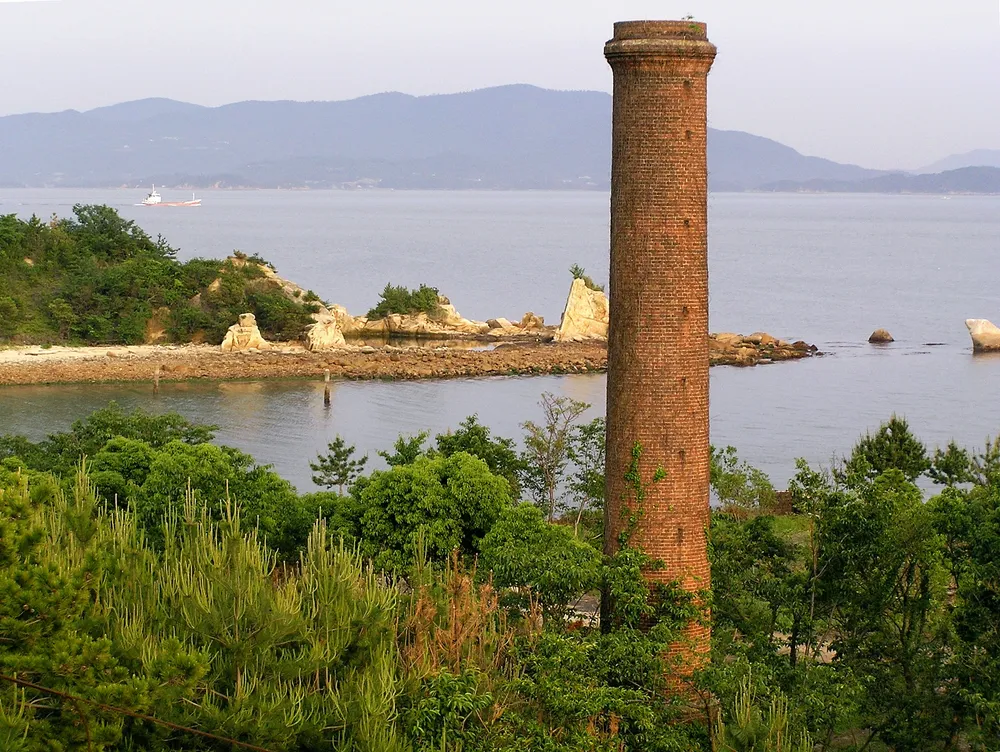
History During the feudal age (1185-1603), the island was used as a source of granite to construct castles, including those in Osaka and Okayama. In 1909, a copper refinery was opened and the population of the island increased to over 1,000 people. However, copper prices plummeted soon afterwards, and the refinery was permanently shut down in 1919. In 2008, the ruins of the refinery were converted into the Inujima Seirensho Art Museum.
Getting there
From Okayama, take a train to Saidaiji Station (20 minutes; ¥240). Then take a Ryobi Bus in the direction of Higashi Hoden, and get off at Nishi Hoden (55 minutes; ¥510). Then take a ferry to Inujima (10 minutes; ¥300). Ferry schedules are available online (Click on the right tab in the middle "から"). Inujima can also be reached via ferry from Naoshima (55 minutes; ¥1; 850) and Teshima (25 minutes; ¥1; 230). Check the ferry schedules online.
Getting around
The island must be traversed on foot. Maps are available online. A guide to the island is also available online
See
1 Inujima Seirensho Art Museum, 327-5, ☏ +81 86-947-1112. ¥2,060 (includes admission to Inujima Art House Project and Seaside Inujima Gallery). An art museum that was built in the ruins of a former copper refinery. The refinery was built in 1909 and shutdown in 1919 after a decline in copper prices. The art was inspired by the late novelist Yukio Mishima, a controversial figure who opposed Japan's modernization and movements away from its culture and traditions. The abandoned copper refinery is symbolic of how modernization at the expense of culture and heritage leaves a society empty and without identity. The museum is mostly underground and incorporates local materials. The museum only has a few exhibits, including a tunnel of mirrors and pieces of Yukio Mishima's residence suspended in mid-air. 2 Inujima Art House Project (プロジェクト). 10:00-16:30, closed Tu, closed Tu-Th in winter. 5 galleries constructed of material from the island, including parts of abandoned houses. ¥2,060 (includes admission to Inujima Art House Project and Seaside Inujima Gallery).
Do
During the summer, the island is a popular place for swimming, camping, and kayaking.
1 Inujima Swimming Beach, 221 Inujima (In the southern part of the island), ☏ +81 86-252-4183. Mid-Jul to mid-Aug. A nice beach for swimming.
Festivals and events There are often mini-festivals and other special events related to art at various times.
Setouchi Triennale aka Setouchi International Art Festival. The festival takes place over several islands in the Seto Inland Sea. Works of contemporary art are installed throughout the islands.
Eat
There are a few small cafes near the port.
Sleep
1 Inujima Campground (キャンプ), 4-11 Nishiki-cho (On the southern part of the island; near the swimming beach). Equipment rental is available. ¥1,020.
Overview adapted from Wikipedia, travel guide fromWikivoyage (CC BY-SA). Photography via Wikimedia Commons.