
Inje County
South Korea · Asia
About Inje County
Inje is a county in Gangwon province in the far north of South Korea. It is a destination not only for soldiers stationed near the border, but also for travelers seeking to reconnect with nature.
Inje County travel guide
Understand
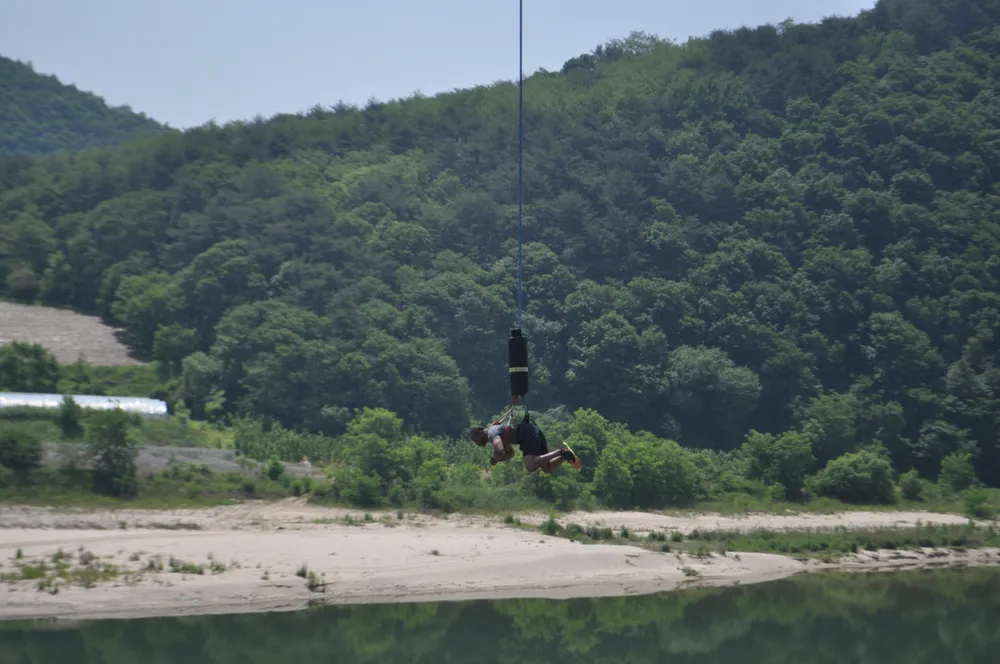
Inje is famous for its beautiful nature. Over ninety percent of the region is formed of mountains or valleys, such as Mt. Seoraksan, Mt. Bangtaesan, Daecheong Peak, and Naerincheon Valley. You can take a trip to several mineral water springs and natural forest resorts. It is also a great place for the various leisure tours, such as rafting, bungee jumping, mountain biking, paragliding, four-wheel biking, or climbing an artificial waterfall. The northern part of Inje is in the Korean DMZ, and plenty of South Korean military activity in the area. Musk deer and Asiatic black bears can be found in this remote region.
History Inje’s history is a story of transformation from a rugged, isolated mountain frontier into South Korea’s premier hub for adventure and speed. Historically, Inje was so remote that a famous folk saying lamented, "When will you return once you go to Inje? I cannot live in such frustration (Wontong)," referring to the county's difficult mountain passes and its distance from the capital. This isolation, however, allowed Inje to preserve its breathtaking natural landscapes through the Goryeo and Joseon dynasties. During the Korean War (1950–1953), the county’s strategic location in the Taebaek Mountains made it the site of intense battles. Following the armistice, Inje became a vital military garrison, a status that unintentionally preserved its vast forests and crystal-clear streams from rapid industrialization. In the 21st century, Inje underwent a massive rebranding. It moved away from its image as a secluded military outpost to become the "Capital of Adventure," establishing world-class facilities like the Inje Speedium for motorsports and restoring the Wondae-ri Birch Forest, which has now become a global icon for eco-tourism and media production.
Climate Inje experiences a humid continental climate, significantly influenced by its high altitude and inland location within the Taebaek Mountains. It is known for having some of the most extreme s
Getting there
Inje is primarily accessible by road. While there are no train stations within the county, an efficient network of intercity buses connects it to Seoul and other major cities in Gangwon-do.
By bus 1 Inje Intercity Bus Terminal, 12, Inje-ro 188beon-gil, Inje-eup. An intercity bus terminal. Frequent direct buses run from Dong Seoul Terminal (approx. 1.5–2 hours). It is the best arrival point for the Birch Forest and the Naerin-cheon rafting sites.It can be reached from these major destinations: Dong-Seoul terminal (Korean) in Seoul Wonju intercity bus terminal (Korean) in Wonju Chuncheon intercity bus terminal (Korean) in Chuncheon Sokcho intercity bus terminal (Korean) in Sokcho 2 Wontong Public Bus Terminal, 1, Wontong-ro 174beon-gil, Buk-myeon. A major transit hub located north of the town center. Most buses from Seoul stop here after Inje-eup. This is the primary terminal for hikers heading to Baekdamsa Temple and the inner Seoraksan area. To Inje Speedium: If you are heading to the racing circuit by bus, take a bus to the Hyeon-ri (Girin-myeon) Terminal. Alternatively, some travelers take a bus to Sinnam and then a taxi to the circuit, although driving is highly recommended for motorsports fans.
By train There is no direct rail service to Inje. The most common rail-to-bus transfer points are:
Via Chuncheon Station: Take the Gyeongchun Line (subway or ITX-Cheongchun) to Chuncheon. From the station, take a taxi or city bus to the Chuncheon Intercity Bus Terminal, where frequent buses depart for Inje (approx. 1.5 hours). Via Wonju Station: Take a KTX-Eum train to Wonju or Manjong Station. Transfer to the Wonju Intercity Bus Terminal for a bus to Inje (approx. 2 hours).
By car Inje has become significantly more accessible since the opening of the Seoul–Yangyang Expressway (Highway 60).
From Seoul: The drive from eastern Seoul typically takes about 1.5 to 2 hours. Use the Inje IC for the
Getting around
Public transportation in the county is scarce, so taxis will have to make do if you want to get anywhere in Inje. There are plenty waiting outside the bus terminal. Remember to note down the phone number of your taxi driver. Alternately, exploring Inje became significantly easier if you are already on a self-driving trip across South Korea.
By bus Local buses (Nong-eo-chon buses) connect the main terminals in Inje-eup and Wontong to the surrounding villages.
Hubs: Most local routes start from either the Inje Intercity Bus Terminal or the Wontong Public Bus Terminal. Routes for Travelers: To the Birch Forest: Take a bus heading towards Wondae-ri from Inje Terminal. To Baekdamsa: Take a local bus from Wontong Terminal to the Baekdamsa entrance (Yongdae-ri). Payment: Standard transportation cards (T-money; etc.) are accepted. Intervals can be very long (1–3 hours), so checking the schedule at the terminal is essential.
By car For motorsports enthusiasts and those who enjoy scenic drives, a car is the ideal way to explore Inje.
Driving Experience: The roads in Inje are a dream for those who love winding mountain passes. National Route 44 over Hangyeryeong Pass or the old roads through Misiryeong offer technical curves and breathtaking views. Access to Speedium: The Inje Speedium circuit is located in a secluded area of Girin-myeon. Driving allows you to easily access the circuit, the on-site hotel, and the nearby classic car museum. Rentals: It is best to rent a car in larger nearby cities like Chuncheon or Wonju, or at Yangyang Airport, as local rental options within Inje are limited.
By taxi Taxis are the most realistic alternative to buses for those without a car.
Taxi Stands: You can always find a line of taxis waiting at the Inje and Wontong terminals. Fares: Due to the long distances between destinations (e.g.; from Inje-eup to the Birch Forest), fares can be higher than expected. It is common to call for a taxi using the KakaoT app or local call servi
See
Inje’s landscapes are characterized by a dramatic mix of high-speed racing circuits, serene alpine forests, and ancient temples nestled deep within the Taebaek range.
1 Park In-hwan Literary Museum, 50 Inje-ro 156beon-gil, Inje-eup, ☏ +82334622086. 09:00-17:30. A museum dedicated to the Korean modernist poet Park In-hwan (1926-1956), who was born in Inje and made a name for himself early in his age. However, at the age of 29, he passed away after four days of heavy drinking. Exhibitions include his personal items, letters, and literary works, as well as a recreation of Myeongdong in the 1940s where he ran a small bookshop and mingled with the poets of his time. The second floor is a gallery of photos that capture the history of Inje. Information boards mainly in Korean. Free. (updated Apr 2025) 2 Inje Mountain Village Folk Museum, 415-1 Sangdong-ri, Inje-eup, ☏ +82334622086. 09:30-18:00. Another museum beside Park In-hwan Literary Museum. Exhibitions mainly focus
Overview adapted from Wikipedia, travel guide fromWikivoyage (CC BY-SA). Photography via Wikimedia Commons.