
Indian Himalayan Region
India · Asia
About Indian Himalayan Region
The Himalayan North region comprises the two states and two union territories of India at the northernmost Himalayan mountains (from west to east): Jammu and Kashmir, Ladakh, Himachal Pradesh and Uttarakhand. Part of this region consists of the disputed territory of Kashmir between India, Pakistan and China. Eastern parts of Himalayan India are in the northern sections of Eastern India and North-Eastern India, which have their own regional articles.
Indian Himalayan Region travel guide
Understand
History The Himalayan North has been shaped for millennia by the movement of peoples, religions, and kingdoms across some of the world’s most dramatic terrain. Early inhabitants included Indo‑Aryan, Tibeto‑Burman, and Dardic groups, whose cultures adapted to the mountains through terraced agriculture, pastoralism, and trade. Ancient trans‑Himalayan routes connected the region to Tibet, Central Asia, and the Indian plains, allowing merchants to exchange salt, wool, spices, and precious stones. These routes also carried spiritual ideas, making the Himalayas a crossroads of early Indian civilization. Hindu traditions took deep root in the lower and middle Himalayas, where numerous small kingdoms emerged over time. The Garhwal and Kumaon regions of Uttarakhand developed into influential Hindu polities, ruled by dynasties such as the Katyuris and later the Chand kings. These rulers built temples, patronized Sanskrit learning, and established pilgrimage routes that remain central to Hindu identity today. A major turning point came with the arrival of Adi Shankaracharya in the 8th century CE. His journeys through the Himalayas helped revive Hindu philosophy, unify diverse traditions, and establish important monasteries. He is credited with formalizing the Char Dham pilgrimage circuit and is believed to have restored or founded shrines such as Kedarnath and Badrinath, cementing the region’s spiritual significance. At higher altitudes, Buddhism spread from the 2nd century BCE onward, taking firm hold in Ladakh, Spiti, and parts of Himachal Pradesh. Monasteries such as Tabo, Key, Thiksey, and Hemis became centres of art, scholarship, and political authority. Meanwhile, Kashmir developed into a major centre of Hindu and Buddhist learning before later embracing Islam. The valley’s rulers—including the Karkotas and later the Shah Mir dynasty—oversaw a flourishing of literature, philosophy, and craftsmanship. The Mughal Empire also left a lasting imprint, with emperors like Jah
Getting there
By plane Despite its altitude, there are eight domestic airports and one international airport in the Himalayan North region. However, there are problems of altitude sickness if travellers get in the region by plane.
Dehradun Airport or Jolly Grant Airport (DED IATA) at Dehradun, Uttarakhand Jammu Airport (IXJ IATA) at Jammu, Jammu and Kashmir Kangra Airport (DHM IATA) at Kangra, Himachal Pradesh Kullu–Manali Airport (KUU IATA) at Kullu, Himachal Pradesh Kushok Bakula Rimpochee Airport (IXL IATA) at Leh, Ladakh Pantnagar Airport (PGH IATA) at Pantnagar, Uttarakhand Pithoragarh Airport or Naini Saini Airport (NNS IATA) at Pithoragarh, Uttarakhand Shimla Airport (SLV IATA) at Shimla, Himachal Pradesh Srinagar International Airport (SXR IATA) at Srinagar, Jammu and Kashmir
By bus Long‑distance buses are one of the most common ways to reach the Himalayan North, especially from major cities in North India. From Delhi, frequent government and private buses run to Himachal Pradesh and Uttarakhand, with popular routes including Delhi–Manali, Delhi–Shimla, Delhi–Dehradun, and Delhi–Rishikesh. These services range from basic state‑run buses to more comfortable Volvo and deluxe coaches. Travel times can be long due to winding mountain roads, but the scenery becomes increasingly rewarding as you climb into the hills. For Jammu and Kashmir and Ladakh, bus travel is more seasonal and depends heavily on weather conditions. Buses to Jammu operate year‑round from Delhi, Amritsar, and Chandigarh, but services to Srinagar and Ladakh are subject to closures during winter. The Manali–Leh and Srinagar–Leh routes typically open between late May and early October, offering some of the most spectacular road journeys in the world. These routes are demanding and slow, but they provide an unforgettable introduction to the high Himalayas. Within the region, local buses connect most towns and villages, though schedules can be irregular in remote areas. Travellers should be prepared for bas
Getting around
By motorcyle Motorcycling is one of the most iconic ways to explore the Himalayan North, and many travellers consider it the ultimate way to experience the region’s dramatic landscapes. Popular routes such as Manali–Leh, Srinagar–Leh, and the Spiti Valley circuit attract riders from across India and abroad. Renting a Royal Enfield or similar touring bike is easy in hubs like Manali, Leh, Rishikesh, and Shimla, with options ranging from daily rentals to fully guided tours. The freedom to stop at remote villages, high passes, and scenic viewpoints makes motorcycling especially rewarding. However, riding in the Himalayas demands caution and experience. Roads can be narrow, unpaved, or affected by landslides, and weather conditions change quickly at high altitudes. Riders should be prepared for steep climbs, water crossings, and occasional stretches of loose gravel. Proper gear—including a good helmet, riding jacket, gloves, and boots—is essential, as is carrying basic tools and spare parts. Altitude sickness can also affect riders, so gradual acclimatization is important, particularly in Ladakh and Spiti. Despite the challenges, motorcycling offers an unmatched sense of adventure. The thrill of crossing high passes like Khardung La, Baralacha La, or Kunzum La, combined with the stark beauty of the mountains, makes these journeys unforgettable. For many travellers, exploring the Himalayan North on two wheels becomes the highlight of their entire trip.
By car Travelling by car is one of the most flexible ways to explore the Himalayan North, especially given the region’s vast distances and scattered mountain towns. Major highways such as the Manali–Leh Road, the Srinagar–Leh Highway, and the routes connecting Shimla, Dehradun, and Rishikesh are well‑travelled, though conditions vary dramatically with altitude and weather. Hiring a taxi with a local driver is common and often recommended, as they are familiar with mountain driving, landslide‑prone stretches, and seaso
See
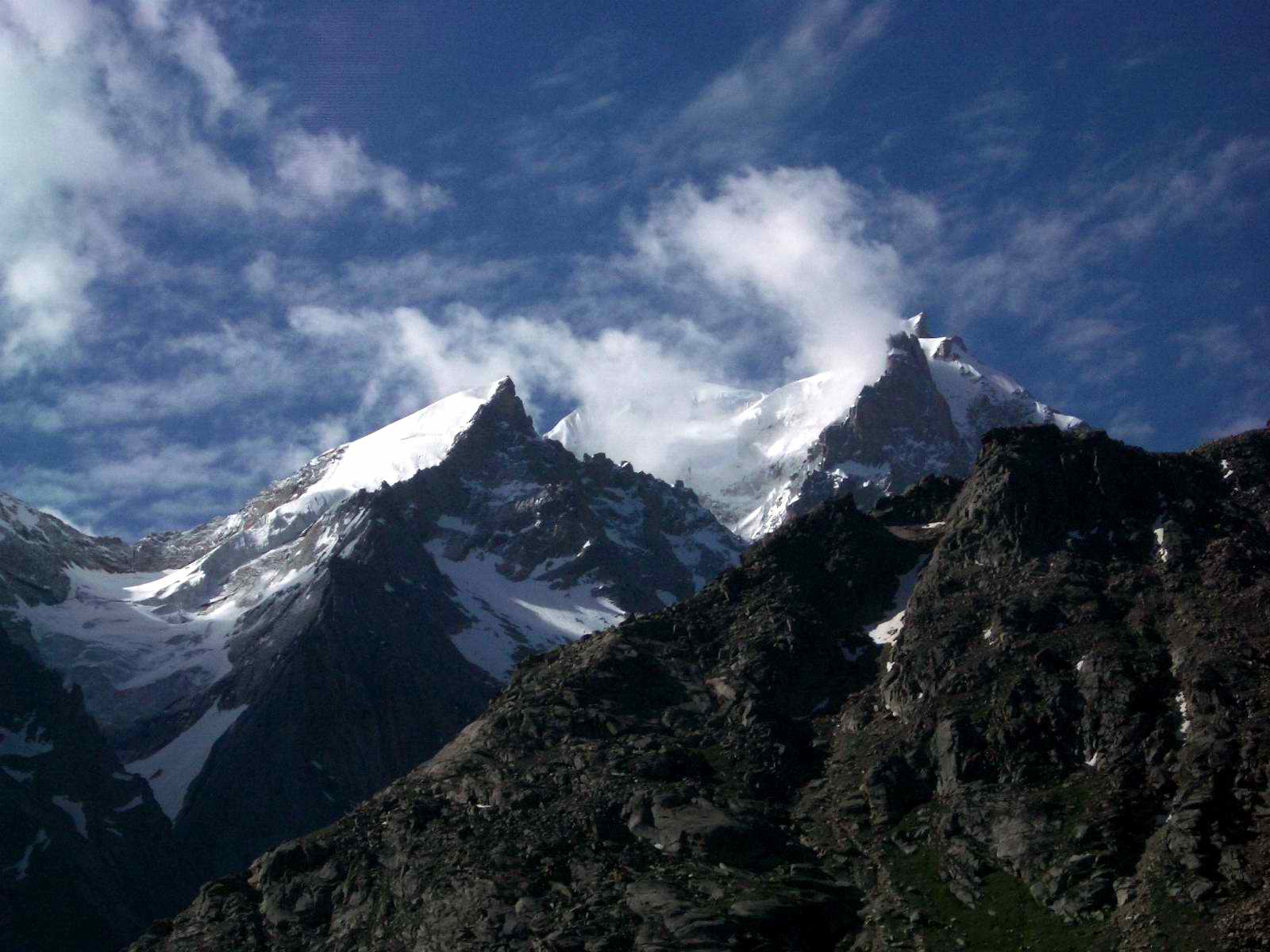
This is an extremely picturesque area of the country, with much natural beauty. As a region that borders on Tibet, it also has Tibetan-style Buddhist temples, especially in Dharamsala, where the Dalai Lama and many of his followers set up a kind of "free Tibet" in exile, but also in the union territory of Ladakh, which has a home-grown but Tibetan-influenced Buddhism. In addition, Uttarakhand contains the sources of the Ganges, Hinduism's holiest river, which runs past the state's holy cities of Dehradun, Rishikesh and Haridwar. Himachal Pradesh features the hill station of Shimla, which was a great favourite of Britons during the British Raj, while the summer capital of Jammu and Kashmir, Srinagar, with its breathtaking location in the Kashmir Valley surrounded by high Himalayan peaks and its famous Dal Lake, though probably too big to be thought of as a hill station, is a very beautiful place to fly to cool off during the hot summer months in the Plains.
Do
The Himalayan North offers som
Overview adapted from Wikipedia, travel guide fromWikivoyage (CC BY-SA). Photography via Wikimedia Commons.