
Haleakalā National Park
United States · Americas
About Haleakalā National Park
Haleakalā National Park is a national park on the Hawaiian island of Maui.
Haleakalā National Park travel guide
Understand
The park is open year-round, 24 hours a day, except for severe weather closures. The park preserves a stunning volcanic crater and surrounding mountain.
History Haleakala National Park was established in 1916. It now protects 30,183 (12; 214 ha) acres of land on Maui. Within the park 24,719 acres (10; 003 ha) are designated as a Wilderness Area and this land is managed under the Wilderness Act of 1964.
Landscape Extensive lava flows, ash, and cinder cones cover the floor of the crater at the summit. Many compare it to a moonscape. The Park extends all the way down to sea level and so has varied landscapes.
Flora and fauna Haleakala National Park has more endangered species than any other park in the NPS, even including species that are listed as endangered by the U.S. Fish and Wildlife Service but not native to the park. Isolation of the Hawaiian Islands from any mainland resulted in unique evolution here. There are only two native Hawaiian land mammals, the monk seal and the hoary bat. There are no native land amphibians or reptiles. Whales, turtles, dolphins and seabirds can sometimes be seen off-shore, while an afternoon spent looking for a glimpse of the freshwater inhabitants (shrimp; rock-climbing goby; other fish) can be a cool and rewarding way to spend your time. Haleakala is famous for its endangered silversword plant. Growing where it seems that almost nothing grows, it is a stunning contrast to the stark landscape.
Climate In any given day the temperatures in the park can range from a high of 80°F (27°C) in Kipahulu to a low of 30°F (1°C) at the summit. In either area clouds and rain can quickly replace warm sunshine. Summit and Wilderness
Weather in the high-elevation areas of the park is highly unpredictable and changes often. Cool temperatures, intense solar radiation, and rapidly moving clouds are characteristic. On average, the temperature drops about 3°F for every 1,000-foot rise in elevation (or approximately 5°C for every 1,000-meter
Getting there
Haleakala National Park extends from the 10,023-foot (3; 055-m) summit of Haleakala down the southeast flank of the mountain to the Kipahulu coast near Hana. These two sections of the park are not directly connected by road, but both can be reached from Kahului. There is no public transportation available either to or in the park. To the Summit and Wilderness Area - Park headquarters and the 10,023-foot (3; 055-m) summit can be reached from Kahului via Route 37 to 377 to 378. Driving time to the summit from Kahului is approximately 1.5 hours. To Kipahulu - Kipahulu is reached via Route 36 to 360 to 31. Driving time from Kahului is approximately 3 hours.
See
Summit and wilderness
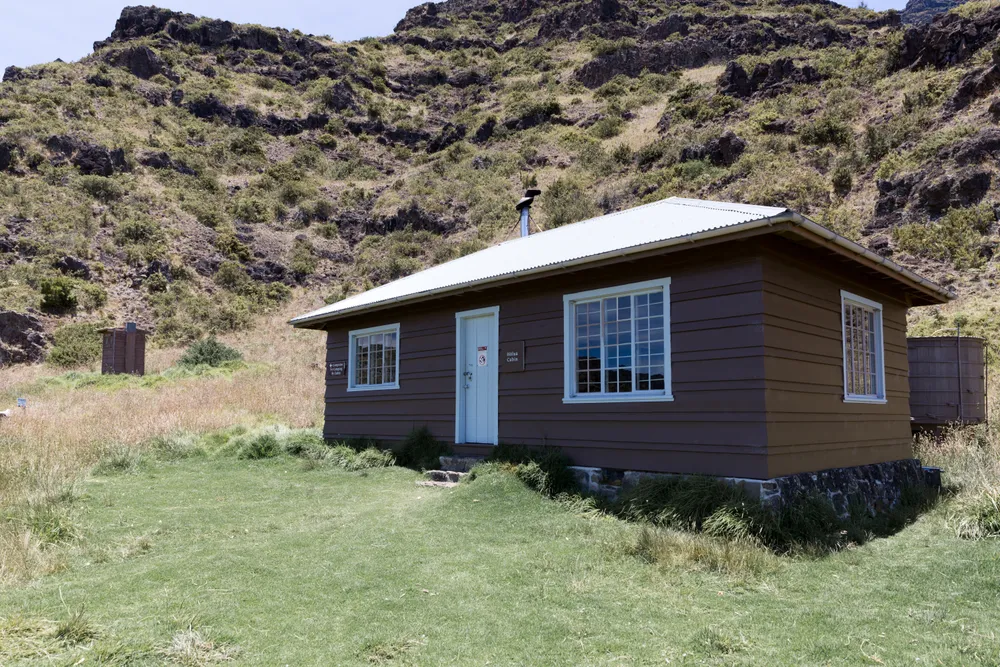
No place you have ever been can prepare you for the experiences and feelings you will have on the summit of Haleakala volcano. The landscape - deeply sculpted, richly colored, and intensely evocative will be unlike any landscape you have known. Visually expansive, the summit area continually eludes any attempt to understand its scale or dimensions. It is strongly recommended that you get up early one clear morning to watch the sunrise over the edge of the rim. To regulate the number of people at the summit during the sunrise, a reservation of $1.5 is now mandatory. It can be made on-line. You may spend a few hours hiking in the cinder desert landscape, or a few minutes looking for native birds in the shrubland - whatever you choose to do, you will do it surrounded by native Hawaiian plants and animals. The mountain summit is one of the only easily-accessible areas of Hawaii where our rare and endemic species survive and thrive. An unexpected and dramatic landscape at the top of the world, the Wilderness Area encompasses 24,719 acres (10; 003 ha) and countless microclimates. Elevation change from rim to the floor can be 3,000 feet (914 m). You can day hike, spend the night in a tent at one of the two Wilderness Campgrounds, or reserve one of the three historic cabins along the trail. Your steps will take you from brown and red cinder cones, towering hundreds of feet tall in dry, cold desert air to cloudforests dripping with red and green native ferns. Nene and endemic honeycreepers can be seen in the lower, wetter parts of the Wilderness area during the day. Seabirds can be heard (in season) at night, and stars saturate the sky. Photographers will quickly run out of superlatives. The Wilderness Area of Haleakala can be accessed by two mountaintop trailheads: Halemauu Trailhead at 8000 feet (2; 438 m), and Keoneheehee (or Sliding Sands) near the summit at 9740 feet (2; 969 m). Both trails merge eventually and lead down the southeast side of the v
Do
Mount Haleakala Sunrise Bike Tour: Plan this for one of your first mornings in Hawaii. The bus will pick you up at your hotel around 3AM and drive you up the mountain where you will watch a spectacular sunrise and take a guided bike tour down. This is a must do. For more experienced bikers, there are also companies that you can rent a bike from and do an unguided tour. Stop at the food trucks along the way for breakfast!
Buy
There is no food, coffee, fuel, or clothing available for sale in the park. The closest services, restaurants, lodging and shops to the summit area are in Pukalani, Makawao and Kula. The closest to the Kipahulu Area are in Hana.
The Hawaii Natural History Association bookshops stock books, CDs, DVDs, photos, posters and various educational materials.
Eat
No food or drink concessions are available. All food must be brought in yourself, and all garbage taken out of the park with you.
Drink & nightlife
Crater coffee, kula lodge parking lot (on the right), ☏ +1-808-757-1342. 3AM-7AM. Coffee, teas, hot cocoa & other drinks. Snacks include bagels and muffins. This business is a mobile coffee trailer with restrooms and staff that can provide information about road conditions, sunrise times, and other matters of local interest. $1-15.
Sleep
The only lodging available in the park is found in our campgrounds and Wilderness Cabins. The Kipahulu Area has a drive-up campground available, while the Summit Area has a drive-up campground and is your access point to the trails leading to our Wilderness campgrounds and Wilderness cabins.
Lodging Kula provides the closest hotels and bed-and-breakfast lodging to the Summit Area. The nearest to the Kipahulu Area is in the Hana area.
Camping For those who need an overnight escape without a backpack trip, the park offers two car accessible campgrounds: Kipahulu and Hosmer Grove. Kipahulu campground is near sea level on the wet, east-side of the island in the Kipahulu area of the park, which is reached via the Hana Highway. Hosmer Grove is on the way to the summit, high on the windy slopes of Haleakala.
1 Hosmer Grove Campground. Hosmer Grove lies in the cloud belt of Haleakala, just below the 7,000-foot level (2; 134 m) in the Summit area. Be prepared for rain and cold weather. Nighttime temperatures can drop to near freezing (0°C); daytime highs average 50-65°F (10-18°C). T
Overview adapted from Wikipedia, travel guide fromWikivoyage (CC BY-SA). Photography via Wikimedia Commons.