
Hajj
Saudi Arabia · Asia
About Hajj
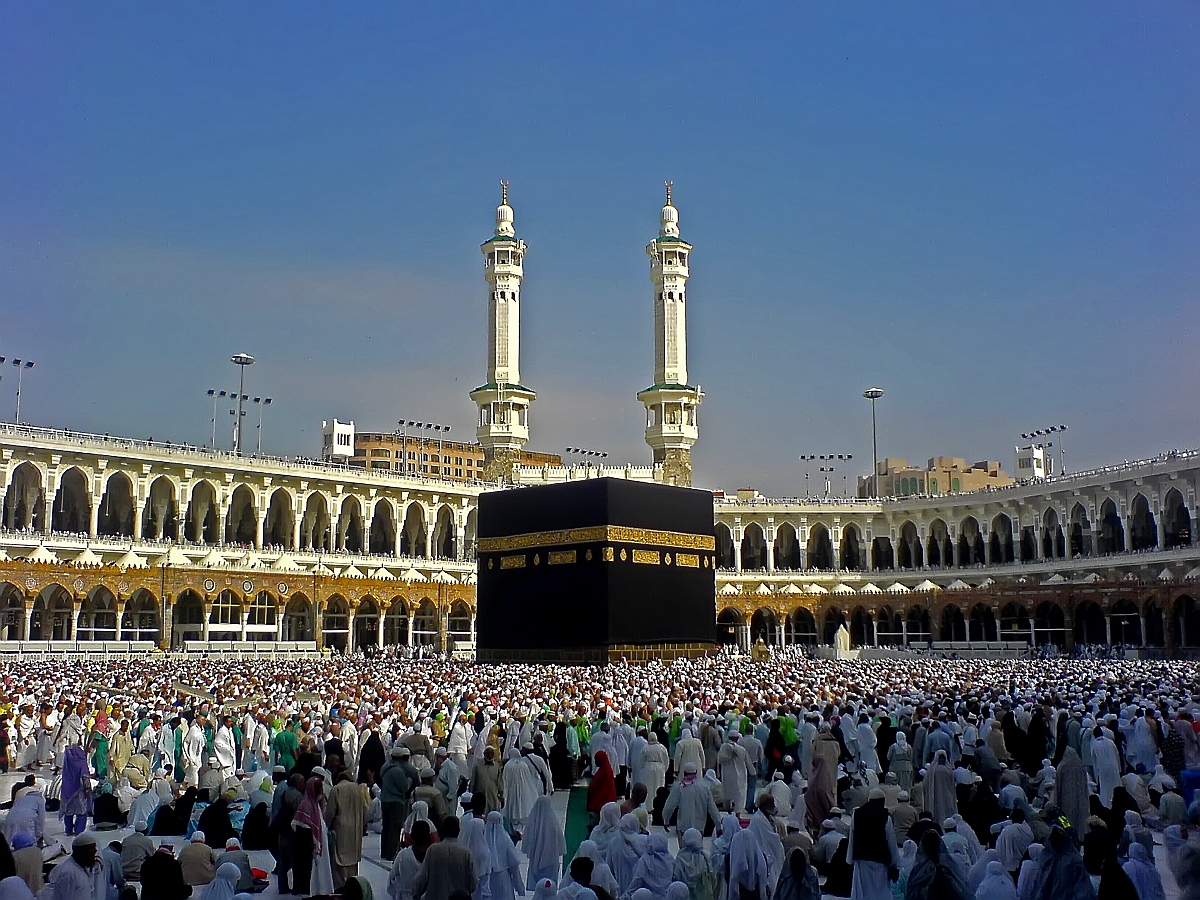
The annual Muslim pilgrimage to Mecca, the Hajj is a mandatory religious duty for Muslims and is the largest annual gathering of people in the world. It occurs between the 8th and 12th of the last month of the Islamic calendar, Dhu al-Hijjah. Hajj is that symbolic pilgrimage when millions of Muslims from around the world belonging to different ethnic groups, socioeconomic strata and cultures travel to Mecca together to praise Allah and ask for forgiveness of their sins.
The five day spiritual Hajj, which dates back to the 7th century of the Gregorian calendar, is designed to promote the bonds and affection between Muslim communities and shows that everyone is equal in the eyes of Allah by wearing simple white garment Ihram. Pilgrims spend days worshiping in and around the holy city of Mecca and performing the rituals that make up the Hajj.
Hajj travel guide
Understand
The Hajj is one of the five pillars of Islam; every adult Muslim is supposed to do it at some time in their life if health and finances permit. In poorer areas it is not uncommon for whole families or even whole villages to chip in to send one person.
It is also one of the largest human migrations. Every year over two million people visit Saudi Arabia for this pilgrimage. Since they all arrive at roughly the same time and visit the same places in the same order, and since a large number of Saudis go as well, this is a major logistical problem. The Saudi government has created the Ministry of Hajj and Umrah to manage it. To make this process more fair, the Saudi government has Hajj quotas for Muslim-majority countries. Pilgrims from Muslim-majority countries must wait for several years for their slot. But pilgrims from other countries need only wait a few weeks for paperwork to be arranged. The Hajj can only be completed during the Islamic month of Dhu al-Hijjah. A pilgrimage to Mecca at any other time is known as Umrah (عمرة), and while not compulsory is strongly recommended. People who have completed the Hajj are entitled to use the honorific title Haji (men) or Hajjah (women). The dates for Hajj are set using the Islamic calendar, dated as "AH" from the hejira when Mohammed fled Mecca for Medina.
History In the Islamic tradition, history of Hajj can be traced back to the time of Abraham, around 2000 BCE. According to tradition, Abraham was ordered by Allah to leave his wife Hagar and his son Ishmael alone in the uninhabited desert with little food and water, where Mecca stands today. When the food and water were gone, Hagar, in search of water for her baby Ishmael, desperately ran seven times between the two hills of Safa and Marwah but found nothing. Returning in despair to Ishmael, she saw him scratching the ground with his leg and a water fountain underneath. Later, the uninhabited desert area started to attract inhabitants due to availability of water and
Getting there
In medieval times, people made the pilgrimage to Mecca by camel caravan or by ship; the journey often took months, sometimes even years. Today, most pilgrims arrive via the airport at Jeddah. Airlines in most Muslim countries offer special flights specifically for Hajj and Jeddah has many regular commercial flights as well, in particular flights to most major European or Middle Eastern hubs. See Jeddah#Get_in for more information. There are two special Hajj terminals, the largest buildings by roof area in the world at 260,000 m2 (2.8 million ft2). They are enormous tents of fiberglass fabric on reinforced concrete poles and steel cables. At Hajj time, there are dozens of large aircraft parked alongside these terminals. These are used only for the Hajj; the airport has other terminals for normal travel. Driving to the North Terminal, you pass between the two Hajj terminals. From Jeddah — for most pilgrims, directly from the airport — there are chartered buses and taxis to Mecca. Many are painted in the yellow and black pattern used on school buses in North America; seeing dozens of those on the highway is a strange sight if you know them as school buses. Medina is another entry point, with its airport handling many Hajj flights as well. The Haramain High-Speed Railway connects Mecca to Medina via Jeddah, and is the quickest and most comfortable way to get to Mecca once you've landed in Saudi Arabia.
Getting around
Mecca's Al Mashaaer Al Mugaddassah Metro line (Arabic: قطار المشاعر المقدسة الخط الجنوبي; English: The Sacred Sites Train Line) is Saudi Arabia's first metro line, and was specifically catered to shuttle pilgrims between the different holy sites. It is the highest capacity metro line in the world, but still gets very crowded during the Hajj given the sheer number of pilgrims, so be sure to prepare and plan accordingly.
Buy
It is fairly common for pilgrims coming from carpet-producing areas (much of the Muslim world) to bring along a few rugs to sell along the way to help finance their trip. Places like the bazaar in Jeddah therefore often have a broad selection of rugs, some from quite far away. Prayer rugs make particularly good souvenirs because they have religious significance and are small enough to be reasonably easy to transport and often moderately priced. Medina dates are famously excellent.
Go next
Special visas for Hajj are strictly limited to Mecca, Medina, Mina, Arafah and Muzdalifah. Traveling anywhere else in Saudi Arabia will require an additional travel permit, which is difficult and time-consuming to obtain, and is rarely granted without good reason (e.g. medical emergencies). Most pilgrims head to Medina after performing Hajj and stay there for few days before going back home. Medina is where Muhammad lived and taught from when he was driven out of Mecca until his triumphant return, and is also where he was buried. During the Hajj season flights between Jeddah or Medina and any Muslim country are quite cheap since there are many flights full of pilgrims going one way (in before Hajj and out after), and airlines do not want to fly the other way with empty planes. Muslim expatriates working in Saudi Arabia often take advantage of this to visit home; Western expats use it for vacations.
Overview adapted from Wikipedia, travel guide fromWikivoyage (CC BY-SA). Photography via Wikimedia Commons.