
Hadhramaut Governorate
Yemen · Asia
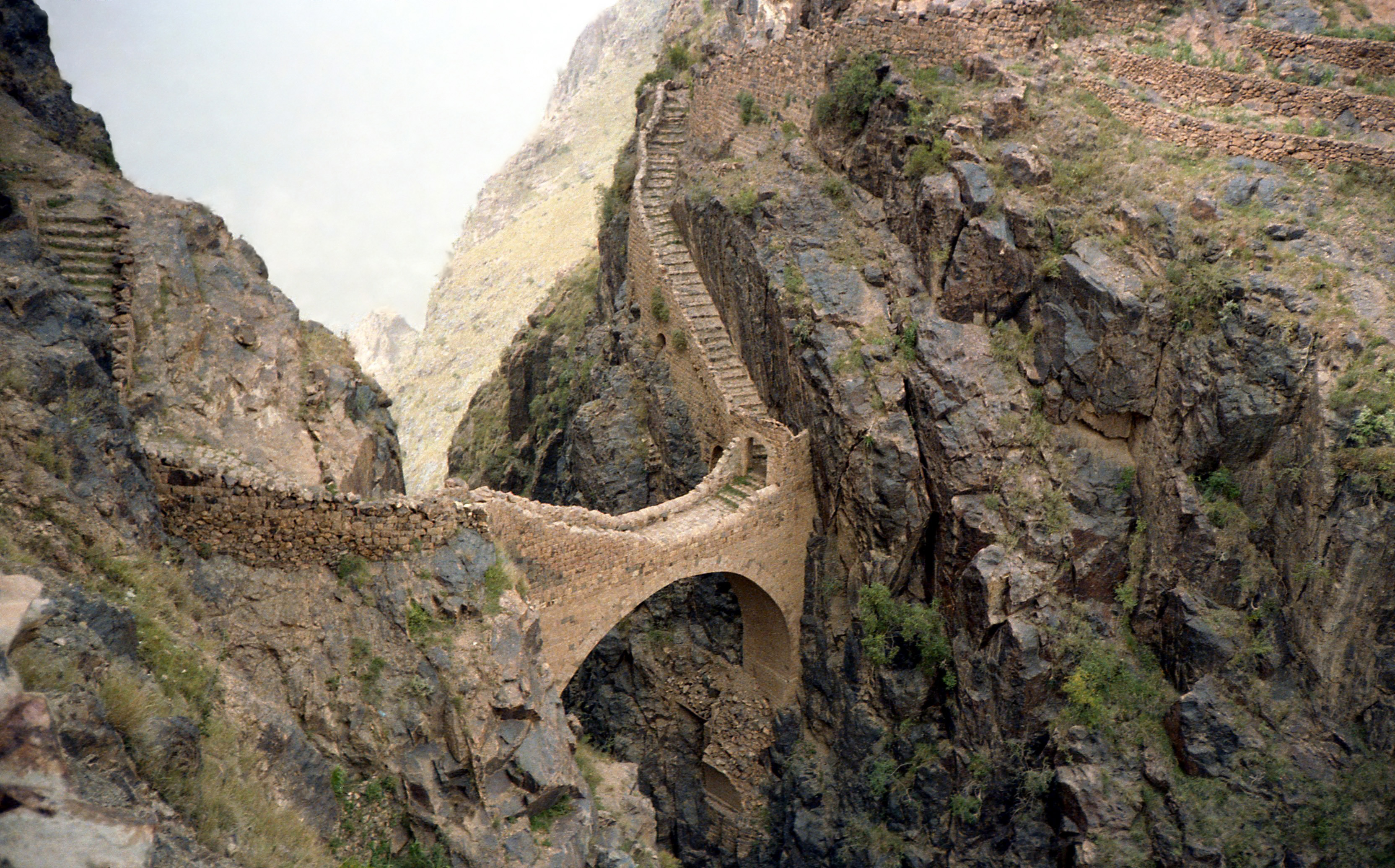
About Hadhramaut Governorate
Yemen (Arabic: ٱلْيَمَن) is a country in the southern Arabian Peninsula of the Middle East. Although it is rich in history and culture, being part of several civilizations, the country has been in a state of flux since the 1980s. It is one of the least developed and poorest countries in the world.
However, under less extreme circumstances, this vast country has a lot to offer to the adventurous, thrill-seeking traveller, from desert to mountains. Yemen is a difficult country to get around, but the rewards for the persistent visitor are unforgettable.
Yemenis are very friendly and open, and tourists might find themselves being treated as celebrities here; in fact, they might be showered with a lot of hospitality and care, even if they unintentionally make a few cultural blunders.
Hadhramaut Governorate travel guide
Understand
History Yemen has long existed at the crossroads of cultures, linked to some of the oldest centres of civilization in the Near East by virtue of its location in South Arabia. Between the 12th century BCE and the 6th century, it was part of the Minaean, Sabaean, Hadhramaut, Qataban, Ausan and Himyarite kingdoms, which controlled the lucrative spice trade, and later came under Ethiopian and Persian rule. In the 6th century, the Himyarite king Abu-Karib Assad converted to Judaism. In the 7th century, Islamic caliphs began to exert control over the area. After this caliphate broke up, South Arabia came under the control of many dynasties who ruled part, or often all of South Arabia. Imams of Persian origin ruled Yemen intermittently for 160 years, establishing a theocratic political structure that survived until modern times.
Egyptian Sunni caliphs occupied much of Yemen throughout the 11th century. By the 16th century and again in the 19th century, Yemen was part of the Ottoman Empire, and in some periods Imams exerted control over all of Yemen. The modern history of south Arabia and Yemen began in 1918 when Yemen gained independence from the Ottoman Empire. Between 1918 and 1962, Yemen was a monarchy ruled by the Hamidaddin family. North Yemen then became a republic in 1962, but it was not until 1967 that the British Empire, which had set up a protective area around the South Arabia port of Aden in the 19th century, withdrew from what became South Yemen. In 1970, the southern government adopted a nominally Communist governmental system. The two countries were united as the Republic of Yemen on 22 May 1990. Unification did not lead to peace, however. The USS Cole, a visiting U.S. Navy ship, was attacked by Al Qaeda in 2000 while on a fuel stop in Aden. Al Qaeda in the Arabian Peninsula has since grown stronger in the country, and the U.S. has responded by striking targets in Yemen repeatedly with drone-fired missiles. The government of longtime dictator, Ali Abdulla
Getting there
Entry requirements
Visa regulations change quite regularly, and an embassy should be contacted to make certain that the relevant documentation is obtained (it is recommended also to ask one of the licensed tour operators in Sana'a). Citizens of most countries (with the possible exception of Gulf Co-operation Council members) must obtain visas in advance. Most visas are valid for 30 days from the date of issue (3 months for European Union; but sometimes it depends on the mood of the official dealing with you). If you have a local contact to help you push the paperwork through, this can increase your chance of getting the visa. Another way of getting visa is via one of the licensed tour operators, as they are allowed to prepare pre-visa paper in the Ministry of Foreign affairs for their clients. Such pre-visa paper is valid for 30 days from the day of issue and upon this a real visa is issued at the Sana'a airport.
By plane
As of 2023, most flights to Yemen are suspended. Yemenia runs a skeleton service based in Aden with flights from Amman, Cairo and Riyadh. There are also flights into Say'un as of 2023 from Aden and Cairo. As of July 2024, Sanaa Airport has flights from Amman, Mumbai, and Cairo. Other airports are either closed permanently or operate only infrequently.
By train There are no trains to or within Yemen.
By car It is possible to cross the Omani-Yemeni border in a car, although the border posts are often difficult to negotiate. Crossing from Saudi Arabia in a car is substantially more difficult, as regulations for getting a car into Saudi are very intricate.
By bus Some buses operating throughout the Arabian peninsula connect to Yemen. The buses are mostly air-conditioned and comfortable, although the fleet sometimes contains old buses which may not be very comfortable to be on for several hour trips. Arriving from Oman can be difficult, especially if you're trying to get to Sana'a. There are buses from Salalah to Sayu'n in Wadi Hadramawt
Getting around
Yemen is not an easy country to get around, since foreign nationals need travel permits and, in some regions, independent travel is not possible. There is a lack of road infrastructure in the eastern Mahra region, while all other Yemeni regions have hundreds of kilometres of newly built roads. If you are an intrepid traveller, the local transport (taxis; buses; aircraft) is perfect to get around on the cheap. More expensive, but more efficient travel is to book your tour via one of the registered tour operators, that are found on the Yemen Ministry of Tourism webpage. Be aware that there are many non-registered tour operators in Yemen offering lower quality services, providing non-relevant information and many times tourists do not get all the paid services. In case of any problem, the Ministry of tourism will not be able to help you if you choose to travel with a non-registered tour operator or services provider. For trips outside the capital, many travellers prefer a car (preferably 4WD) and may choose to hire a driver through a local travel agency. More intrepid travellers should certainly take advantage of the local intracity bus service, which is cheap, comfortable, and a wonderful way to see the country. The buses usually take a pit stop every hour or so, making this a slower but much more interesting way to travel for those who are up for an adventure and some friendly conversation. The biggest company in Yemen is Yemitco, their offices can be found in major cities. Additionally, all travel outside the capital will require a travel permit (tasriih) from the tourist police; their station is 30m up the canal from the Arabian Felix Hotel. You need your passport, list of destinations and how long you are going to stay outside the capital. No photos required, however bring a photocopy of your visa and the picture page in your passport, as the photocopier there often doesn't work. This takes about 15 minutes. Office is closed from noon to (let's say) 14:00. Then
See
Sana'a: Babel Yemen (old city), Wadi Dhar (Dar al-Hadschar Palace—also known as the rock house). Sana'a is at over 2,200 metres (7; 200 feet) in elevation. The old city is a mystical and amazing place and also a UNESCO World Heritage site. The streets are alive and bustling around gingerbead-like houses several stories high, one of the oldest cities in the world. Socotra: Off the south coast of Yemen—an idyllic island untouched by modern man and home to many rare species and plants. The seas are turquoise blue and the sands white and unspoiled. One of the most valuable islands on the planet, often described as the most alien-looking place on Earth. Its beaches resemble those of the Caribbean and its mountains and Yemeni mountains covered in 300 species only found in Socotra. A must-see. Kawkaban: An old fortress-city northwest of Sana'a 3,000 m (10; 000 feet) high, with elegant old buildings an artefacts from the old Himyar civilization 2,000 years ago. Himyaric inscriptions can be seen
Overview adapted from Wikipedia, travel guide fromWikivoyage (CC BY-SA). Photography via Wikimedia Commons.