
Gulangyu
People's Republic of China · Asia
About Gulangyu
Gulangyu is an island in Xiamen, a few minutes by ferry from downtown. It has a population around 17,000 and an area of about 2 km² (500 acres). It was a foreign enclave from the 1840s until the 1930s, and is now a residential suburb, a major tourist area, and a UNESCO World Heritage Site.
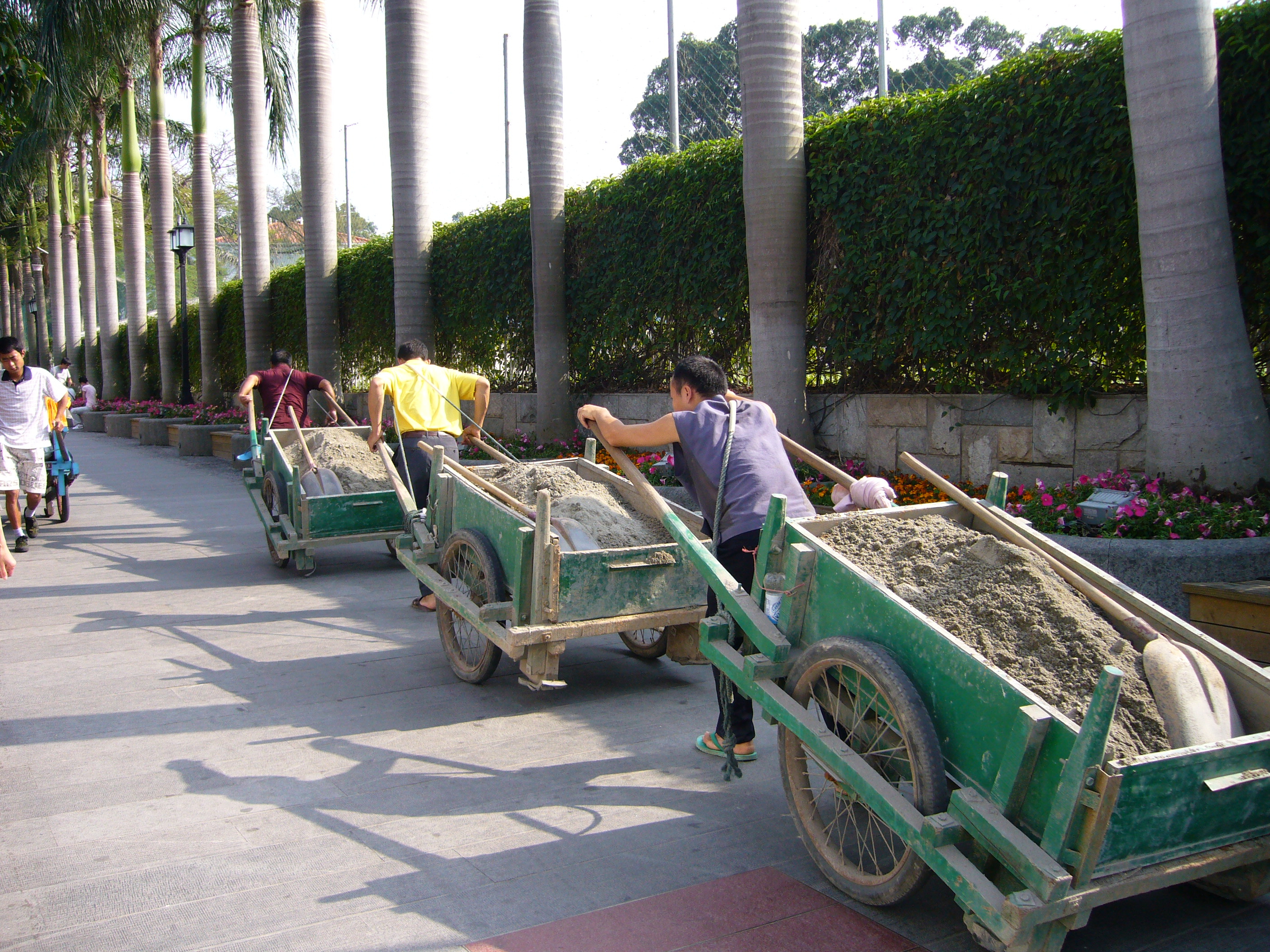
Cars, motorcycles and bicycles are banned, making the island both quieter and safer than almost anywhere else in China. The whole island is basically pedestrians-only, though golfcart-type electric vehicles serve as a sort of bus on a circular route around the island near the coast. The only vehicles powered by internal combustion are a few firetrucks. Everything from fruit to bricks to furniture gets moved about by handcart; you often see men hauling enormous loads of supplies up and down steep hills.
The island is extremely popular with Chinese tourists, who arrive in droves, often in large tour groups. You can spot the guides because they hold up brightly coloured flags for their flock to follow. Some reports claim it is the most-visited site on the UNESCO list. Although the island is quite scenic, the noisy crowds can be quite annoying at times. Gulangyu is probably best avoided during major Chinese holidays and may be more pleasant during the week than on a weekend.
Gulangyu travel guide
Understand
After the British victory in the First Opium War, Xiamen (then known as Amoy) became one of five "treaty ports" established by the Treaty of Nanjing in 1842, and Gulangyu became the main residential area for foreigners.
As in other International Settlements in China, the population was always predominantly Chinese but the police, the legal system, quite a few residents, and much of the architecture were foreign. All thirteen of the foreign consulates were on Gulangyu, along with houses, churches, schools, parks and a hospital. Both foreign traders and wealthy Chinese built mansions, often with large gardens, and many commercial buildings were built as well. Today the island is a major tourist area; many of the old colonial-era buildings have become restaurants or guesthouses, and there are many shops geared towards tourists. Gulangyu is sometimes called "Piano Island" and one of its attractions is music; there have been pianos on the island since the first foreign residents arrived in the 1840s. It is quite common to hear piano music (usually recorded and usually classical) in the streets as you walk about. There has been a Piano Museum for over a century, and later an Organ Museum was built as well. Both have many instruments, some dating back to the 19th century, and both have recitals for the tourists. See also the UNESCO listing and a guide site.
Read Some readers may know the place from Neal Stephenson's novel ReamDe ISBN 9780062191496; part of the story takes place in Xiamen and one character, the female British spy, has an apartment on Gulangyu. Those who do not know the novel might consider picking up a copy for on-the-road reading when heading for Xiamen.
Getting there
Ferries open to visitors arrive in Gulangyu at either of two harbors: the more popular 1 Sanqiutian ferry terminal (Sānqiūtián) in the east and the slightly more out-of-the-way 2 Neicuo'ao ferry terminal (Nèicuò'ào) in the west. During the daytime, direct ferries are limited to Xiamen residents only and visitors must purchase tourist tickets, which are also more expensive at ¥35 (regular ferry) or ¥80 (deluxe ferry) return. It's strongly recommended to buy your tickets in advance online; however, this is effectively impossible without Chinese ID, meaning you'll need to enlist a local friend or go through a travel agency. If you arrive mid morning without having already purchased a ticket, it's possible you'll have to wait a few hours for a boat that has tickets available, especially during busy holiday seasons or the weekend. There's also a cap of 65,000 visitors per day, so if you really luck out, you may not be able to visit at all. You must have your passport with you when buying tickets and boarding the ferry. Tourists can travel from 3 docks to the island, depending on the time of day: 1. During daytime: Ferry from Youlun Matou, confusingly also known as 3 Xiagu Matou, Dongdu Matou and the Xiamen International Cruise Terminal. Ferries leave multiple times per hour and the crossing takes about 20 minutes. Ferry operating times are 07:10 until 17:30 (winter) or 18:30 (summer) to Gulangyu, and 07:20 until 17:40 (winter) or 18:40 (summer) from Gulangyu back to Youlun Matou. The terminal is located several kilometers from the center of Xiamen/main tourist area and has shops and restaurants both before and after security if you end up waiting. It's served by Metro Line 2, but to get there from downtown/Zhongshan area/Lundu Matou, you can take bus b1 or the special Lundu Matou tourist bus. 2. At night: tourists can take the ferry directly from 4 Lundu Matou Terminal 2 (2). This is the quickest option, yet stil
Getting around
Cars, motorcycles and bicycles are banned, but the island is small enough to walk around as long as one is physically able. It is, however, quite hilly. Walking about, there is quite a bit of nice colonial architecture to see, much of it tucked away on back streets. The Longshan Cave, near the Sanqiutian ferry terminal, is actually a bomb shelter repurposed as a 400m tunnel that provides a handy shortcut under one of the larger hills. There are golfcart-type battery-powered vehicles that run on a fixed route circumnavigating the island. Riding one of those around to the back (west side) of the island can be a good escape when the main tourist areas are crowded. Fare starting from the ferry terminal is a flat ¥10 for any distance. If you board elsewhere, then ¥10 gets you anywhere before the ferry terminal; to go beyond it you would need to pay again. You can also hire a boat — on the Xiamen side, on Gulangyu at the docks near where the ferry comes in, or at another dock a bit north of that — for a ride around the island. This takes about an hour. Starting from the ferry stop, most travellers either jump on a golfcart-bus for a tour or turn left onto Dragon Head Road (Longtou Lu), which is one of the main shopping streets and leads to the sights around Dragon Head Hill. An alternative is to walk straight ahead, heading inland; this gets you to a large map of the island, then to the local tourist information office (which has a left luggage service), to one of the few banks on the island, and to another shopping area. Off to the left as you walk inland are a set of steps which lead up into a pleasant area with several guesthouses and a number of restaurants.
See
A combo ticket can be bought on the island for ¥110 (2019), which gives entry to Bright Moon Garden, Shuzhuang Garden, Sunlight Rock (including cable car ride), the Piano Museum, the Organ Museum and the International Calligraphic Carving Art Gallery.
Museums and monuments
Art museums and galleries 1 Celebrity World Wax Museum & 3D Art Museum (3D), 111 Lujiao Road (111), ☏ +86 592 2064908. Daily 08:30-18:30. Includes waxworks of famous people from around the world. ¥60. 2 Gulangyu International Calligraphic Carving Art Gallery, 7 Gangzihou Road (7), ☏ +86 592 2068251. 08:15-17:45 (winter), 08:15-18:15 (summer). A small gallery of carved calligraphy from Chinese, Japanese, and Korean artists. Entrance near the main gate of Shuzhuang Garden. Admission normally ¥10. 3 Oriental Fishbone Gallery (Xiamen Eastern Fishbone Gallery), No 27 Guxin Road (27), ☏ +86 592 2571269, [email protected]. 09:00-17:00. Includes personalized explanations of every art-piece and autograph of the artist. ¥60. 4 Red Carpet Wax Museum, 2nd Floor, Bank of China building, 3 Longtou Road (32), ☏ +86 592 2064733. 09:00-22:30. ¥60.
History and culture museums 5 China Records Museum, 32 Fujian Road (32), ☏ +86 592 6883070, [email protected]. 09:00-17:30. ¥78. (updated Feb 2019) 6 Gulangyu 100 Years Museum, 62 Fujian Road (62) (Inland and uphill from the ferry stop), ☏ +86 18659236520. 08:00-18:00. A museum focusing on the colonial-era foreign residents of Gulangyu, in a building that was once a villa belonging to th
Overview adapted from Wikipedia, travel guide fromWikivoyage (CC BY-SA). Photography via Wikimedia Commons.