
Guaynabo
United States · Americas
About Guaynabo
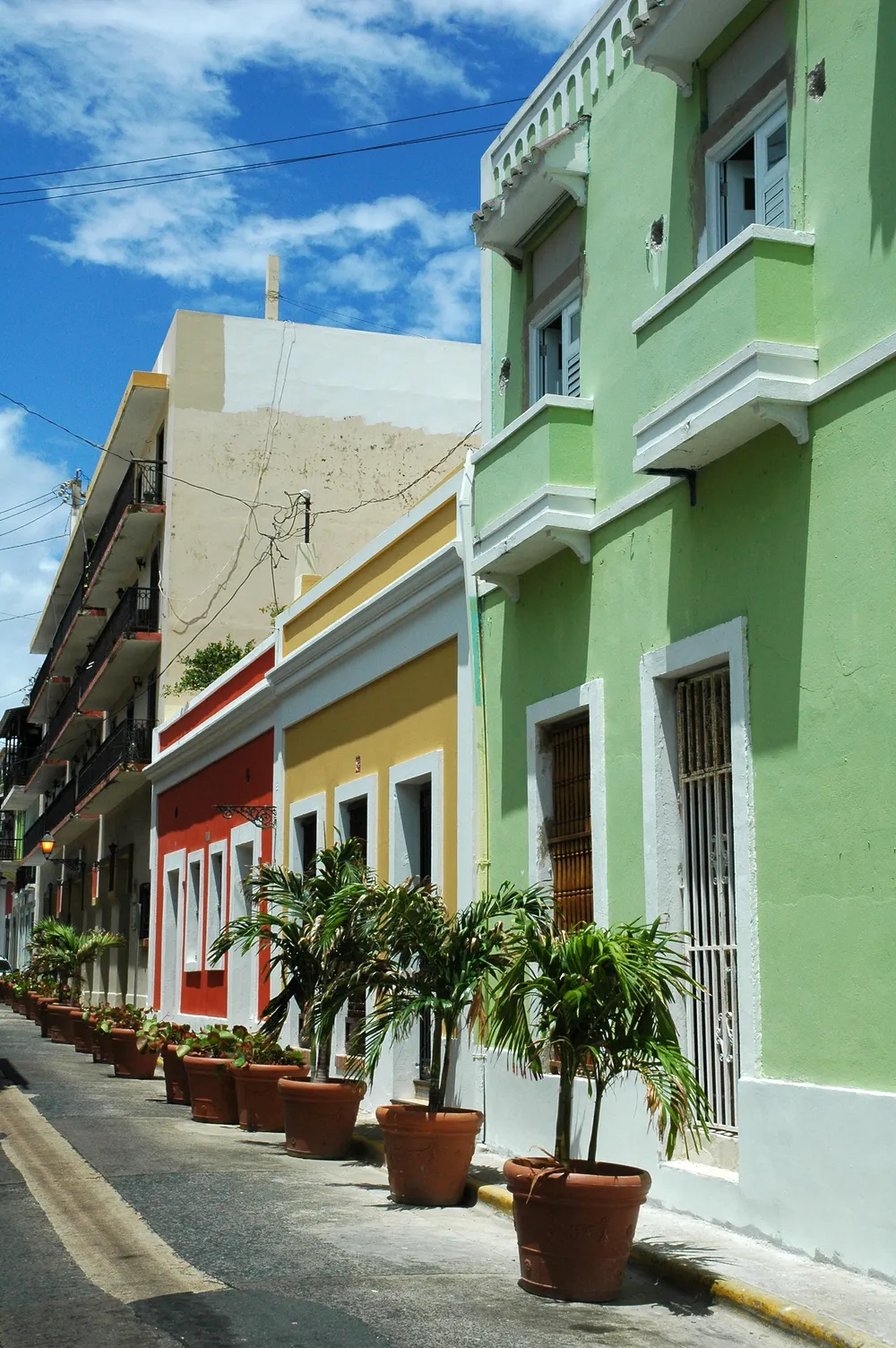
San Juan is the capital of Puerto Rico and its largest city, with 342,000 (2020) inhabitants in the municipality and 2,203,000 in the metropolitan area. Founded in 1521 by the Spanish conquistadors, San Juan is the oldest city under the jurisdiction of the United States. San Juan is located in the north-east coast of Puerto Rico and features distinctly centuries-old architecture, such as Spanish military forts built from the 1540s to 1800s, an active harbor, and a very active economic area in the Hato Rey and Santurce districts. San Juan has magnificent beaches, hotels, plazas, historic sites, and museums.
Guaynabo travel guide
Understand
Location
San Juan has one of the best harbors in the Caribbean in a strategic location in the Atlantic Ocean. The city celebrated its 5th century anniversary in 2008 from the founding of Caparra, and in 2021, it celebrated its 500th anniversary of its official founding in its current location at the Isleta de San Juan. The city has a land area of about 76 sq mi (200 km2).
Climate
San Juan is a tropical city with winter temperatures typically ranging in the low 80s°F (21-24°C) during the day, and low 70s°F at night. Summer temperatures are generally in the high 80s°F (29-32°C) during the day, and high 70s (25-28°C) at night. Summer does include high humidity. The city has a tendency to receive rain and thunderstorms from April to November in the afternoon. San Juan and the rest of Puerto Rico can be hit by hurricanes or tropical storms from July to November.
Culture San Juan is a Latin American city with Spanish-based culture, mixed with African traditions and Taíno culture. Museums of modern art exist abroad. The citizens of San Juan are very festive, as on the rest of the island. San Juan has bars and discotheques all-around the city, from Old San Juan to the southern part of the city that stay open until 3 or 4AM. San Juan has become very modernized as of late, with its first Metro line (called Tren Urbano) and buses. Like most large cities, however, there is a small population of vagrants and beggars lining the streets. San Juan is the financial capital of Puerto Rico. There are facilities for petroleum and sugar refining, and pharmaceuticals.
Old San Juan Founded in 1509, San Juan became a walled city protected by multiple forts. It guarded an important entrance into the Spanish Main, and withstood multiple attacks by the British and Dutch (some partially successful). It was considered the Gibraltar of the West Indies. Due to its military significance, the government kept the growing population within the city walls until 1897, when a few bastio
Getting there
Today the port of San Juan annually accommodates nearly 1.4 million passengers in cruise ship travel alone, making it the third busiest cruise port in the world, according to the Cruise Industry Statistical Review published in 2000. The busiest docks are on the south side of the area near a large city bus station. Another pier adjacent to the old Pan American airport handles mostly Royal Caribbean cruise ships for beginning or ending their cruises; it must be reached by car or taxi. Otherwise, all cruise ships dock at Old San Juan. You may arrive at San Juan/Luis Muñoz Marín Airport, then take a $20 cab ride to your pier. If cruising, you should reach San Juan at least a day before the cruise ship embarks to ensure you make it despite any airline troubles. This also provides time for sightseeing in Old San Juan, near your hotel, etc. There is also ferry service from across the harbor. Although one can easily drive to Old San Juan, it is not easy to drive or park within the district due to the narrow streets. For those staying at major hotels outside Old San Juan, day tours can usually be arranged with the concierge. During busy times, drivers may refuse those with significant luggage. For just getting around, you might also consider the city bus to and from Old San Juan (see same subject for "San Juan".)
By ferry Ferries del Caribe operates an international passenger and vehicle service from Santo Domingo, Dominican Republic. The overnight journey requires Western Hemisphere Travel Initiative documentation and there are strict rules regarding vehicle transportation. Fares payable in US dollars.
By plane San Juan is served by 1 Luis Muñoz Marín International Airport (SJU IATA). A large international hub airport about 14 km away. Airlines that fly here include Air Canada, American, Avianca, Condor, Copa, Delta, Frontier, Iberia, InterCaribbean, JetBlue, Southwest, Spirit, United and domestic airline Vieques Air Link. Most travelers opt to rent a car here
Getting around
For those staying in Old San Juan, organized bus/van day-trips to other sights in Puerto Rico can be arranged through most hotels. Some cabs wait at the end of the El Morro esplanade footpath. There are usually many, many cabs standing at the southwest corner of Plaza Colón.
By car 1 Estacionamiento Doña Fela (Doña Fela Parking Garage), Calle del Recinto Sur, ☏ +1 787-722-3558. Parking lot in Old San Juan with reasonable prices. (updated Apr 2022) Getting around various parts of the city, the rest of the island, and to and from the airport, will be much more convenient with a car. Though some road signs may be in Spanish, on the plus side driving is almost a universal language, and with this being an American territory, the road sign shapes are going to be as familiar to you, if you are used to American road signs. And after all, when you see the word norte sitting above a numbered-road sign enough times, it won't take you long to realize that means north. However, a car could entail parking fees as you travel around to your destinations so you will need to budget for that, and if you go to Old San Juan, parking will be quite difficult. If you think you can handle San Juan drivers and have a good road map in hand, you may want to rent a car to drive to the attractions in the city. Keep in mind that in Old San Juan and in the hotels especially, parking is rarely free. There is free parking at the Puerta de Tierra beach, however, and most of Puerta de Tierra's attractions are either on the beach or within walking distance. If you decide to drive anywhere in San Juan, however, read the main San Juan article on driving around the city and brace yourself for some very close encounters on the road! Old San Juan is primarily made up of one-way cobblestone roads, and parking is practically non-existent. If you must drive, try to drive and park along Calle de Norzagaray or any other streets on the northern side, and park there if you can. It is near the main attract
See
Old San Juan
San Juan National Historic Site, 501 Norzagaray St, ☏ +1 787-729-6960. 9AM-5PM. The park consists of multiple sites. Castillo San Cristóbal is one of the largest Spanish fortresses in the new world, and has a National Park Service visitor center off of Avenida Luis Muñoz Rivera. The center offers English and Spanish versions of an introductory film to the Historic Site, exhibits, and a bookshop. Castillo San Felipe del Morro (or el Morro) is a citadel with a commanding view of the entrance to San Juan Harbor, at the end of Calle Norzagaray. The extensive esplanade between the citadel and the town is popular for kite flying. Allow at least an hour to explore each fort. The park also includes most of the historic city walls, and tiny Fortín San Juan de la Cruz (or el Cañuelo) across the harbor on Isla de Cabras. $10/day adults, children under 15 free, national park passes includes up to 3 visitors. One ticket is good for both Castillos on the same day. 1 El Castillo San
Overview adapted from Wikipedia, travel guide fromWikivoyage (CC BY-SA). Photography via Wikimedia Commons.