
Greater Hobart
Australia · Oceania
About Greater Hobart
Greater Hobart is the region surrounding the Tasmanian capital of Hobart, taking in the commuter towns to its north, south and east, the diverse landscape around the River Derwent and D'entrecasteaux Channel, as well as the offshore of Bruny Island. With a population of 247,086 (2021), it is the most populous area in Tasmania and home to nearly half of Tasmanians.
Greater Hobart travel guide
Understand
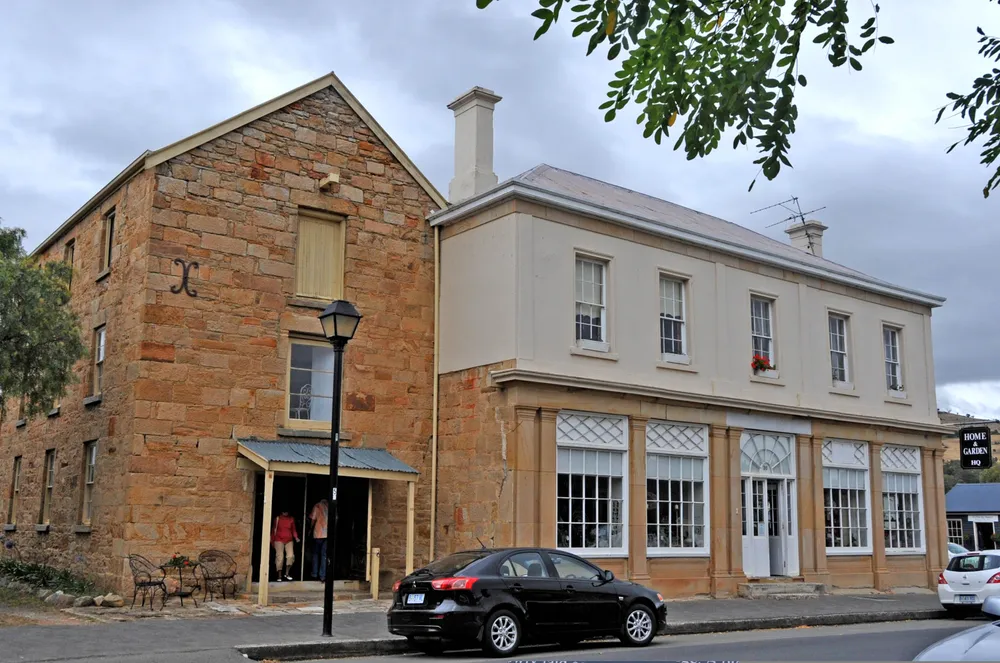
History Greater Hobart takes in a diverse area that roughly correlates to the local government areas of Hobart City, Glenorchy City, Brighton, Clarence and Kingborough. The regional towns were once independent but many have grown closer as urban sprawl connected them. Hobart is Australia's second oldest city, settled in 1804 by Colonel David Collins. The first settlement was at Risdon Cove, 8km up the river, but this site was abandoned as it was marshy and wet and proved difficult to build on and prone to disease outbreaks. Each of Greater Hobart's towns have a unique history, and many are nearly as old as Hobart itself. Kingston was once called Brown's River, and was settled by colonists evacuated from Norfolk Island in 1808. For decades, Kingston's contact with Hobart was irregular and it had no church, school or post office until a road was built in 1835. It was officially named a town in 1851. It became a popular holiday village for Hobart's elite in the 20th century - some of Tasmania's wealthiest still own homes on Kingston Beach's esplanade - and it wasn't until after the World War's that it began to develop as a significant economic center of its own. Today it has strong ties to the Dutch diaspora, as a significant site of Dutch immigration after World War II. Richmond was founded by Governor George Arthur as a penal district, and served as the center for court hearings for the agricultural regions east of Hobart. Its extensive Georgian architecture is owed to this time, when convict labour was used extensively. Today it has Australia's oldest bridge still in use, Richmond Bridge. Margate was discovered in 1792 when Bruni D'entrecasteaux sailed up the channel, which would later be named for him, and charted the coastline. In 1802, another French explorer Nicolas Baudin anchored here to collect wood, water and wood, and setup an observatory to observe a solar eclipse. Margate was settled first as an agricultural region, with its neighbouring smaller towns
Getting there
By car Greater Hobart can easily be reached from all other areas of Tasmania by car. Driving from Launceston via National Highway 1 takes around 2.5 hrs. Hire cars are available in Hobart, Launceston, at Hobart International Airport, and Devonport. You can also take your car from mainland Australia via the Devonport car ferry.
By boat Cruise ships stop at Macquarie Wharf during the cruise season.
Getting around
By car Greater Hobart is well connected by road. Some of its road networks may be confusing, as they follow Victorian era routes and may require a roundabout route to get where you're going. An arterial highway, the Southern Outlet, connects Hobart center to Kingston center.
By bus Bus services are provided by several regional operators - the public bus company Metro Tasmania services the inner urban area and Kingston and Margate. RedLine Tasmania and TassieLink also provide some services connecting the region. Outside of Hobart and Kingston proper, buses may be expensive and unreliable. Several tour companies offer bus tours departing the city to the outer towns. Tasmanian Tours offers a tour to Bruny Island, while Experience Tasmania offers a half-day tour to Richmond. Other operators may focus on a particular attraction - such as touring local wineries, food, whiskey, historic sites or natural attractions.
By boat A public ferry operates from Hobart's Brooke Street Pier to Berriedale Pier on the eastern shore of the River Derwent. River cruises connect Hobart city to its outlying attractions, often terminating at a restaurant. Some of these include Peppermint Bay Cruises, which depart Hobart and head to the far end of the Channel, stopping at Woodbridge, Hobart Historic Cruises which loop the River Derwent, and Bruny Island Cruises.
By bicycle Greater Hobart has a decent collection of bike rides that connect many of the outlying suburbs and towns. An old railway line has been converted to a bike and walking path that runs from Hobart city to Claremont in its northern suburbs, bike paths connect Sandy Bay and Taroona to the city proper. A further 10km along the same route will take you to Kingston, though the return journey is quite steep. A bike lane also connects Kingston to Huntingfield. Several bike hire businesses operate in Hobart, including Hobart Bike Hire. Bicycle Network Tasmania provide advice and resources for keen cyclists.
See
Buildings and landmarks Cape Bruny Lighthouse is a historic lighthouse built in 1836, at the far end of Bruny Island. Visitors can climb the steps to the lighthouse base and the overlook over Cape Bruny. A small museum exhibition is open to the public in the nearby cottage. A great place to see an echidna too.
Richmond Bridge, Richmond. The oldest stone span bridge in Australia and oldest bridge still in use, and perhaps Tasmania's most photographed location - well worth a wander by the river to take it in, and a perfect picnic spot. (updated Mar 2022) Taroona Shot Tower, 318 Channel Highway, Taroona. A historic shot tower and attached house that now hosts a tearooms. It is the only circular stone shot tower open for visitors to climb in Southern Hemisphere, and one of only 3 shot towers left in Australia at all. (updated Mar 2022)
Museums and art galleries Lady Franklin Gallery in Hobart. Built by Lady Franklin, wife of the governor, in 1842 at her own expense in the style of a Greek temple, the Gallery was entrusted to a local society but neglected for decades after Lady Franklin departed Tasmania, until it was handed to the Art Society of Tasmania and since 1948 it has been lovingly restored by the Art Society of Tasmania and now hosts rotating exhibitions of local art. Moonah Arts Centre in Moonah, Hobart, is a state-of-the-art regional art centre showing rotating local art exhibitions and hosting community arts activities. Bligh Museum of Pacific Exploration is a collection of artifacts relating to exploration of the South Pacific. The building was built from convict bricks from North Bruny Island, and the foundation stone laid on the 200th anniversary of Captain William Bligh's birth, in 1955.
Do
Music 1 Longley International Hotel, 1678 Huon Road, Longley, [email protected]. M-Th Sa 11AM-9PM, F Su 11AM-11:45PM day. Founded 1861, the local pub of country act the Wolfe Brothers, the Longley International Hotel has become a great local music venue, with blues, country and indie acts music almost every Friday and Sunday. It also hosts the Southern Blues Music Festival, and serves local and international beers and wine. It boasts the "longest huon pine bar in the world". Free. (
Buy
Greater Hobart has a range of boutiques and small shopping centers. Consider visiting the unique Margate Train, where a converted steam train has boutiques inside the former train carriages; Richmond town center boasts a range of boutiques and antique shops along the main street. For quick access to big box stores, Cambridge Homemaker Center includes many national chain stores.
Overview adapted from Wikipedia, travel guide fromWikivoyage (CC BY-SA). Photography via Wikimedia Commons.