
Great Australian Bight Marine Park
Australia · Oceania
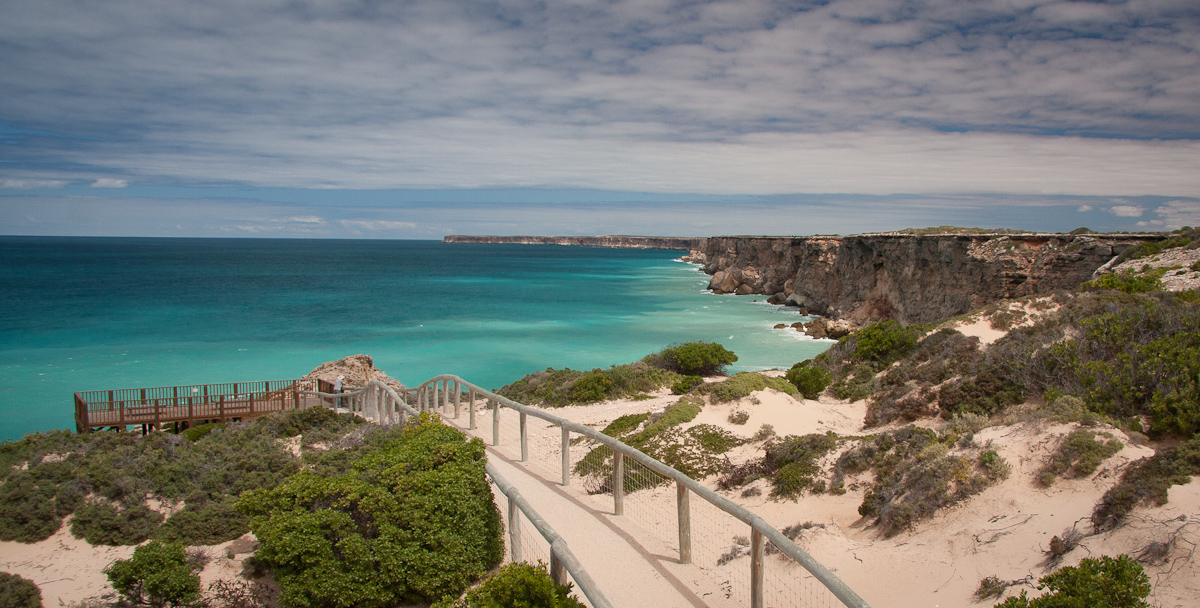
About Great Australian Bight Marine Park
Great Australian Bight Marine Park is a large Australian marine park off the waters of South Australia. Although they may be off the waters of SA, most of the marine park is not part of South Australia but in Commonwealth waters, but for practical purposes, it is categorised under South Australia. Only the national park section is under the waters of South Australia, administered by the South Australia's National Parks and Wildlife Service.
For practical purposes, this article covers the larger Great Australian Bight Marine Park and not just the Commonwealth waters, and so the South Australian national park of Great Barrier Reef Marine National Park and the Great Australian Bight Marine Park Whale Sanctuary are covered under here. However, both of those now overlap with the Far West Coast Marine Park. With joint state and federal protection, the marine park is home to large populations of whales, sea lions, and perhaps one of the most extraordinary spots to find wildlife of the Southern Ocean.
The only visitor facilities of any kind are at the Head of the Bight.
Great Australian Bight Marine Park travel guide
Understand
History The first European to come to the Great Australian Bight was in January 1627, when the Dutchman Pieter Nuyts sailed along the coast on the Gulde Zeepaard. Antoine Bruni d'Entrecasteaux later came to this area in December 1792 on the sailing ships La Recherche (French for "The research") and L'Esperence (French for "the Hope"). The first commercial activities in this sea area were carried out by whaling and sealing around 1800, which became insignificant after 1845 due to insufficient catches. From 1931, the whales in the South Australia area were placed under protection. The Southern Rock Lobster is also fished for. In June 1995 the South Australian Government declared a 430 km² whale sanctuary. In 1996 another 1,240 km2 (480 sq mi) were placed under protection and the whole area was declared a marine park. In 1998, the federal government placed a further 19,395 km2 (7; 488 sq mi) south of the marine park under protection as a marine park. In November 2012, the Great Australian Bight Marine Park was incorporated into the Great Australian Bight Commonwealth Marine Reserve together with South Australia's parts and the newly created marine reserve covers 45,926 km2 (17; 732 sq mi). Since 2012, the marine reserve of the state of South Australia has been overlaid by the 1,690 km2 (650 sq mi) Far West Coast Marine Park, giving it the maximum protection.
Landscape
Flora and fauna The area along the coast primarily protects Australian sea lions and southern right whales, while the south-facing deep-water strip protects benthos. The conservation park has a very rich marine fauna with a wide variety of marine animals such as red algae, sea squirts, bryozoans, mollusks and echinoderms. Many of these species are endemic. The high food supply that attracts many animals to the sanctuary results from the meeting of the warm tropical waters of Western Australia and the cold waters of South Australia.
Climate
Visitor information centre 1 Head of the Bight Visit
Getting there
Access is only via the Head of Bight visitor centre, which is a 20-minute deviation from the Eyre Highway. From there, access is restricted and you need a boat.
Go next
Nullarbor Wilderness Protection Area is just up north on land
Overview adapted from Wikipedia, travel guide fromWikivoyage (CC BY-SA). Photography via Wikimedia Commons.