
Golden Horn
Turkey · Asia
About Golden Horn
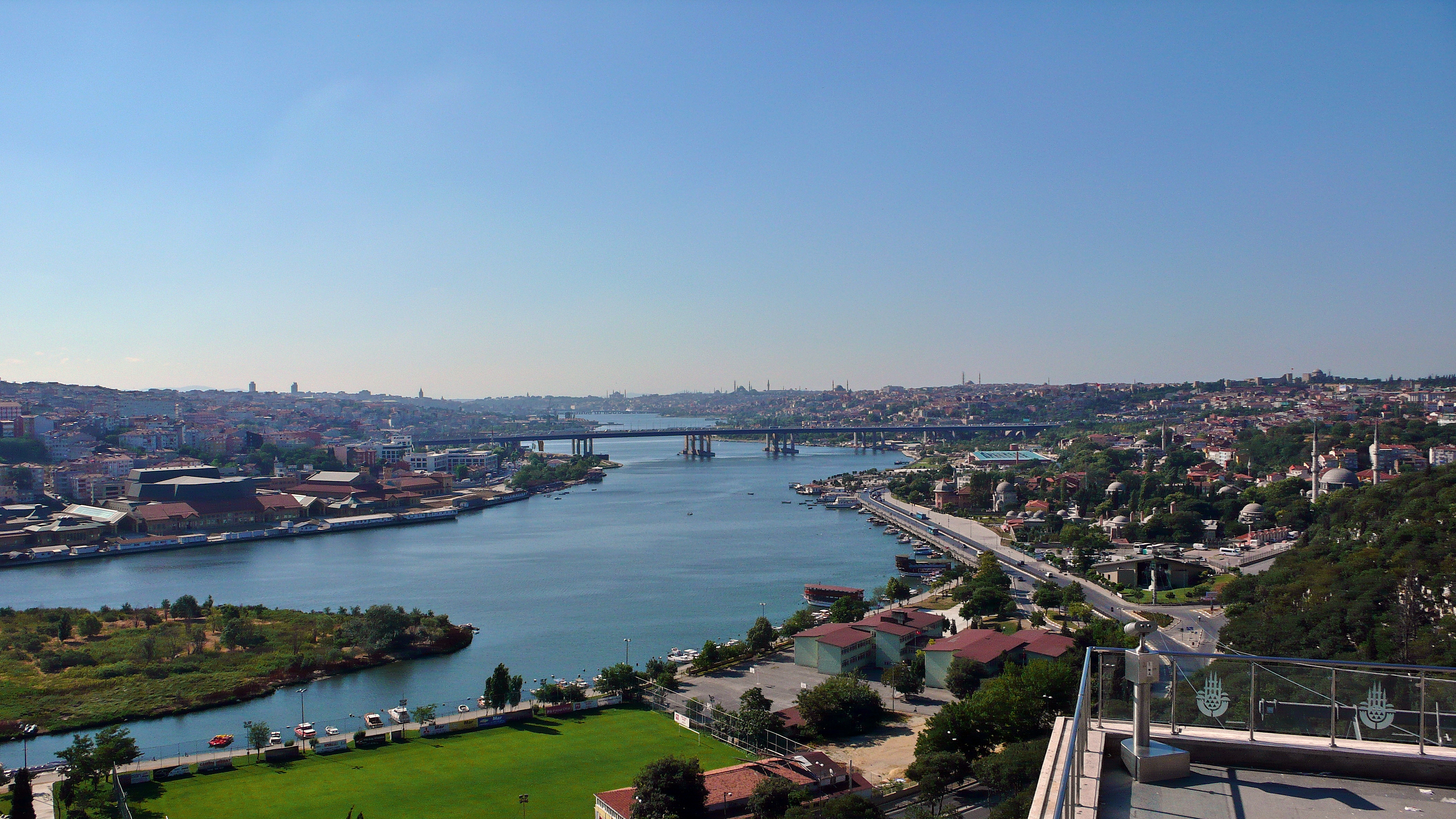
The Golden Horn (Turkish: Haliç) is the district of Istanbul surrounding the banks of the body of water of the same name, which is a bay of the Bosphorus along its western, European coast.
This article focuses on the areas around the Golden Horn banks west of the city walls or the inner beltway (O-1). For the southeastern and the northern banks, often visited on a combined trip to the area, see the articles for the Old City and Galata districts, respectively.
Golden Horn travel guide
Understand
The English name of the bay comes from its Greek counterpart, Hrison Keras (Χρυσόν Κέρας), which literally translates the "Golden Horn". The "horn" part perhaps comes from the deep curve the bay has towards its end in the northwest. The "golden" part is more obscure, but possibly it's a poetic referral to the reflections on the Horn's water during the beautiful sunsets. The Ottomans named the Horn as Haliç, which in modern Turkish is a geographical term for an "estuary", although in its original Arabic, it simply means a "gulf".
History
The Golden Horn is the estuary of the Alibeyköy and Kağıthane Rivers (known collectively as the Sweet Waters of Europe by the early European travellers of the centuries past; joining each other northeast of Eyüp near Silahtar), formed when the waters of the Bosphorus flooded their common riverbed in prehistory. Always been the primary harbour of Istanbul, it can even be argued that Istanbul would never have existed in such a grand way if it weren't for this well sheltered, superb haven (and also the superb trading route through and across Bosphorus; by the way). In the 18th century, the banks of the Horn and the rivers that form it were adorned with palaces and mansions that were surrounded by large tulip gardens (most of which are now lost without a trace), where the Ottoman high society were enjoying themselves in ostentatious parties. The banks of the Kağıthane River was especially favoured, where the partying suburb of Sadabad, "the happy city" was founded (the "sweet waters" simply wasn't a metaphor for the then-azure rivers; but it more was a referral to all the dolce vita going on). This was the Tulip Era (Lale Devri; 1718-1730), or as some call it, the "Debauch Era" (Sefahat Devri), which was later accused as one of the reasons for the economical weakening, and the eventual dissolution of the empire. All this festive lifestyle abruptly came to an end with the Janisarry-led Patrona Halil Revolt of 1730, when some of the
Getting there
The M2 line of the Istanbul Metro crosses the Golden Horn on a bridge (the only above ground section of that line). Haliç station in mid-channel is connected to both sides with pedestrian bridges. However Şişhane, the next station north, is better placed for the north bank locations. Tram line T5 runs along a north-south axis from Alibeyköy Cep Otogarı down to Cibali. An extension will eventually link it to Eminönü. Buses run from Eminönü and Taksim up the length of the Horn and beyond. Eminönü is better linked to the southern coast and Taksim is better linked to the northern. Boats. Ferries across the Bosphorus from Üsküdar to Eminönü also zigzag between quays either side of the Horn and go as far west as Eyüp. Smaller ferries also shuttle across the Horn. These ferries still burn fossil fuels. The electric gondolas from Eyüp for nearby destinations on the opposite bank are quieter, cleaner and maybe more romantic. They carry up to 4 people but the price is per boat and destination. On foot the main consideration is where to cross the Horn. The main crossing near Eyüp is the Old Galata Bridge (Eski Galata Köprüsü), the old pontoon bridge renovated and towed to its present location after badly damaged by fire in 1992. It is sometimes opened so you'll need a work-around when it does. Other bridges down the estuary are the Unkapanı, Metro (also accessible on foot), and (new) Galata, all between the vicinity of Eminönü and Karaköy. A chairlift runs between downtown Eyüp and Pierre Loti on a hill overlooking the Horn; see the "Do" and "Drink" sections below. 1 Eyüp Pier. (updated Feb 2025)
See
1 Eyüp Mosque Complex (Eyüp Camii), Eyüp (Eyüpsultan Teleferik 400 m; Eyüp 400 m). This is the main attraction around this part of the city. The holiest Islamic shrine in the city, the complex includes, right next to the mosque, the tomb of Abu Ayyub al-Ansari (Eyüp Ensari Türbesi), the standard bearer of Prophet Mohammad, died and buried here during the first Muslim siege of Constantinople (674-678 AD). The neighbourhood was named after him. Muslims flock here (in such huge numbers that sometimes you have to queue for a few minutes before entering the tomb) also to see a rather uninteresting plaque made of plastic, which is purported to be Mohammad's footprint. The interior of the tomb, covered with fine tiles/faience, is nonetheless well worth a look, however. It is also interesting to see the devout Muslims leaving the place by walking backwards through its exit hallway, as not to turn their backs to al-Ansari's catafalque, though obviously no one expects everyone to quit the place in the same manner. Free. (updated Jun 2023) Around the mosque complex are cemeteries and tombs from the Ottoman period, with their distinctively decorated marble headstones. Besides, there are a number of other mosques, streets, and stores surrounding the Eyüp Complex, all pleasantly preserved, and give the visitors an idea of how Ottoman Istanbul should be looking like. Here is where all of those "boys-to-be-circumsized photos" are taken, as it’s a tradition to take the boys in their special Ottoman prince outfits to this particular mosque before the event. In the adjoining streets, you can find shops offering interesting Ottoman-style stuff like wooden toys or traditional salty ring-shaped cookies (halka) not easily available elsewhere.
2 Artistanbul Feshane, Eski Feshane Cd, Eyüpsultan (Feshane 250 m; Eyüpsultan 400 m; on the waterfront; just east of downtown Eyüp), ☏ +90 212 501-73-26, fax: +90 212 501-73-28. 10:00 - 18:00. Feshane began as a factory producing fezzes (fes), t
Do
Parks along the Golden Horn like; Eyüp Sahil, Silahtarağa and Nilüfer Parks. The annual Epiphany of Orthodoxy, ceremony of retrieving the cross from the sea on the Golden Horn. The annual Golden Horn Rowing Cup, organized by the metropolitan municipality. 1 Cable car. Every 5 min 09:00-24:00. Offers a very short ride (3 min) up the nearby hill. And it can get very crowded during summer. The same price as in public transport, 2.6TL for IstanbulCard holders and 5TL for others. (updated Feb 2019) 2 Vialand, Şehit Metin Kaya Sk, Yeşilpınar (Veysel Karani Akşemsettin 1 km; shuttle buses depart from the station; by car the easiest access is by taking the Gaziosmanpaşa exit from O-2/E80; and then following the brown signposts; which may be old enough to call the park by its former name; İsfanbul). Daily 11:00-20:00 (Summer: 11:00-21:00). The only theme park of the city has a good selection of rides, including a couple of rollercoasters. US$55, under 3 free, discount for domestic visitors. (updated Jul 2023) 3 Istanbul Dolphinarium, Silahtarağa Mh, Silahtarağa Cd. No:20. (updated Feb 2025) 4 Eyüpsultan Cultural Center, Merkez, Silahtarağa Cd. no:18. (updated Feb 2025) 5 Haliç Congess Center, Sütlüce, Karaağaç. Cad. No:48. (updated Feb 2025) 6 Rami Library, Yeni Rami Mahallesi, Rami Kışla Cd. 98/1 Eyüpsultan, ☏ +90 212 934 38 55, [email protected]. 19th centur
Overview adapted from Wikipedia, travel guide fromWikivoyage (CC BY-SA). Photography via Wikimedia Commons.