
Frenchman Coulee
United States · Americas
About Frenchman Coulee
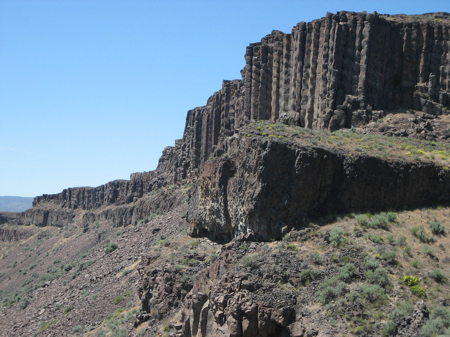
Frenchman Coulee is a gorge along the bank of the Columbia River in central Washington state. Its basalt columns are popular with rock climbers. It is also frequently referred to as Vantage, the nearest community across the river.
Frenchman Coulee travel guide
Understand
History Between 5 and 16 million years ago, a series of volcanic eruptions from what is now the Yellowstone Hot Spot periodically flooded the Columbia Basin with thousands of feet of molten basalt. Much more recently, during the Ice Age between 12,000 and 18,000 years ago, a glacial meltwater flood breached the Grand Coulee. During the first stages of flooding, the water levels between the flood-filled Quincy Basin and the Columbia River immediately west of Evergreen Ridge approached 700 feet over just a few miles. This incredible difference in water levels caused floodwaters to relentlessly eat away the underlying rock layers. Erosion continued for at least as long as it took for the water level in the Columbia Valley to rise to about 1200 feet, or until the floodwater supply was exhausted.
Landscape Sandy land surrounded by steep cliff walls. The Coulee exhibits a waterfall near the North Alcove as well as a small stream that flows into the dry bed of the Coulee. The waterfall has been called Frenchman Waterfall, Frenchman's Coulee Waterfall, and Stolp Falls among other names, though consistent record of the actual name is difficult to find. There is a set of basalt columns commonly frequented by climbers located between the north and middle alcove of the Coulee. Frenchman Coulee terminates near the edge of the Columbia River Gorge and is located directly north of Echo Basin.
Flora and fauna Desert brush and small species of cactus exist in the canyon. Some reeds and more lush growth can be found along the small stream leading into the canyon and around the falls.
Climate Frenchman Coulee receives very little rain at any time of the year. The summers are typically hot and windy making spring and fall the best time to visit the area. Fog has been known to roll through the Coulee. High winds are also present at times in the area, sometimes arriving quickly and with little to no warning.
Getting there
Frenchman Coulee is 1 mi (1.6 km) northwest of Interstate 90, directly across the Columbia River from Vantage, between Ellensburg and Moses Lake. From I-90, take Exit 143 to Silica Road. Head north for about 1/2 miles, then turn left onto Vantage Highway.
Getting around
The main road through the park is paved, though other auxiliary roads are not. Most campsites are accessible to normal cars, but a few are difficult to access without a high-clearance vehicle. The Coulee is about 3 miles from end to end, and makes a good day-hike.
See
The Old Vantage Highway takes you through the coulee, where you can visualize the flood as it unfolded:
The north cataract flows past 1 The Feathers, a distinctive set of basalt columns at the front of the main climbing area. Follow the cliff wall until it ends at 2 Echo Basin, a south cataract merging into the north one. At the top of the Echo Basin cataract, you can see diatom, a white powder used for mining. At the bottom, you may notice the plunge pools eroded from the falling water. Keep going, and you will eventually come to the 3 end of the old highway at the Columbia River.
Do
Rock climbing is the primary draw for people to Frenchman Coulee. There are hundreds of routes, sport and traditional, on a variety of rock ranging from 30m basalt column cracks to sporty 5.12 jug-fests. An excellent guidebook is available for the area. For sport climbing, you'll need a 60m rope and sixteen draws, plus some slings and carabiners for anchors. Hiking is also popular. Frenchman Coulee has a (present-day) waterfall that is accessible by foot.
Buy
There are no facilities at Frenchman Coulee. The nearest towns are Vantage to the west, and George to the northeast, which has several convenience stores, a gas station, and a few restaurants.
Eat
Sagecliffe Resort and Spa. Ten minutes by car down Silica Rd. If you are camping at the Feathers hit the bathroom at the restaurant and hotel, get coffee, etc. The food in the restaurant is amazing but comes at a cost.
Drink & nightlife
There is no running water at Frenchman Coulee. Bring your own drinking water.
Sleep
Camping 1 Dispersed Camping Area (immediately east of the main parking area). There are no designated sites but you can drive through the rough dirt trail to find a flat area. Portable toilets are nearby but there is no running water, no picnic tables and no fires are allowed. The area can become quite busy during long weekends or when there are big concerts held at the nearby amphitheater in George. (updated Nov 2024) 2 Wanapum State Park (south of Vantage; about 10 miles from Frenchman Coulee). There are 50 camp sites that are quite nice, situated along the Columbia River (Wanapum Lake) and lined with trees. Tent and RV sites are available and all cost $22/night. Reservations can be made online for an additional $7 fee. The sites are almost completely booked up during the weekends over the summer. (updated Nov 2024) There are several more campgrounds around Vantage, George, and Quincy. The wind in this area is notorious for picking up into gale force winds. Tie your tent down and inspect the trees in your vicinity for rot and the potential for them to blow over.
Backcountry There is no backcountry camping in the area. Camping is restricted to designated locations.
Go next
Try the other rock climbing areas of Washington:
Index — easy access to a big wall Leavenworth — the "Bavarian" village nestled in the mountains Mazama, outside of Winthrop — cragging next to the huge routes of North Cascades National Park North Bend — the most accessible rock to Seattle Tieton, outside of Yakima — also features column basalts
Overview adapted from Wikipedia, travel guide fromWikivoyage (CC BY-SA). Photography via Wikimedia Commons.