
Fort St. John
Canada · Americas
About Fort St. John
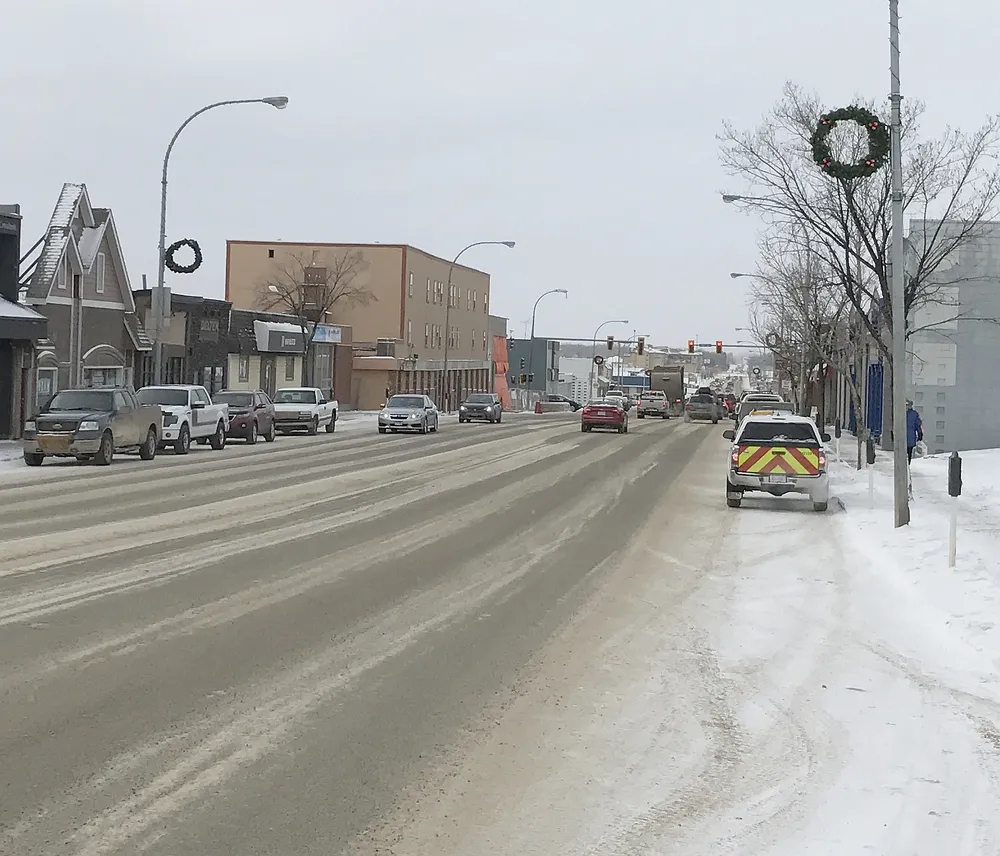
Fort St. John is in the Peace Country and Northern Rockies and is the second-largest settlement along the Alaska Highway. The city of 20,000 people (2016) is in northeastern British Columbia, approximately 382 km (237 mi) south of Fort Nelson and 75 km (47 mi) north of Dawson Creek. Fort St. John is the oldest European-established settlement in present-day British Columbia.
Fort St. John travel guide
Understand
Fort St. John is a retail, service and industrial centre. The province's oil and gas industry is centred in the city. Forestry has become more important to the city since the opening of an oriented strand board plant in 2005. Much of the wood is exported to the United States. Agriculture has been the mainstay of the economy servicing and providing a market for the upland prairies.
1 Fort St. John Visitor Centre, 9324 96 St (inside the Pomeroy Sport Centre), ☏ +1 250-785-3033, toll-free: +1-877-785-6037. Winter (Sept-May): M-F 9AM-8PM, Sa Su 11AM-7PM, Closed Holidays; Summer (May-Sept): M-F 8AM-7PM Sa Su Holidays 9AM-6PM. (updated Jul 2020)
History Over the years the community has been moved a number of times for varying economic reasons. The present location is thought to be its sixth. The original trading post built in the area was named Rocky Mountain House (not to be confused with the modern Alberta town by that name). It was established one year after Sir Alexander Mackenzie explored the area in 1793. One of a series of forts along the Peace River constructed to service the fur trade, it was southwest of the present site of Fort St. John. The Dunneza and Sikanni First Nations used it as a trading post. It was also used as a supply depot for further expeditions into the territory. The fort closed in 1805. Fort d'Epinette was built in 1806 by the North West Company. It was renamed Fort St. John in 1821 following the purchase of the North West Company by the Hudson's Bay Company. This fort was about 500 m downstream from the mouth of the Beatton River, which at that time was known as the Pine River (d'epinette in French). It was shut down in 1823. The site was designated a National Historic Site of Canada in 1958. After a lapse of nearly 40 years, Fort St. John was reopened in 1860 on the south side of the Peace River, directly south of the present community. It was moved in 1872 by Francis Work Beatton directly across the river. This community lasted until 1
Getting there
By bus BC Bus North, ☏ +1-844-564-7494. Provides bus service on the following routes:. (updated Apr 2021) From Prince George twice per week with stops in Mackenzie, Chetwynd, Dawson Creek, and Taylor. Travel time to Fort St. John from Dawson Creek is 1 hour and from Prince George is 8 hours. Fare is $48. From Dawson Creek and Fort Nelson once per week. Travel time to Fort St. John from Dawson Creek is 1 hour and from Fort Nelson is 5.25 hours. Fare is $49.
By car Highways serving Fort St John:
Highway 29 - Terminates just north of Fort St. John after traveling northeast from Chetwynd via Hudson Hope Highway 97 (Alaska Highway) - Fort St. John can be reached by driving north from Dawson Creek or south from Fort Nelson
By plane
Airport 1 Fort St. John Airport (YXJ IATA) (a few kilometres east of the city), ☏ +1 250-787-0426, [email protected]. The only commercial airport between Dawson Creek and Fort Nelson. The two-runway airport has Air Canada Jazz, WestJet and other smaller airlines such as Central Mountain Air with regularly scheduled flights and North Cariboo Air providing chartered flights. (updated May 2022) Flights to Fort St. John from Vancouver take 1.75 hours.
Airlines Canadian airlines traveling to Fort St. John:
Air Canada, ☏ +1-514-393-3333, toll-free: +1-888-247-2262. Canada's largest airline with hubs in Vancouver, Calgary, Toronto, and Montreal. It operates across Canada and services international destinations. (updated Apr 2022) Central Mountain Air, toll-free: +1-888-359-2620, [email protected]. Operates flights mostly in British Columbia and to a lesser extent in Alberta. Edmonton, Prince George, and Vancouver effectively serve as hubs for the airline. (updated Apr 2022) WestJet, toll-free: +1-877-952-0100. Canada's second largest airline services with hubs in Calgary and Toronto. It operates across Canada and services international destinations. (updated Apr 2022)
Getting around
Within the city the streets are laid out in a grid pattern. The main streets are the north-south 100 Street and the east-west 100 Avenue.
By public transit BC Transit (Fort St. John Transit System), ☏ +1-250-787-7433. Operates several routes around the Fort St. John from Monday to Saturday. (updated Apr 2022)
By taxi Teco Taxi, ☏ +1 250-787-0641, [email protected]. (updated Jul 2022)
See
1 Fort St. John North Peace Museum, 9323 100 St, ☏ +1 250-787-0430, [email protected]. M-Sa 9AM-5PM. This museum tells the story of the Fort St. John region including First Nations' settlements, the fur trade, agricultural settlement, the growth of the town, and the Alaska Highway. Adults $6, seniors (65+) $5, students $4, children 5 & under free. (updated Jun 2018) 2 North Peace Cultural Centre, 10015 100 Ave, ☏ +1 877-785-1992. Gallery: Tu-Sa 10AM-5PM. In the centre of town, it houses the Fort St. John Public Library, a theatre, and the Peace Gallery North Art Gallery. (updated Jun 2018) High on Ice Winter Carnival (Centennial Park). The event features ice sculptors competing at Centennial Park and other special winter-related activities occurring around town. Held annually in January or February. (updated Mar 2023)
Do
1 Centennial Park. Includes the Fort St. John North Peace Museum, the North Peace Leisure Pool, the North Peace Arena (home of the Fort St. John Huskies), a separate arena for children, an 8-sheet curling rink, as well as an outdoor water park and speed skating oval. (updated Mar 2023) 2 Pomeroy Sport Centre, 9324 96 St, ☏ +1 250-785-4592. It is the city's main recreation centre, a three-storey public facility with two National Hockey League-sized ice rinks, an indoor near-Olympic-sized long track speed skating oval, and a 340 meter long walking track (the "Northern Vac Track"). (updated Mar 2023) 3 Fish Creek Community Forest (trails can be accessed just east of Northern Lights College). Several trails that follow Fish Creek. (updated Mar 2023) 4 Beatton Provincial Park (accessed from Road 271; about 10 km north of downtown). Located on the east side of Charlie Lake. In the winter, has 15km of groomed cross-country ski trails. (updated Mar 2023) 5 Charlie Lake Provincial Park (accessed from Highway 97; about 10 km north of downtown). Located on the west side of Charlie Lake. Has forested hiking trails. (updated Mar 2023)
Eat
1 Whole Wheat and Honey Cafe, 10003 100 St, ☏ +1 250-787-9866. M-F 6AM-4PM, Sa 9AM-4PM. Breakfast and lunch. They source locally staples like eggs, honey, and bakery fresh bread, and purchase as much as possible from local butchers and grocers (much of it organic), and local produce seasonally when available. Vegetarian, gluten- and dairy-free options are always available. They serve fair trade organic coffee. (updated Jun 2018) 2 North Bar & Grill, 9830 100th Ave, ☏ +1 250-261-6961, toll-free: +1-800-663-8312, [email protected]. Classic and modern dishes and offering wine and draught beer selections. Mains $18-38, sandwiches and burgers $14-18. (updated Jun 2018) 3 Sp
Overview adapted from Wikipedia, travel guide fromWikivoyage (CC BY-SA). Photography via Wikimedia Commons.