
East Cork
Ireland · Other
About East Cork
County Cork (Contae Chorcaí) is in Southwest Ireland, and historically part of the province of Munster. It's the largest county in the Republic, and Cork is the country's second largest city, with many visitor attractions. It has lush farmland dotted by defensive turrets such as Blarney Castle, and a rugged Atlantic coastline.
East Cork travel guide
Understand
County Cork (Contae Chorcaí) on the south coast of Ireland is the Republic's largest county by area, and in 2022 had a population of 580,000, concentrated around Cork city and its large natural harbour. Most of the area is lowland and fertile, along the valleys of the rivers Bandon, Lee (flowing through Cork) and Blackwater (the boundary with County Waterford). This attracted settlers from elsewhere, notably the Vikings, Anglo-Normans and Tudors, using the many small harbours and tidal channels. The county became dotted with early Christian monasteries, stone turrets and other fortifications. The incomers came into conflict with the ancient kingdom of Deas Mumhan or South Munster, anglicised as "Desmond" - not until 1601 was this broken. The southwest of the county by contrast is poor stony land, with a rugged convoluted coastline, small fishing villages and a scatter of islands. Life here was hand-to-mouth even in the good years, and then came the bad - the district around Skibbereen was among the worst stricken in Ireland during the Great Famine of 1845-49. Cork's harbours became busy with the export of Ireland's people to America, with lonely Fastnet their last glimpse of the Old Country. But the 19th century invented tourism and re-defined what we regard as "scenic", so these bleak depopulated hills and headlands became the county's prime draw, and still are. Here too are many Neolithic and Bronze Age relics, which elsewhere were cleared for farmland. A last stand against English influence was in 1921 / 22, after Ireland achieved independence, but at the price of Partition. The new country was plunged into civil war, and the anti-Treaty faction was especially strong in County Cork, proclaiming a breakaway "Republic of Munster". Almost the last shot of that war felled the pro-Treaty leader and local man Michael Collins. Some 15,000 people in the county are Irish speakers, concentrated in Cork itself and in the northwestern Múscraí (Muskerry) area. Everyone spe
Getting there
By plane Cork Airport (ORK IATA) is 6 km south of Cork city center. It has flights from UK and Europe but is too small for direct long-haul aircraft. If you're flying in and renting a car, which you'll need to explore the southwest, then Dublin (DUB IATA) or Shannon (SNN IATA) might also work well.
By train Trains run hourly from Dublin Heuston, taking 2 hr 40 min to Cork via Kildare, Portlaoise, Ballybrophy, Thurles, Limerick Junction and Mallow. There are also rail connections from Limerick city, Waterford and Tralee.
By bus There are no through-buses to Ireland from Great Britain or the continent: change in London for the ferry ports. Buses run hourly from Dublin Airport (3 hr 30 min) and Busáras (3 hr) to Cork. A bus runs hourly from Galway via Ennis, Shannon Airport, Limerick and Mallow to Cork, with a faster bus every 2-3 hours. Buses run from Rosslare ferry harbour via Wexford, Waterford, Dungarvan and Youghal to Cork, and continue to Kerry.
By boat From the Channel ports, first sail to UK then cross it to sail to Dublin or Rosslare. Summer ferries from Roscoff and Santander sail to Cork, landing at Ringaskiddy 7 km south of the city.
Getting around
By bus Bus routes radiate from Cork. Buses from Dublin are non-stop to Cork so for other towns you have to change there: Bus 251 for Blarney, 220X for Crosshaven, 226 for Kinsale, 237 for Clonakilty, Skibbereen, Baltimore and Schull, and 236 for Bantry, Glengarriff and Castletownbere. Expressway Bus 40 trundles right across Ireland from Rosslare to Tralee; within this county it links Youghal, Cork and Macroom. For Cobh, Midleton and Mallow take the train. There are few cross-country buses between the radial routes, so you might have to double back via Cork. See individual towns for Local Link bus services. These are generally too sparse for visitors, running once or twice a week, but a few are practical ways of getting in and around, eg the Kinsale-Clonakilty service. Cork City Tours operate a hop-on hop-off bus tour of Cork, and excursions to the Jameson Distillery, all of which you can easily visit independently. But they also have long day trips out to far-flung spots like Mizen Head and Ring of Kerry, impractical to reach without your own car.
By train The only railways in the county are around Cork city: the mainline from Dublin Heuston via Mallow, and commuter lines to Midleton and Cobh.
By road Car hire is available at the airport and in Cork city, with all major companies represented. Bicycling is pleasant on the quieter roads, but there are no traffic-free bike lanes outside Cork city. In the west expect to cycle in the teeth of a stiff Atlantic breeze, which will somehow fail to be at your back when you return east.
See
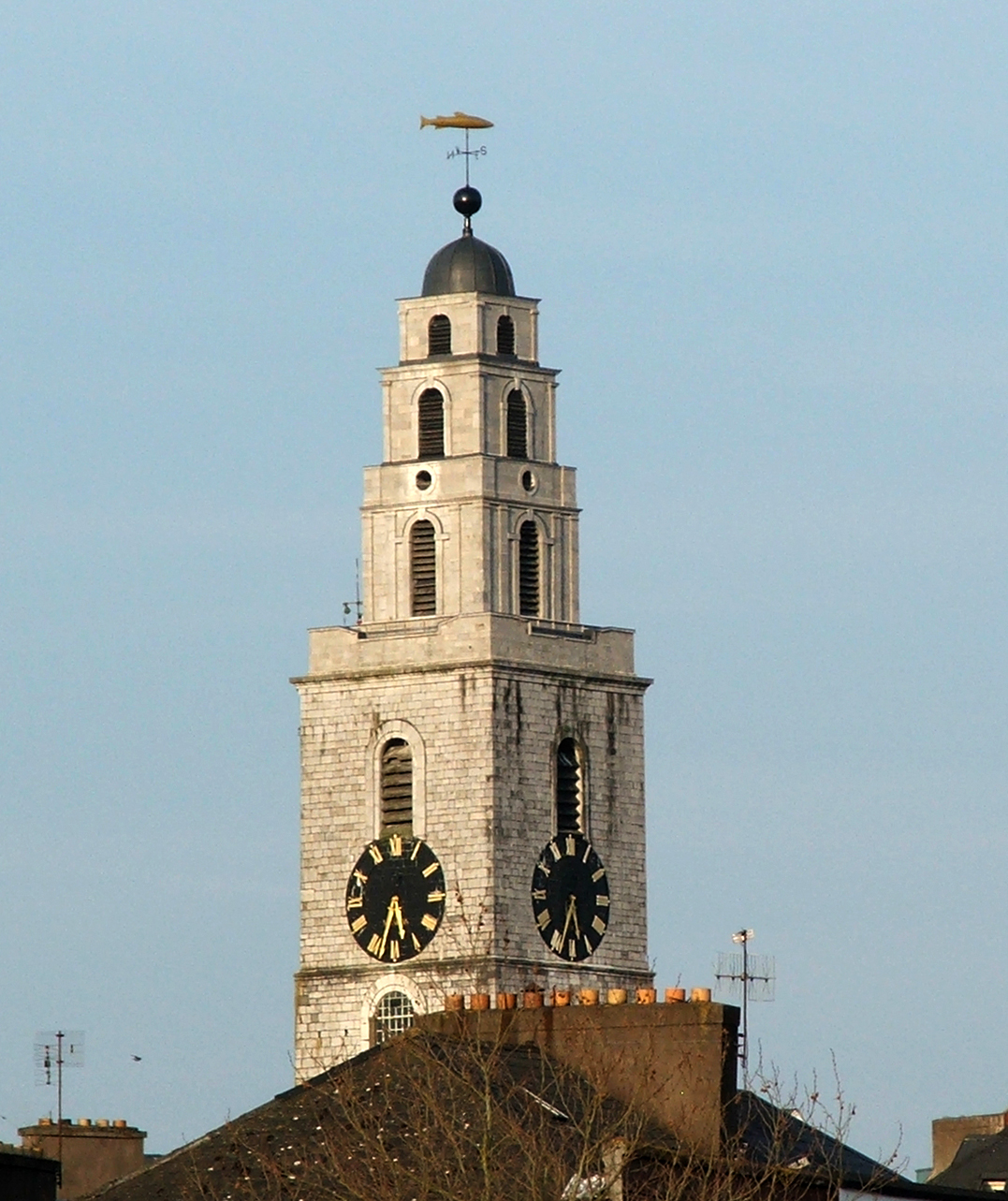
Cork city needs a few days to explore. City centre architecture is Georgian / Victorian, such as St Finbarre's cathedral, St Anne's with the Shandon Bells, the city gaol, and the English Market; while modern design is seen on the University campus. Easy day-trips from the city are Blarney for its touristy castle and Blarney stone, Fota wildlife park and Arboretum, and Cobh the colourful port. Other small ports were more important in bygone times: Youghal was a walled Tudorbethan town, and Kinsale was worth defending with two forts — one formidable, the other overgrown. To the west, Ireland ends in stony peninsulas dotted with prehistoric sites. Bantry is a good base for exploring them. Night skies are a lost cause near the city, but the rural places are free of light pollution. On a clear night, get away from the street lights and give your eyes 20 min to adjust, and the Milky Way and other objects will swim into view as never before. Road Bowling is the Irish team sport of hurling a small cannonball down a public road. Wherever it stops, the next shot is taken from there, until one team crosses the finish line. It's played especially in County Cork and in County Armagh so you may well find a game along a back lane.
Do
The Wild Atlantic Way is a coastal driving route from Cork away up to Donegal. You're unlikely to want to do it all in one trip, it's best to explore one region at a time. It starts at Old Kinsale Head and heads west via Timoleague, Clonakilty, Galley Head, Glandore, Toe Head Bay, Skibbereen, Baltimore, Inishbeg, Cunnamore, Heir and Sherkin Islands, Ballydehob, Schull, Toormore and Barley Cove to Mizen Head. It then heads north via Sheep's Head to Whiddy Island, Bantry, Glengarriff, Castletownbere and Bere Island then Dursey Island. After Derryvegal you cross into County Kerry towards Kenmare. No fixed route, it's up to you whether you follow all the convolutions of the coast and hop to the islands, or shortcut on the main highway further inland. Gaelic games: the County GAA play home games in Cork, with Páirc Uí Chaoimh as the main stadium and Páirc Uí Rinn their second ground. There are some 180 club teams across the county. Fishing: there's sea angling, and coarse angling on the many lakes and rivers. The salm
Overview adapted from Wikipedia, travel guide fromWikivoyage (CC BY-SA). Photography via Wikimedia Commons.