
Dominican Republic
Dominican Republic · Americas
About Dominican Republic
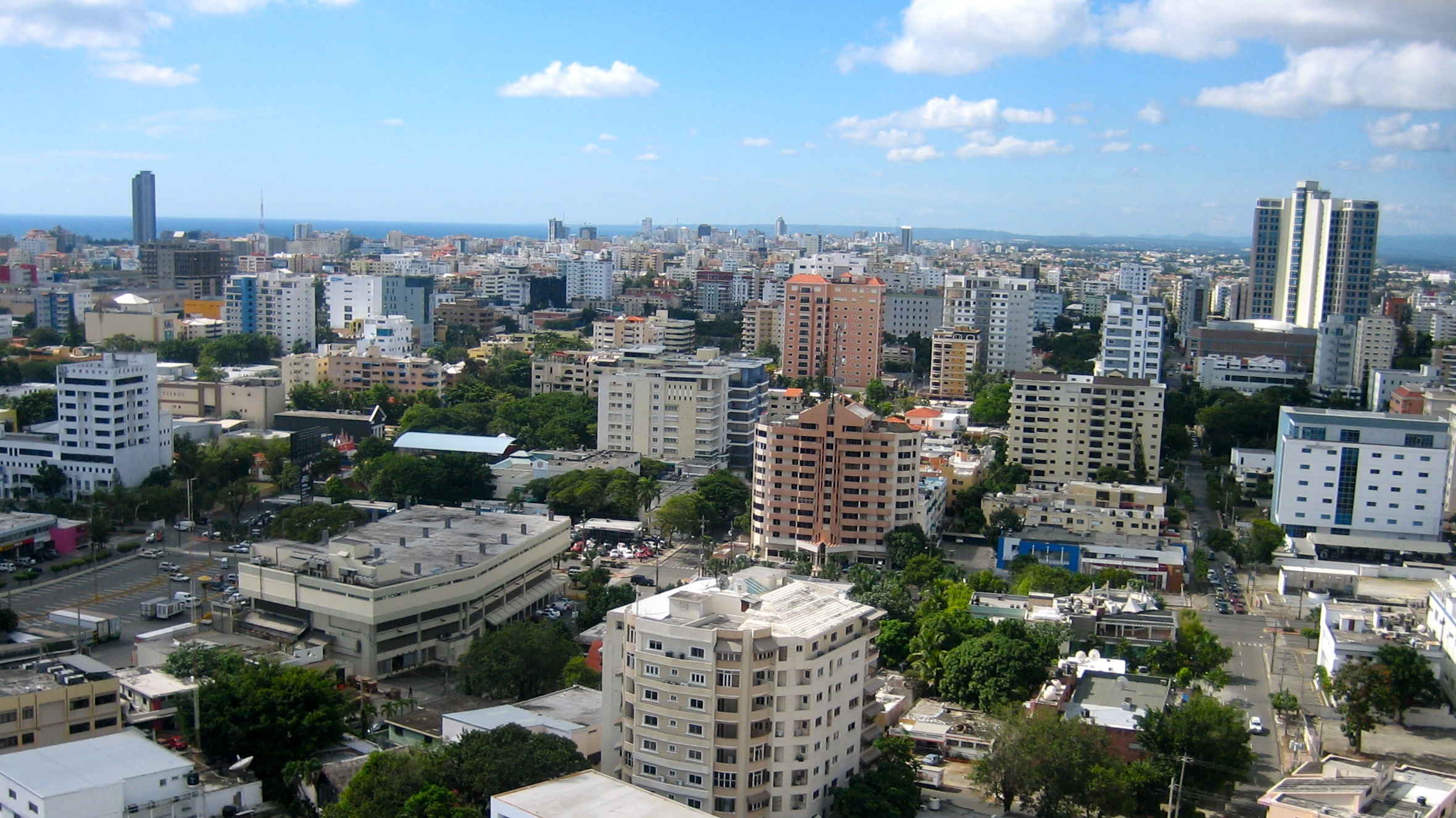
The Dominican Republic (Spanish: República Dominicana) is a Caribbean country that occupies the eastern half of the island of Hispaniola, which it shares with Haiti. Besides white sand beaches and mountain landscapes, the country is home to the oldest European city in the Americas, now part of Santo Domingo. Due to its Hispanic heritage, the Dominican Republic is called the Cradle of the Americas.
Dominican Republic travel guide
Understand
History Explored and claimed by Columbus on his first voyage on December 5, 1492, the island of Ayití, named by Columbus as La Hispaniola, became a springboard for Spanish conquest of the Caribbean and the American mainland. The island was first inhabited by the Taínos and Caribes. The Caribes were an Arawakan-speaking people who had arrived around 10,000 BCE. Within a few short years following the arrival of European explorers, the population of Tainos had significantly been reduced by the Spanish conquerors. Based on Fray Bartolomé de las Casas (Tratado de las Indias) between 1492 and 1498 the Spanish conquerors killed around 100,000 Taínos.
The first European settlement founded on the American continent was on La Isabela, founded in 1493 using a 15th-century style in La Isabela, Puerto Plata (19°53'15.08" N 71°04'48.41" W). The City of Santo Domingo was founded by Bartolomé Colón, on August 5, 1496 and was moved by Frey Nicolás de Ovando to the west side of Ozama river in 1502. In 1606 the royal crown of Spain ordered the depopulation of the western end of the island due to high piracy and contraband. This led to the French invasion and the establishment of Haiti. In 1697, Spain recognized French dominion over the western third of the island, which in 1804 became Haiti. The remainder of the island, by then known as Santo Domingo, sought to gain its own independence in 1821, but was conquered and ruled by the Haitians for 22 years; it finally attained independence as the Dominican Republic in 1844. A legacy of unsettled, mostly non-representative rule for much of its subsequent history was brought to an end in 1966 when Joaquín Balaguer was elected president for his second, non-consecutive term (he had first served from 1960-1962). He maintained a tight grip on power for most of the next 30 years, until international reaction to flawed elections forced him to curtail his last term, hold new elections in 1996, and give up power. Since then, regular competitive
Getting there
The Dominican Republic allows citizens of virtually every country in the Western Hemisphere to enter without a visa for up to 30 days (Cuba; Haiti and Venezuela are notable exceptions). Also visa-exempt are citizens of any of the European Union / European Economic Area member states, Australia, Bahrain, Hong Kong SAR, Israel, Japan, Macao SAR, Malaysia, New Zealand, Papua New Guinea, Qatar, Singapore, South Africa, South Korea, Switzerland, Taiwan, Turkey, Ukraine, the United Arab Emirates, the United Kingdom, and Zimbabwe. See Entry Requirements. The 30 day visa waiver can be extended once for an additional 30 days. All arriving passengers regardless of citizenship or residency status must complete an eTicket online prior to departing for the Dominican Republic. This consolidates and digitizes the arriving passenger/ tourist card, customs declaration, and health declaration required to enter the country and produces a QR code that can be scanned by immigration and customs. Information requested on the eTicket application is fairly straightforward, traveler details, passport number, purpose and dates of trip, where you'll be staying, etc... In all likelihood you will not be asked to produce the QR code on arrival (it appears to be linked to your passport number), but your airline will ask to see it.
A US$10 tourism fee is payable by all arriving foreigners apart from returning residents. Formerly, this was paid in cash just prior to going through passport control, although since the eTicket system was introduced in 2019, it's now almost universally collected as part of the traveler's airfare or cruise package. Private aviation and yacht passengers must pay this fee on arrival in US dollars or euros (not Dominican pesos).
By plane The main airports (in alphabetical order) are:
(AZS IATA) Samana, also known as "El Catey", located between the towns of Nagua and Samana on the north coast. (EPS IATA) Samana, also known as "Aeropuerto Internacional Arroyo Barril"
Getting around
Options for getting around the country include bus service, 'gua-guas' (pronounced "Gwa-Gwas": small battered vans or trucks that serve as a collective taxi running fixed routes that are very cheap but can also be very overloaded), domestic air flights and charter air service. There is a rail system operating only in the city of Santo Domingo. Most towns and cities have regularly scheduled bus service, if not by one of the big bus companies, then by gua-gua. The bus lines are most often simple, independently run operations, usually only connecting two cities within a region (Southwest; East; North) or between one city and the capital (with stops made for any towns on the route). Because of the geography of the country, to get from one region of the country to another you have to go through the capital. At horariodebuses.com you can check bus timetables between destinations in the country.
By car Cars may be rented through Hertz, Avis, Car Rentals or other agencies in Santo Domingo and other major cities. Gasoline, however, is expensive often costing upward of US$5/gallon (as of June 2018). Some roads, especially in remote areas, are fairly dangerous (often without lane divisions) and many people tend not to respect oncoming traffic. Road conditions on most major highways are roughly similar to road conditions in the United States and western Europe. However, potholes and rough spots are not rapidly repaired and drivers must be aware that there are a significant number of rough spots even on some major highways. There are a number of very good roads such as DR-1 which is a four lane highway connecting the cities of Santo Domingo and Santiago and can be traveled with no trouble. Highway DR-7 is an excellent toll road from just east of Santo Domingo north to near Sanchez. From there, you can go east to the Samana peninsula or west along the northern coast of the DR and costs about US$11. Probably the biggest challenge that an international visitor to the Dominica
See
There is one UNESCO World Heritage Site, the old town of Santo Domingo which is the oldest European city in the Americas. In addition to that there are many national parks and beaches in the country. Boinayel is a revered Taíno deity of rain in the Dominican Republic. In Indigenous myth, his tears were believed to create rainfall to fertilize the soil. He is deeply featured in the country's cultural heritage, notably in depictions of cave art, whose name can be seen in the prehistoric Las Cuevas del Pomier.
Do
Climb/hike to the top of Pico Duarte. At 3,098 m it's not only the highest mountain in the Dominican Republic but in the whole Caribbean.
National parks Los Haitises National Park Jaragua National Park National Park Isla Cabritos Armando Bermudez National Park Jose Del Carmen Ramirez National Park Sierra del Bahoruco National Park Parque Nacional del Este Monte Cristi National Park Parque Historico La Isabela
Buy
Money
The currency of the Dominican Republic is the Dominican peso den
Overview adapted from Wikipedia, travel guide fromWikivoyage (CC BY-SA). Photography via Wikimedia Commons.