
Czech Republic
Czech Republic · Other
About Czech Republic
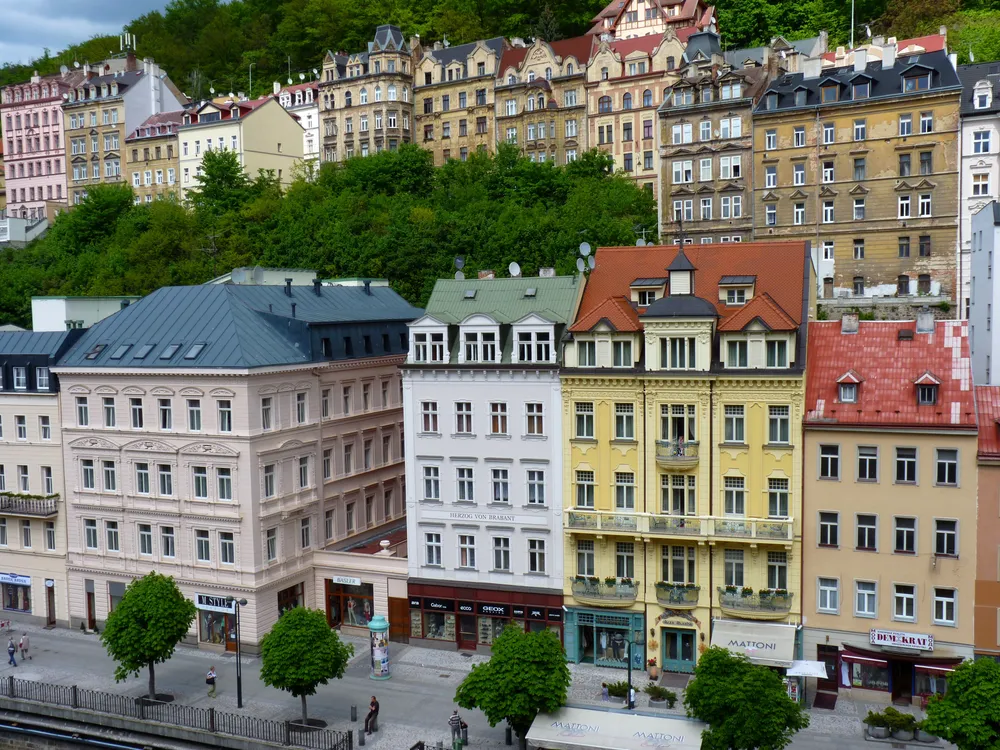
The Czech Republic (Czech: Česká republika), or Czechia (Česko) is a landlocked country in Central Europe. It is not a large country but has a rich and eventful history, including incidents and people like Saint Wenceslas, Jan Hus, the Thirty-years War, Operation Anthropoid and the dissolution of Czechoslovakia. Czechs, Germans, Slovaks, Italian stonemasons and stucco workers, French tradesmen, and deserters from Napoleon's army have lived and worked here, all influencing one another. For centuries they jointly cultivated their land, creating works that grace this small country with hundreds of ancient castles, monasteries and stately mansions, and entire towns that give the impression of being comprehensive artefacts. The Czech Republic contains a vast number of architectural treasures and has beautiful forests and mountains to match.
Czech Republic travel guide
Understand
History
The Czech region was inhabited by Celtic tribes called the Boii for the first four centuries of the first millennium. The Celts gave way to post-Roman Germanic tribes. Later, Slavs arrived and, in the 9th century they founded the Great Moravian Empire, stretching from Germany to Ukraine. After the fall of Great Moravia the Bohemian Duchy (later Kingdom) was formed, creating a territorial unit almost identical to the modern Czech Republic. The rise of the Habsburgs led to the Czech lands becoming a part of the Holy Roman Empire, and later Austria-Hungary; these brought a massive influx of German immigrants. The mineral springs of the West Bohemian Spa Triangle gave rise to "health tourism" and both Habsburg and non-Habsburg royals would cure their various ailments there. After the First World War, the closely related Czechs and Slovaks of the former Austro-Hungarian Empire formed the new nation of Czechoslovakia. During the interwar years, the new country's leaders were frequently preoccupied with meeting the demands of other ethnic minorities within the republic, most notably the Sudeten Germans and the Hungarians. A poor relationship with the German minority (20% of the overall population) was a particular problem that was capitalised on by Adolf Hitler and used as "rationale" for the dismemberment of the nation before the outbreak of World War II. The country was annexed and brutally occupied by Germany during the war. After World War II, Czechoslovakia expelled most of its Germans by force and many of the ethnic Hungarians after the Potsdam Conference. However, the nation was very blessed in the fact that it emerged from the war more or less physically intact as it mostly avoided the fate of the massive air bombardments and invasions that levelled most of the historic neighbouring cities in Germany, Austria, Poland and Belarus. The country fell within the Soviet sphere of influence and remained so by force of arms until 1989 (see Cold War Europe). In 1
Getting there
Visa requirements
The Czech Republic is a member of the Schengen Agreement. See Travelling around the Schengen Area for more information on how the scheme works, what countries are members and what the requirements are for your nationality. In summary:
There are normally no immigration controls between countries that have signed and implemented the treaty; there may be such controls temporarily, such as in connection with important events and various crises. The operators may carry out identity checks before passengers board international flights, ferries or trains, even between Schengen countries. Citizens of the EEA countries and Switzerland do not need visas to travel in the Schengen area, and may stay up to 90 days with no requirements other than having a valid ID card or passport. See European Union#EEA citizens. Normal visas granted by any Schengen member are valid in all countries that have signed and implemented the treaty (with exceptions for some overseas territories). The granting country may offer additional rights (such as longer stays or right to work) that apply only locally.
Travel document requirements For EU, EEA and Swiss nationals, passports and national identity cards only need to be valid for the period of their stay in the Czech Republic. For all other nationals, passports/travel documents must be valid for a period of at least 90 days beyond the expected length of stay in the Czech Republic/Schengen Area. Foreign nationals whose stay in the Czech Republic will exceed 30 days are required to register within 30 days on their arrival in the Czech Republic with the Alien and Border Police. In case you stay in a hotel or similar institution, the provider of the accommodation should arrange this registration for you. Children inscribed in their parents´ passports are allowed to travel with their parents up to the age of 15. Once the child has reached the age of 15, a separate passport is necessary. Visit this webpagefor more information on w
Getting around
Find your connections on one of following websites:
Jízdní řády Seznam Public Transport IDOS (Mobile App) Both sites cover all Czech trains, buses and city transport and many train and bus lines abroad.
By bus
A cheap and excellent means of travelling between Prague and other major cities are the buses from FlixBus, RegioJet, Leo Express and Student Agency. These buses are usually a bit faster and cost less than the Czech trains (not considering discounts). On some routes (e.g. Prague to Brno) this is marginal, but on others such as Prague to Karlovy Vary or Liberec, there is no direct train connection so the buses are by far the best option. Usually, you do not have to book a seat but if you travel on Fridays or during holidays from or to Prague, it is recommended. You can reserve seats online at the Regiojet website. Apart from this operator there are many other bus companies that link Prague and other cities and towns, even remote villages, regularly. Most buses leave Prague from the central bus station at Florenc, but other major bus stations can be found at Na Knížecí (metro station Anděl), Černý Most, Zličín and Roztyly, all of which are located next to metro stations. Local bus travel between small towns and surrounding villages is usually operated by companies named ČSAD (district name), a remnant of the nationwide state-run company Československá Autobusová Doprava from communist times. On local buses you simply tell the driver where you're going and pay him a fare as you get on.
By car
Czech drivers may seem aggressive sometimes, especially in Prague, but it is far from the "madness" found in some southern European countries. The Czech Republic is a zero tolerance country for alcohol. It's illegal to drive a motor vehicle under the influence of any amount of alcohol (or other drugs), and violations are heavily punished. Every time a driver is stopped, he is given an alcohol breath test, if the driver looks suspicious, he is can be also given saliv
See
UNESCO sites
Prague, the capital with its incredible historic centre (and famous monuments such as the Astronomical Clock; Charles Bridge; and Prague Castle). Olomouc, a vibrant university town with the second largest historic centre after Prague. Český Krumlov - a beautiful city with a castle. Holašovice - a preserved baroque village Telč - a well preserved Renaissance town Zelená Hora - a unique baroque church Litomyšl - a Renaissance château and historic centre Kutná Hora - a silver mining town with a Gothic cathedral and other sights. Vila Tugendhat in Brno Třebíč - a preserved Jewish quarter Lednice-Valtice Area - a cultural landscape of castles, fish ponds and gardens Kroměříž - an archbishop's palace and garden Erzgebirge/Krušnohoří Mining Region. see Ore Mountain Mining Region, shred with Germany Kladruby nad Labem (22 km west of Pardubice) - This is the home town of the Kladruber horse breed, best known for their role as the imperial carriage horses of the Austro-Hungarian
Overview adapted from Wikipedia, travel guide fromWikivoyage (CC BY-SA). Photography via Wikimedia Commons.