
Christianshavn
Denmark · Other
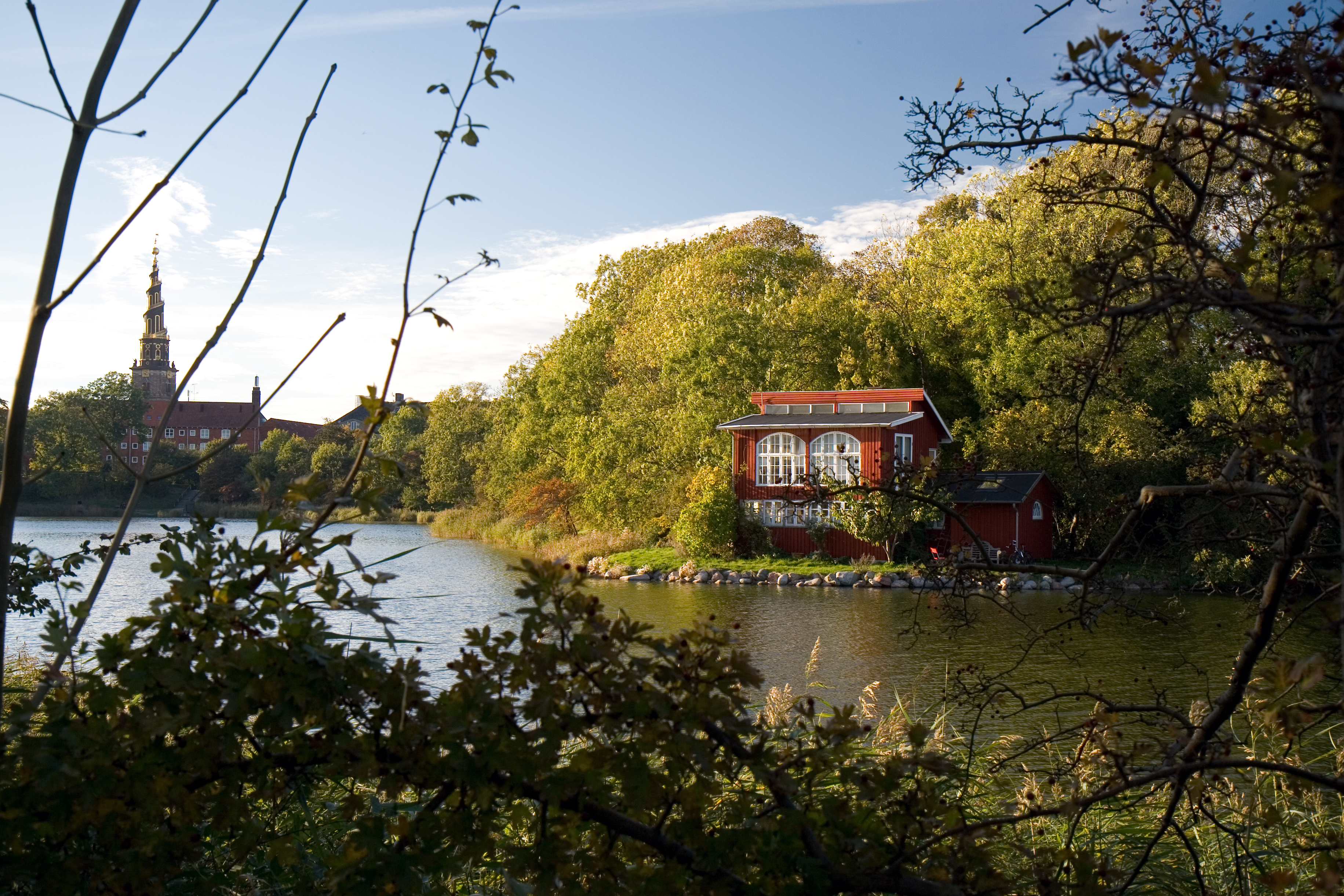
About Christianshavn
Christianshavn is a district east of the inner city of Copenhagen. Once a working-class neighbourhood, today Christianshavn is a trendy part of the city with its own unique identity. people from all walks of life, live side-by-side among cool cafes, old school bodegas, fancy restaurants and charming 19th-century houses along picturesque canals. Further north, Holmen is an old naval area, that has seen a dramatic change in the past few years, with the old buildings being updated for residence, along with new dramatic architecture - fittingly a new home of the royal Danish school of architecture.
Christianshavn travel guide
Understand
Christianshavn is an artificial island, erected in the swampy area between what is now the Inner city and the island of Amager, by King Christian the 4th, as a grand unification of his mad dash of construction projects, and his ambitions to develop Denmark into a major Naval power. The district was built as part of the southern fortification of Copenhagen in the early 17th century. It was designed in the image of Amsterdam, with a canal cutting straight through the centre — from this point Danish merchants were to expand trade over the seven seas, a heritage that is still very visible today, with the forest of masts from the sailing ships docked along the canal, and the century-old watering holes of sailors still handing out beers and snaps to thirsty passers by. In the early days Christianshavn was an independent city, until it was swallowed by the rapidly expanding capital, but it retains a unique atmosphere — and the people refer to themselves at Christianhavners first, and then as Copenhageners. In many ways Christianshavn is still a small town in a big city. Diversity is thriving here, and the district has managed to embrace people from all walks of life; from the alcoholic sipping beer at the corner, to the marketing yuppie, and form its own special identity stemming from this diversity.
Getting there
Christianshavn and the subdistrict of Holmen are on a peninsula stretching out north through the old fortifications. Because it is virtually surrounded by water, the only access is across the Knippelsbro Bridge and the dam to Amager. It is entirely located within Zone 1 of the common ticketing system of the Metro, trains and buses. If you prefer not to pay for mass transit, it is a pleasant 10-minute walk from Strøget on Amagertorv, past the parliament, and over the Knippelsbro Bridge.
By bus The backbone of bus transport in central Copenhagen are the A buses operated by Movia, which run every few minutes throughout the day. The S Buses are express buses that operate on longer lines, with fewer stops. Christianshavn's Square is the major stop, with stops by 3 different buslines, and interchange to the Metro.
2A starts at the Tingbjerg district in the North Western part of Copenhagen, and runs through downtown, with stops at Rådhuspladen (the central square) and the central station, before it crosses the harbour, and runs through Christianshavn on Torvegade, with stops at Asiatisk Plads (Ministry of foreign affairs) and the Metro station on Christianshavn Square. It terminates at Kastrup metro station on Amager. 9A starts at Glostrup Station in the suburb of Glostrup, west of Copenhagen. Run through Rødovre, Vanløse and Frederiksberg before reaching inner city with stops on Copenhagen Central Station and Christiansborg. It then crosses Knippelsbro bridge, and stops at Christianshavn Square before passing Christiania and ends at Refshaleøen. 350S begins its journey in the suburb of Herlev, north west of Copenhagen. And runs through the inner city with stops on Nørreport station and Kongens Nytorv square, before it crosses Knippelsbro bridge, and stops at Christianshavn Square. It continues onwards to Amager, and terminates in picturesque Dragør south of the Airport.
By metro The M1 or M2 metro lines stop at Christianshavn in the center of the district at Christ
Getting around
By bus Bus line 9A enters Christianshavn over the Knippels bridge, from the city centre, and turns north at Christianshavns square, along Prinsessegade - where it stops at Vor Frelsers church, and Christianias main entrance, from where it continues on the bridge across to Holmen and terminates at Refshaleøen.
By bike Christianshavn's small, quiet streets are excellent for sightseeing on a bike, and the free citybike system covers the entire district, there are stalls at Christianshavn torv, Asiatisk Plads (near the Ministry of Foreign Affairs), Church of our Saviour, at the main entrance to Christiania, and the central square of Holmen.
See
Christianshavn's main attraction, is Christianshavn itself. It bears some resemblance to Amsterdam, with its quiet streets branching out from the main canal, flanked by old houses, in bright colours, some dating back to 18th century - one of the photogenic ones is Amagergade on the right side of the main street, at the end nearest the dam to Amager. And of course the green oasis of the free town Christiania, with its creative home build houses, covered in its own guide.
Christiania 1 (Fristaden Christiania; or just 'Christiania' or 'Staden') (Enter from Prinsessegade). Open 24 hours. Since its establishment in a former military area in 1971, Christiania has been a partially self-governed and semi-legal community of 85 acres (34 hectares). It has more than 1,000 inhabitants and more than a million people visiting every year. Christiania has bars, cafes, restaurants and concert venues. Christinia is car-free with small paths and a lot of green and water areas. Staden has throughout the years been a subject for controversy. In the 2010s, the district has moved towards legalisation and normalisation, and Danish law is now applied in Christiania. In September 2016, residents tore down "pusher street" after a fatal shooting occurred during a drug bust. Later drug dealers came back but Pusher Street was finally destroyed in April 2024. Free. 2 Dansk Arkitektur Center (Danish Architecture Centre), Strandgade 27B, ☏ +45 3257 1930, [email protected]. Daily 10:00-17:00, W until 21:00. Each year, 5-10 exhibitions on Danish and foreign architecture can be seen here. Conferences, lectures and guided tours are held in connection with exhibitions. Adults 60 kr, students 40 kr, under 18 years free. Free admission on Wednesdays 17:00-21:00. (updated Sep 2017)
3 Nordatlantens brygge, Strandgade 91, ☏ +45 32 83 37 00, [email protected]. M-F 10:00-17:00, Sa Su 12:00-17:00. Nordatlantens Brygge is a cultural house where you can experience culture and arts from the North Atlantic region. Ho
Do
1 Christianshavns bådudlejning of café (Christianshavn boat rental and cafe), Overgaden neden Vandet 29, ☏ +45 32 96 53 53, [email protected]. Interesting mix of a café on a floating dock in the canal, that also rents out rowing boats for sailing in the canals of Christianshavn. Also sells picnic baskets for the boats. 80 kr/hour. Kajak ole, Strandgade 50, ☏ +45 40 50 40 06. This outfit conducts guided kayaking tours around the canals of Christianshavn and Holmen. The owner is a nice friendly dude, that has been doing his tours for more than 10 years. the 3 standard tours ranges between 1½-3 hours, but you can also request special individual tours. Also arranges hilarious kayak water polo games. from 245 kr. (updated Sep 2018) 2 The Operahouse, Ekvipagemestervej 10, ☏ +45 33 69 69 33. 17:00-last show. Opened in 2005 in a striking building overlooking the harbour, designed by world renowned architect Henning Larsen. Mainly hosts operas, but occasionally shows contemporary music concerts, and plays. For operas there
Overview adapted from Wikipedia, travel guide fromWikivoyage (CC BY-SA). Photography via Wikimedia Commons.