
Chonburi
Thailand · Asia
About Chonburi
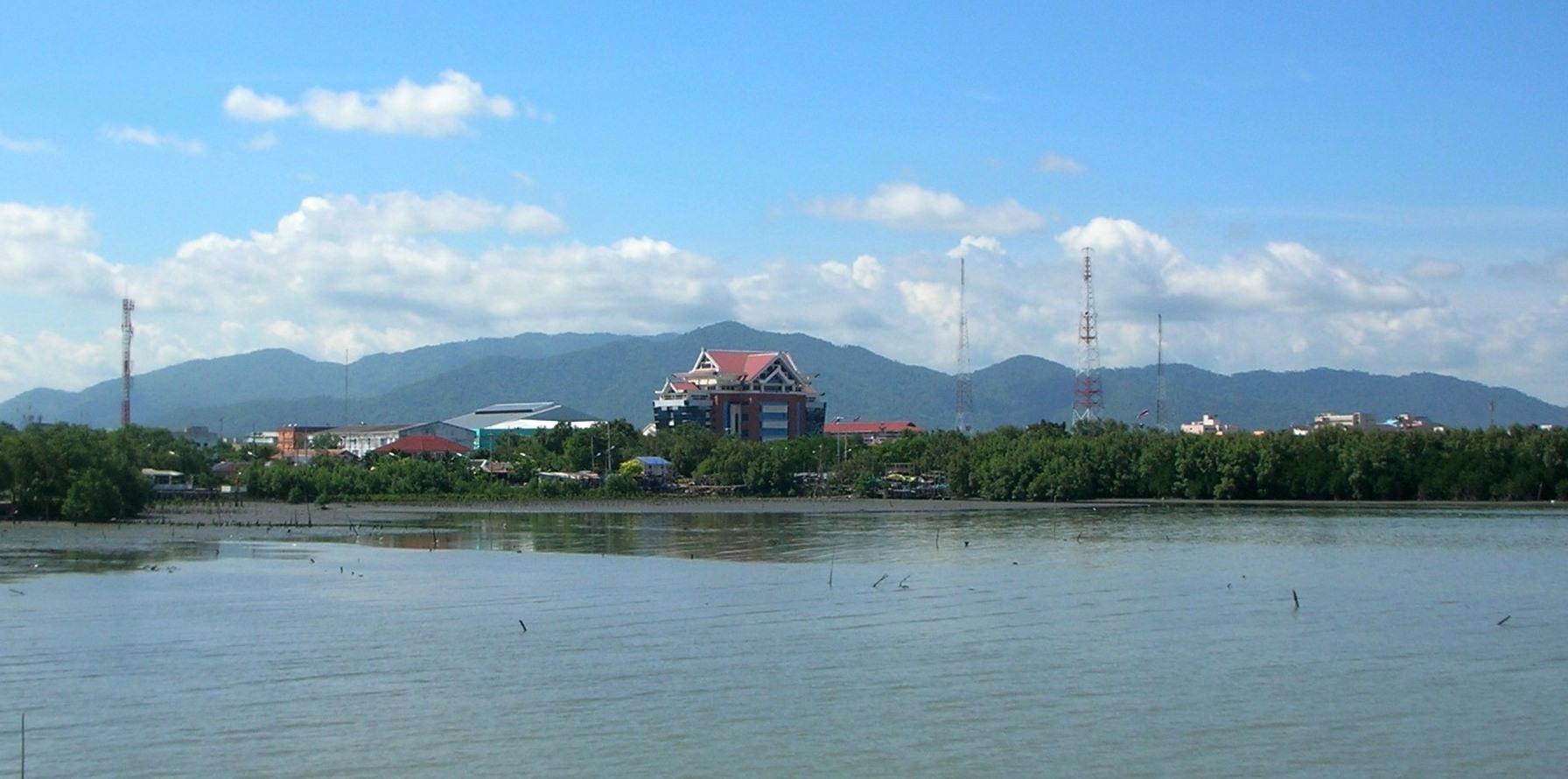
Chonburi (ชลบุรี) is both a city and a province in Eastern Thailand, 83 km or two hours from Bangkok. Chonburi, or "Mueang Chon", is the closest beachside city to Bangkok.
Chonburi travel guide
Understand
This article will focus on Chonburi the city. Other destinations in the province are well-described in their own articles. Most notably, the province is home to the tourism hotspot of Pattaya, and its enormous Jomtien beach. Chonburi province also has Ko Sichang, the nearest island to Bangkok, as well as Ko Lan and other islands. Chonburi province has significant amounts of agriculture (sugar cane; cassava; rubber; etc.) and has even more industry. This includes factories, petrochemical plants, and the enormous port at Laem Chabang, all of which are growing as part of the Eastern Seaboard Development Project. Due to all this heavy industry, if you are looking for pristine clean beaches then Chonburi city isn't for you, travel further south. But if you want to see the real working Thailand, fishing and surviving and delivering seafood on your table, then this is the right place.
Getting there
By car There are many routes from Bangkok to Chonburi as follows:
Hwy 34, Bang Na-Trat to Chonburi. Hwy 304, Bangkok-Minburi, passing Chachoengsao province-Bang Pakong into Chonburi. Take the old route of Sukhumvit Rd, Hwy 3, passing Samut Prakan Province to the intersection of Bang Pakong District. Enter Hwy 34 to Chonburi. Take the motorway, Hwy 7, Bangkok-Chonburi-(Pattaya). Tel. 1193, +66 38 392001.
By train Chonburi city is in the unusual position of having only one passenger train stopping there in each direction on weekdays, with an extra service added on Saturdays and Sundays so Bangkokians can visit the beach. These services depart from the old but centrally-located Hualamphong Railway Station in Bangkok. The daily train leaves Hualamphong at 06:55 and arrives at Chonburi railway station at 09:48. On weekends the additional train departs Hualamphong at 06:45 and arrives at 08:36. In the other direction, the daily train leaves Chonburi 15:20 and arrives in Bangkok at 18:15. The extra train on weekends leaves at 17:02 and arrives in Bangkok at 18:55. For more information see the State Railways of Thailand website.
By bus The best way to get to Chonburi is to get a bus from the Suvarnabhumi Airport bus terminal. A free shuttle bus orbits around the clock between the arrival terminal of the airport and the bus terminal. From the bus terminal it is 85 km to Chonburi and takes about 1 hour and 10 minutes. From the Eastern Bus Terminal (Ekamai), there are many air-conditioned buses to Chonburi from 05:00-21:00 every 40 minutes, Tel. +66 2 3919829. Second-class air-conditioned buses leave from 05:30-21:00 every 30 minutes. Tel. +66 2 3912504. Non air-conditioned buses leave Ekamai every 30 minutes from 05:00-21:00. Tel. +66 2 3912504. There are also air-conditioned buses leaving the Bangkok Bus Terminal (Mo Chit 2). Air-conditioned buses take the motorway from 06:30-18:30. Tel. +66 2 9362852-66. Additionally, there are private buses departing from the Sou
See
Ang Sila ((อ่างศิลา). A seaside fishing village. Most villagers are skilled in making implements from granite, mainly mortars and pestles, still widely used in Thai households, and figurines of animals. Khao Sam Muk (เขาสามมุข). A low hillock situated between Ang Sila and Bang Saen Beach, along the road facing the seashore. A habitat of scores of wild monkeys, the hilltop affords a panoramic view of the Bang Saen Beach. Laem Thaen (แหลมแท่น) (In the area of Bang Saen Beach near Khao Sam Muk). It is a cape reaching out to the sea where there are pavilions for relaxation and restaurants. People come here to fish the area. Phra Phutthasihing Shrine (หอพระพุทธสิหิงค์). The shrine houses a replica of the Phra Phutthasihing cast in silver. Wat Thammanimit (วัดธรรมนิมิตต์). Constructed in 1941 and where the Phra Phutthamongkhon Nimit Buddha image resides. It is a concrete Buddha image decorated with mosaic tiles in the Boarding a Boat posture. Wat Yai Inthraram (วัดใหญ่อินทราราม). An ancient and significant temple of Chonburi, influenced by the late Ayutthayan architectural style. The ubosot was built with a curved gunwale base and inside displays murals. Wihan Thep Sathit Phra Kitti Chaloem or Nacha Sa Thai Chue Shrine (วิหารเทพสถิตพระกิติเฉลิม หรือ ศาลเจ้าหน่าจาซาไท้จื้อ). A Chinese shrine. It is a 4-storey building decorated in extraordinary Chinese architectural style and housing various Chinese deity images.
Do
Chonburi Annual Festival (งานนมัสการพระพุทธสิหิงค์และงานกาชาดประจำปีจังหวัดชลบุรี). This fair is held about mid-Apr during the Songkran Festival. Phra Phutthasihing, Chonburi’s principal Buddha image, is put in a procession around the city. Chonburi Buffalo Races ((งานประเพณีวิ่งควาย). This is a long-established celebration of this most useful animal. A fun-filled event, it is held not only in Chonburi itself, but also in Ban Bueng and Nong Yai Districts. The beasts of burden are dressed outrageously or with admirable creativity by owners, bounded only by their imaginations. Assembled in the courtyard in front of the town hall, the buffaloes partake in racing, or take part in physical fitness and "fashion" contests. (updated Oct 2022) Ko Phra Sai Wan Lai Festival (งานประเพณีก่อพระทรายวันไหล บางแสน) (Bang Saen). A festival long celebrated by the Saen Suk people. Originally, it was called "Ngan Thambun Wan Lai", a gathering of people from various villages to make merit during the Songkran Festival or the Thai New Year Day, taking place on 16-17 Apr every year. Monks from every temple in Saen Suk sub-district are invited to perform the religious ceremony. There is merit- making, food offering, and a bahting ceremony. Later, there are activities of sand pagoda making, water splashing, local games, and sports. Ngan Bun Klang Ban and Phanat Nikhom Basketwork Festival (งานบุญกลางบ้าน และเครื่องจักสานพนัสนิคม). Traditions that have been passed on for a long period of time by the Phanat Nikhom people. They are organized on Friday, Saturday, and Sunday in the first week of May or the Thai 6th lunar month. The locals will bring food, offer it to the monks, and dedicate the merit to the guardian spirits, enemies from a former life, deceased relatives, as well as to drive out bad things, to ask for rain during the season, and to wish for abundant food and crops. After the religious ceremony, there is lunch, games, and a demonstration of Phanat Nikhom basketry making. Patt
Eat
Enterprising food vendors set up clusters of stalls, transforming major street corners, empty lots and alleys into lively food bazaars. Many are mobile, peddling from one area to another on tricycles and motorcycles with fixtures attached, or pushing mini-kitchens around on wooden carts, offering "boat noodles," curries over rice or an assortment of kanom (sweetmeats and snack foods). Nibbling on street food is an inexpensive way to dine out. You can fill yourself at lunch for 30 baht, and spend not much more for a hearty, well-balanced supper of several courses. A snack can cost the same or less. But the low price does not indicate a low quality. In fact, a lo
Overview adapted from Wikipedia, travel guide fromWikivoyage (CC BY-SA). Photography via Wikimedia Commons.