
Chinatown
United States · Americas
About Chinatown
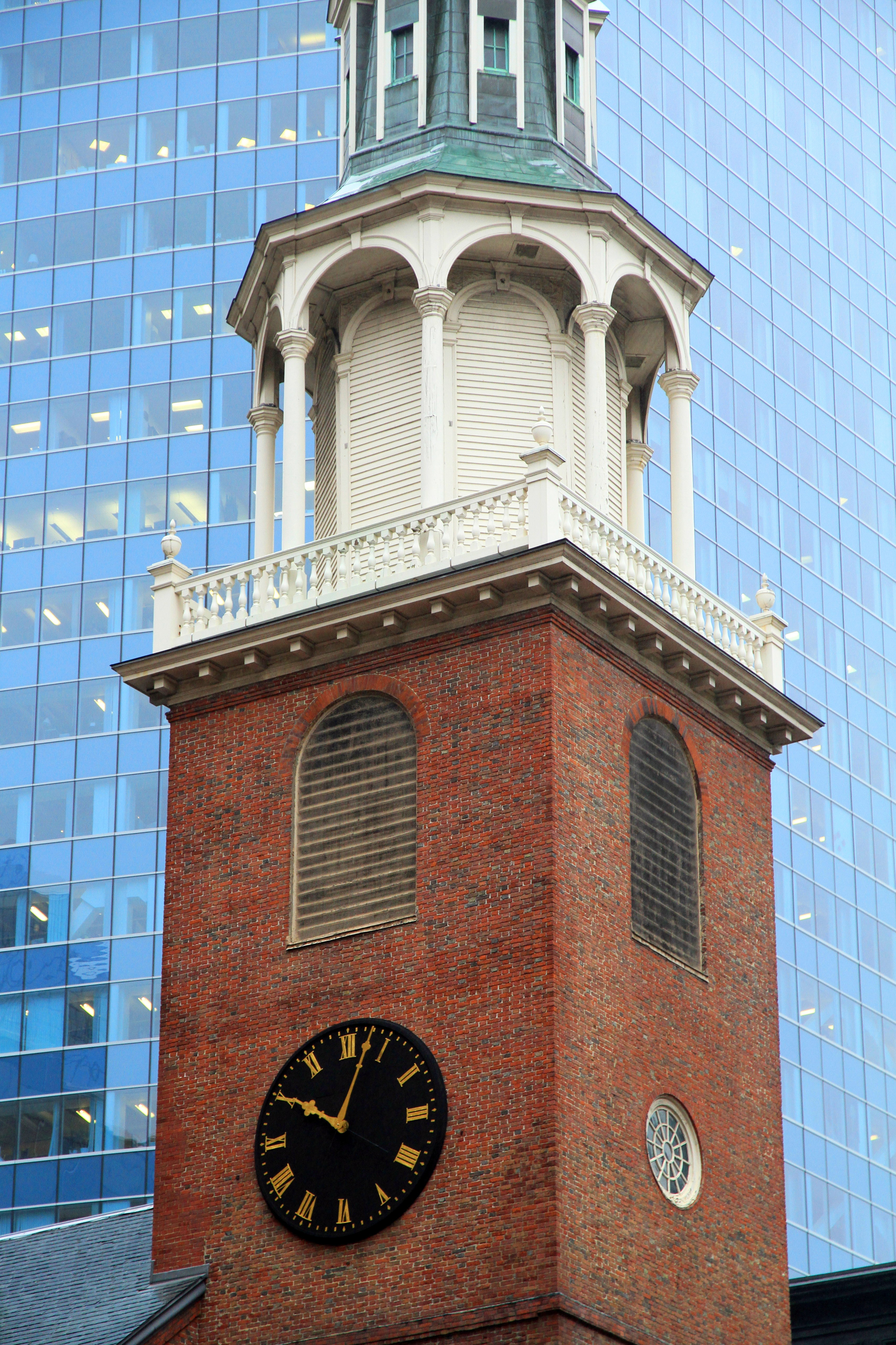
Downtown Boston is really the heart of the city. Boston City Hall is here, and many powerful companies and agencies are headquartered in the area. Since urban planning was done here before the advent of the automobile, this area of town has secured a decidedly European flavor. Here you'll find pedestrian focused streets, large public green spaces, street performers, and historic sites all connected by an efficient public transit system. If you're looking for the adjacent Italian American neighborhood with great food, head on over to the North End. If you want the Boston Common, the State House and the tallest buildings in the city instead, start exploring Back Bay & Beacon Hill.
Chinatown travel guide
Understand
Boston's nickname as the "Hub" makes more sense once you visit downtown. The population balloons during the day as hundreds of thousands of office workers and tourists descend on the area. The Massachusetts State Government maintains its seat in nearby Beacon Hill, but most state employees work out of office buildings around Government Center, where City Hall is also located. Downtown is home to major shopping areas, many of Boston's most famous historic sites, and plenty of major private employers. The financial and legal industry in the city is still largely based here, although some have decamped to nicer and newer space in the Seaport. The area now known as Downtown used to comprise most of the City of Boston, aside from the North End and Beacon Hill. Places like Charlestown and Dorchester were originally separate towns. Boston was founded in 1628 on a head of land sticking out into the harbor, connected to the mainland only by a thin strip of land which is today called Washington St. Other Boston neighborhoods were created through filling in marshland or annexing neighboring towns. Boston was a hotbed of the American Revolution, being home to now famous patriots like John Adams, Sam Adams, and John Hancock. Important pre-revolutionary events like the Boston Tea Party and Boston Massacre happened in what is now Downtown. After the war, Boston continued to be an important seaport and trading center. Until the 1860s and 70s, Downtown was pretty much all there was to the city. During this period, it expanded dramatically and outgrew its old borders, but Downtown remained the hub. Much of Downtown burned down in the Great Fire of 1872, tragically taking some of the city's older buildings with it. This area is now the main financial district and is mostly modern skyscrapers. In the 1950s the Central Artery, an elevated highway, was built through downtown, cutting off the waterfront from the rest of downtown. At a cost of $15 billion, it was buried during the "
Getting there
By foot Walking is by far the preferred way to get around this area, as most everything you'd want to see is relatively packed in together. The train stations are usually only separated by a few minutes walk, and you'll find it's often faster to just walk directly to your destination without heading underground. Walking also affords the opportunity to explore the variety of urban parks, architecture, and quirky street patterns that have gracefully developed over time. Walking around downtown is in many ways what visitors come here to experience in the first place.
By public transit
Downtown is easily the best connected area in the city. Boston operates on a "hub and spoke" philosophy, and this is clearly the hub for a variety of modes of transport. Amtrak makes two stops here, the massive South Station offers connections to NYC, Chicago, and beyond. Also featuring rail connections is North Station, serving coastal points within Maine and New Hampshire. See Boston#By train for details. These two stations are also the termini for all Commuter Rail travel within the region, see Boston#By commuter rail for more detailed descriptions.
By subway The Green line is perhaps the most helpful for visitors, running close to much of the Freedom Trail and the North End. Stops include North Station, Haymarket, Government Center, Park Street, and Boylston. The Orange line is a great alternative, because it closely parallels the Green line while downtown. Stations include: North Station, Haymarket, State, Downtown Crossing, Chinatown, and Tufts Medical Center. The Red line is also quite popular, if you're near it, it can be great for getting across town. Red stops include: Charles/MGH, Park Street, Downtown Crossing and South Station along the way. The Blue line is good for getting to the Aquarium, but it is primarily used by residents and not tourists. This line begins at tiny Bowdoin, then visits Government Center, State, and Aquarium stations before diving under the harb
See
Architecture
1 Boston City Hall (City Hall Plaza), 1 City Hall Square (T: Government Center), ☏ +1 617-635-4500. M-F 8:30AM-5PM. This area used to be known as Scollay Square and was demolished in the 1960s to build a new city hall for the city of Boston. The Hall is a hulking Brutalist architecture and an expansive brick plaza, contrasting sharply with the Fanueil Hall facade directly behind it. Some people love the bold choice of color, form and materials. Everyone else hates it, and considers it to be an eyesore of the first degree. The windswept plaza was mostly deserted until the city began holding seasonal events, festivals, and sports viewings here. Life is slowly creeping back to the center after Government Center station was rebuilt, and plans to make the area more pedestrian friendly are ongoing. Free. (updated Mar 2017) 2 New England Aquarium, Central Wharf (Blue Line to Aquarium), ☏ +1 617-973-5200. M-F 9AM-5PM, Sa Su 9AM-6PM. Home of a 200,000-gallon (757; 000-L) fish tank, the New England Aquarium offers a riveting museum experience which showcases an incredible variety of fish and other types of animals. It has a humongous IMAX theatre, whale-watching tours operating from its pier, and a marine mammal arena out back. It also is known for its penguins, which are a fascinating experience even on their own. It's well worth a visit. $27.95, Senior 60+ $25.95, Ages 3–11 $18.95. (updated Mar 2018) 3 Old City Hall, 45 School St (T: State), ☏ +1 617-523-8678. Old City Hall, unlike the current city hall, is undeniably beautiful. This Second Empire style building was built in 1865 and served as Boston's City Hall until 1969. It has since been converted to office space and also houses an expensive steak house. The building was listed on the National Register of Historic Places in 1970 and is a much touted example of adaptive re-use in architecture. (updated Aug 2015) 4 Boston South Station, 700 Atlantic Ave. Many transit routes go through this station, notably
Do
Theatres 1 Boston Opera House, 539 Washington St (T: Chinatown), ☏ +1 617-259-3400. Opened in 1928 as a movie theater, it was rededicated as a performing arts venue in 1980, and was restored in 2004. The Boston Ballet is the primary offering here. (updated Mar 2017) 2 Charles Playhouse, 74 Warrenton St (T: Tufts Medical Center), ☏ +1 617-426-6912. Performances of the Blue Man Group and Shear Madness play here. The building first opened in 1839 as a church, and was converted to a performing arts space in 1957. (updated Mar 2017) 3 Cutler Majestic Theatre, 219 Tremont St (T: Boylston), ☏ +1 617-824-8000. Performing arts owned by Emerson College. Originally designed for opera performances in 1903. (updated Mar 2017) 4 Orpheum Theatre, 1 Hamilton Pl (T: Park Street), ☏ +1 617-482-0106. Built in 1852, The Orpheum is one of the oldest theaters in America and was the original home of the Boston Symphony Orchestra. Seats 2,700 after many substantial rebuilds, including in 2009. (updated Aug
Overview adapted from Wikipedia, travel guide fromWikivoyage (CC BY-SA). Photography via Wikimedia Commons.